All religion is stupid, including Satanism which isn’t any less stupid than Christianity or others.
LostWanderer69 on
theres an exoteric doctrine for the masses and an esoteric doctrine for the elite, the leadership of the organisations pretend to vilify satan & teach their masses that while secretly worshipping him
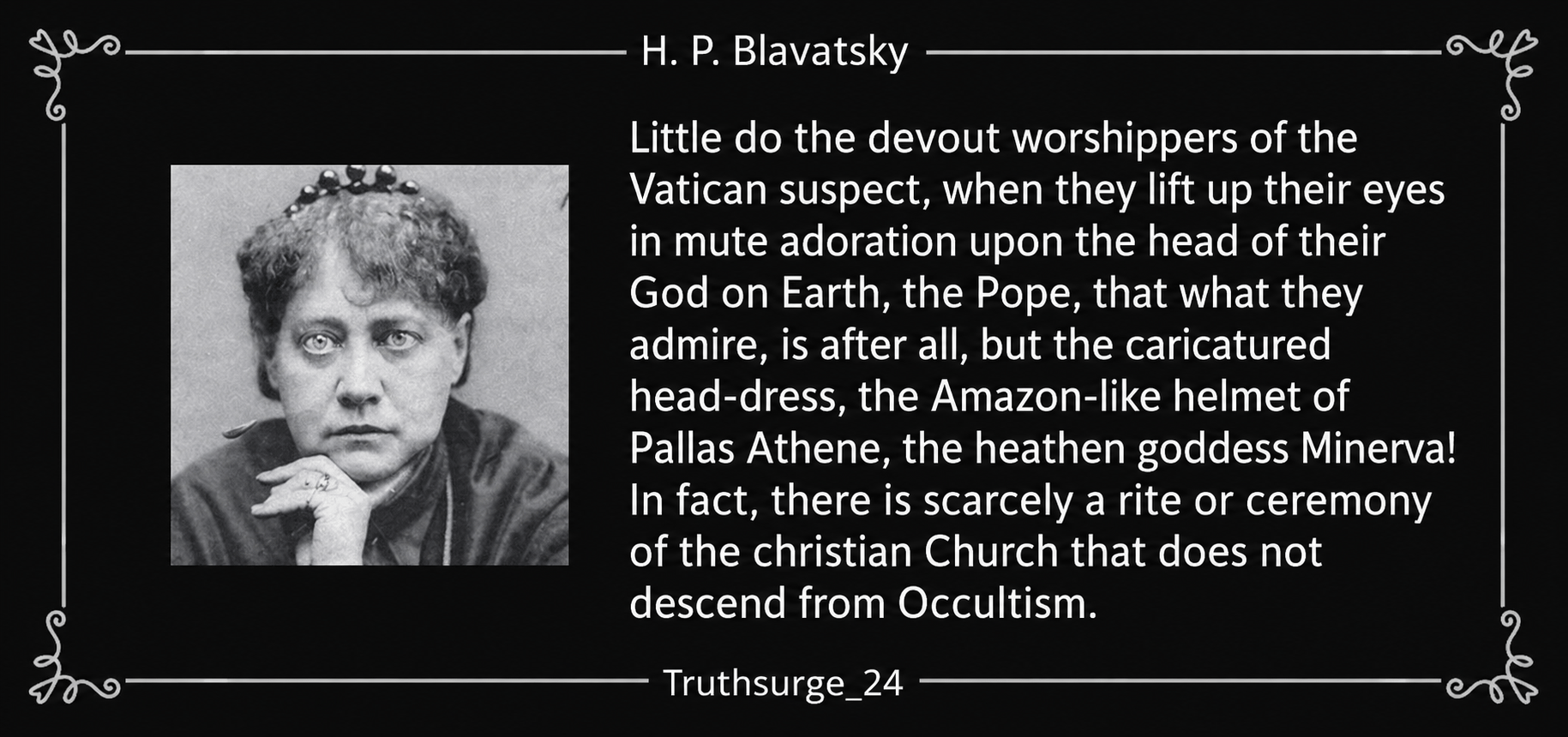
thats basically what blavatsky is saying here
the same thing is said here
“The Blue Degrees are but the outer court or portico of the Temple. Part of the symbols are displayed there to the Initiate, but he is intentionally misled by false interpretations. It is not intended that he shall understand them, but it is intended that he shall imagine he understands them. The true explication is reserved for the Adepts, the Princes of Masonry.”
— Albert Pike, Morals and Dogma, p. 819
the lower ranks are deceived while the true practice is kept for high initiates
StarbrryJuice on
Catholic and Christian are two different things
LanceHardwick on
labels, lol. if you don’t know what a jerk is, you a dummy.
immortallowlife6 on
I’m too drunk to respond gracefully, but the pope, his fish head hat, and all the pinecone symbolism is weird
nfk99 on
Faith, Power, and the Distortion of Spiritual Truth
Religion has been one of the most pervasive forces in human history, yet its operation often contradicts the ideals it claims to uphold. From a spiritual yet cynical perspective, it becomes clear that organized religion frequently functions less as a guide to virtue and more as a system of social control, shaping belief and behavior from the earliest age.
The historical figure of Jesus offers a striking example. He was a human being, not supernatural, but extremely clever, charismatic, and morally compelling. His teachings emphasized inner work, ethical living, compassion, forgiveness, humility, and care for the marginalized. The kingdom of God, according to him, was not a distant, abstract doctrine, but a present reality manifested through personal virtue and relational ethics. He communicated these lessons through parables and stories, often challenging hypocrisy, ritualism, and the rigid interpretations of religious authorities. His focus was on empowering people to think, act, and grow spiritually for themselves.
Paul, however, reinterpreted these teachings in ways that fundamentally shifted their focus. While he genuinely believed he was following Jesus’ vision, his letters emphasized salvation through faith in Christ, grace, and doctrinal belief rather than ethical action. He introduced hierarchy, formalized community roles, and doctrinal rules that were not present in Jesus’ original teachings. By framing morality as secondary to belief, and by emphasizing institutional authority, Paul transformed a radical, empowering ethical movement into a system more easily codified, organized, and, inadvertently or not, controllable.
From a cynical perspective, this shift had profound consequences. Where Jesus’ teachings encouraged personal responsibility and ethical discernment, Paul’s framework emphasized obedience, hierarchy, and faith over personal moral work. The practical effect was that communities became more predictable and compliant, less challenging to social or imperial power. In this sense, the reinterpretation of Jesus’ teachings could be seen as deeply harmful, even evil, because it obscured the original message and limited human moral and spiritual autonomy.
Modern Christianity, built primarily on Paul’s theological system, compounds these distortions. Hierarchies, rituals, hymns, angels, hell, salvation doctrines, and institutional authority dominate much of organized religious practice, often at the expense of the ethical, relational, and spiritual truths Jesus emphasized. Many believers do not realize that these layers were added centuries after Jesus and were never part of his core message.
The broader consequences of religiously justified systems of power are staggering. Religious wars, persecutions, and enforced orthodoxy have resulted in tens of millions of deaths throughout history, often intertwined with politics and empire. The European Wars of Religion, the Crusades, sectarian conflicts in the Middle East, and other historical episodes demonstrate that the misuse of belief can produce immense human suffering. From a human moral perspective, one death is one too many, and yet history records millions. This is the stark irony of organized religion: while preaching compassion, love, and virtue, it has often been wielded to justify violence, control, and oppression.
The essential insight is that the distortion of spiritual teachings, particularly those of Jesus, has consequences not just for theology but for human freedom, ethics, and social structure. The original teachings were about empowerment, ethical responsibility, and personal and communal virtue. Institutional reinterpretation replaced these with hierarchy, dogma, and compliance, turning a system designed to cultivate virtue into one that can be exploited for social control.
Recognizing this allows the spiritually minded but skeptical individual to navigate faith consciously. One can honor ethical and spiritual truths, focus on inner work and compassion, and reject the coercion, ritualism, and institutional manipulation that have historically overshadowed them. True spirituality is about personal moral growth, service to others, and cultivating inner virtue. Organized religion, while capable of community and structure, often obscures or undermines these essential principles.
In the end, the challenge is to reclaim the teachings of the historical Jesus as a guide for ethical, compassionate, and reflective living, while remaining critically aware of the ways that human institutions have transformed, misrepresented, or weaponized those teachings. Faith, when stripped of coercion and hierarchy, can empower, heal, and cultivate virtue. Distorted, it can control, deceive, and harm. Understanding this distinction is essential for anyone seeking truth, ethics, and genuine spiritual growth.
Jesus said the kingdom of god is within us and all around. i think what he meant was if you do the inner work and live morally and ethically, and strive for virtue. you will find the kingdom of god, but if everyone does it… we will bring heaven to earth.
rockland_beaumont on
What she said about the Pope is true, but the Pope isn’t the head of Christ’s body. That is Catholic doctrine that is incorrect. They have adjoined themselves to abominable parts.

7 Comments
All religion is stupid, including Satanism which isn’t any less stupid than Christianity or others.
theres an exoteric doctrine for the masses and an esoteric doctrine for the elite, the leadership of the organisations pretend to vilify satan & teach their masses that while secretly worshipping him
thats basically what blavatsky is saying here
the same thing is said here
“The Blue Degrees are but the outer court or portico of the Temple. Part of the symbols are displayed there to the Initiate, but he is intentionally misled by false interpretations. It is not intended that he shall understand them, but it is intended that he shall imagine he understands them. The true explication is reserved for the Adepts, the Princes of Masonry.”
— Albert Pike, Morals and Dogma, p. 819
the lower ranks are deceived while the true practice is kept for high initiates
Catholic and Christian are two different things
labels, lol. if you don’t know what a jerk is, you a dummy.
I’m too drunk to respond gracefully, but the pope, his fish head hat, and all the pinecone symbolism is weird
Faith, Power, and the Distortion of Spiritual Truth
Religion has been one of the most pervasive forces in human history, yet its operation often contradicts the ideals it claims to uphold. From a spiritual yet cynical perspective, it becomes clear that organized religion frequently functions less as a guide to virtue and more as a system of social control, shaping belief and behavior from the earliest age.
The historical figure of Jesus offers a striking example. He was a human being, not supernatural, but extremely clever, charismatic, and morally compelling. His teachings emphasized inner work, ethical living, compassion, forgiveness, humility, and care for the marginalized. The kingdom of God, according to him, was not a distant, abstract doctrine, but a present reality manifested through personal virtue and relational ethics. He communicated these lessons through parables and stories, often challenging hypocrisy, ritualism, and the rigid interpretations of religious authorities. His focus was on empowering people to think, act, and grow spiritually for themselves.
Paul, however, reinterpreted these teachings in ways that fundamentally shifted their focus. While he genuinely believed he was following Jesus’ vision, his letters emphasized salvation through faith in Christ, grace, and doctrinal belief rather than ethical action. He introduced hierarchy, formalized community roles, and doctrinal rules that were not present in Jesus’ original teachings. By framing morality as secondary to belief, and by emphasizing institutional authority, Paul transformed a radical, empowering ethical movement into a system more easily codified, organized, and, inadvertently or not, controllable.
From a cynical perspective, this shift had profound consequences. Where Jesus’ teachings encouraged personal responsibility and ethical discernment, Paul’s framework emphasized obedience, hierarchy, and faith over personal moral work. The practical effect was that communities became more predictable and compliant, less challenging to social or imperial power. In this sense, the reinterpretation of Jesus’ teachings could be seen as deeply harmful, even evil, because it obscured the original message and limited human moral and spiritual autonomy.
Modern Christianity, built primarily on Paul’s theological system, compounds these distortions. Hierarchies, rituals, hymns, angels, hell, salvation doctrines, and institutional authority dominate much of organized religious practice, often at the expense of the ethical, relational, and spiritual truths Jesus emphasized. Many believers do not realize that these layers were added centuries after Jesus and were never part of his core message.
The broader consequences of religiously justified systems of power are staggering. Religious wars, persecutions, and enforced orthodoxy have resulted in tens of millions of deaths throughout history, often intertwined with politics and empire. The European Wars of Religion, the Crusades, sectarian conflicts in the Middle East, and other historical episodes demonstrate that the misuse of belief can produce immense human suffering. From a human moral perspective, one death is one too many, and yet history records millions. This is the stark irony of organized religion: while preaching compassion, love, and virtue, it has often been wielded to justify violence, control, and oppression.
The essential insight is that the distortion of spiritual teachings, particularly those of Jesus, has consequences not just for theology but for human freedom, ethics, and social structure. The original teachings were about empowerment, ethical responsibility, and personal and communal virtue. Institutional reinterpretation replaced these with hierarchy, dogma, and compliance, turning a system designed to cultivate virtue into one that can be exploited for social control.
Recognizing this allows the spiritually minded but skeptical individual to navigate faith consciously. One can honor ethical and spiritual truths, focus on inner work and compassion, and reject the coercion, ritualism, and institutional manipulation that have historically overshadowed them. True spirituality is about personal moral growth, service to others, and cultivating inner virtue. Organized religion, while capable of community and structure, often obscures or undermines these essential principles.
In the end, the challenge is to reclaim the teachings of the historical Jesus as a guide for ethical, compassionate, and reflective living, while remaining critically aware of the ways that human institutions have transformed, misrepresented, or weaponized those teachings. Faith, when stripped of coercion and hierarchy, can empower, heal, and cultivate virtue. Distorted, it can control, deceive, and harm. Understanding this distinction is essential for anyone seeking truth, ethics, and genuine spiritual growth.
Jesus said the kingdom of god is within us and all around. i think what he meant was if you do the inner work and live morally and ethically, and strive for virtue. you will find the kingdom of god, but if everyone does it… we will bring heaven to earth.
What she said about the Pope is true, but the Pope isn’t the head of Christ’s body. That is Catholic doctrine that is incorrect. They have adjoined themselves to abominable parts.