
By political reporter Nicole Asher
In short:
Migration numbers would be capped to match housing availability, under a plan by the Coalition.
The opposition leader says the move will improve housing availability for Australians grappling with a shortfall.
What's next?
Angus Taylor has resisted putting a number on where he would cap migration, and says he will provide more detail on the policy in his budget reply speech.
The Coalition will link overseas migration to housing supply as part of its migration strategy, which would in effect slash the number of migrants allowed into the country.
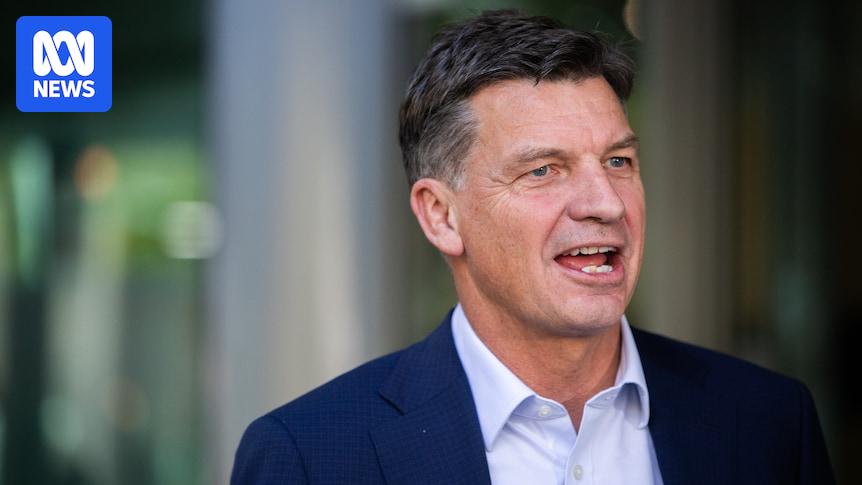
Under the plan, which Opposition Leader Angus Taylor will lay out in his budget reply speech next week, migrant numbers would be limited to open up housing availability for Australian citizens.
"The number needs to be capped by available housing in this country," Mr Taylor said.
Coalition modelling suggests a 400,000-person shortfall in housing since the government was elected, based on a comparison of population increase and dwelling numbers.
In the year to September, the Australian population grew by 400,000 people, according to the Australian Bureau of Statistics. About three-quarters of that growth was driven by overseas migration.
Immigration caps would, Coalition members have confirmed, take into account the need for skilled migrants.
"Cost of living is crushing Australians, and housing is right at the heart of that," Mr Taylor said.
The opposition leader has held off revealing what cap he would apply to net overseas migration.
"What we have seen in recent years is numbers are too high, the standards are too low, and both must change," he said.
"On the numbers, the limiting factor is the housing we have in this country, as well as the services and infrastructure we have."
Under the federal government's national housing target, 1.2 million homes would be built by the end of the decade, but the construction sector has warned that meeting that target will be unlikely.
Treasurer Jim Chalmers has conceded more needs to be done to promote housing growth.
"Our policy reflects the need to build more homes, many more homes, and to make sure there are more affordable options for people to get a toehold in the market," he said.
"I think housing is one of the defining challenges in our economy."
He said the legitimate concerns about it getting harder for people to buy their first home had to be dealt with.
"That's the motivation behind the 5 per cent deposits, the supply question is the motivation behind tens of billions of dollars this government is investing in housing," Mr Chalmers said.
Migration vs homes built
Net overseas migration was forecast to fall to 260,000 in 2025/26, but in the year to September, the number reached 311,000.
The Coalition has pointed to higher-than-planned migration numbers and a shortfall in the number of new homes expected to be built as a problem.
"It's no wonder young Australians can't buy a home, it's no wonder people are having to line up in queues to rent a home, and they can barely afford to do it when they do," he said.
Rental vacancy rates across Australian capital cities and the regions remain below 2 per cent, with prices expected to continue to rise.
When he took over the leadership, Mr Taylor identified housing affordability as a key focus for the Coalition.
To tackle the affordability problem, the opposition leader has previously flagged cutting red tape and winding back regulations to accelerate developments.
Mr Taylor has now indicated that an immigration policy is part of that mix, and crucial to "put Australia first".
Shadow Housing Minister Andrew Bragg said the policy would take into account what skilled migration was necessary.
"It would look, of course, at the economic needs the country has, which can be served by migration,"
he said.
"If frankly there aren't enough houses, then that would have implications for some of the caps that we have in place for certain visa classes," he said.
Senator Bragg also pointed to allowing more cheaply built homes as a further solution to the country's housing crisis.
Policy builds on values-based
This latest promise to crack down on immigration builds on the first element of the Coalition's immigration policy.
Announcing the plan last month, Mr Taylor vowed, if elected, to implement binding Australian-value declarations on visa applications.
"If a visa holder undermines our democratic values, doesn't respect the law, or demonstrates they don't respect our core values, they will be booted out of Australia," Mr Taylor said in April.
Posted by RTSBasebuilder
1 Comment
Relevance: It combines the three subject matter darlings of the sub together – right-wing electoral populism from fear of being outflanked by the farther right, immigration and housing together. Which I presume would produce this response.
https://preview.redd.it/0lpfsfc9ouzg1.png?width=550&format=png&auto=webp&s=d8acfa1c2a85955370526abc8b47b44ee5df466d
You know, before we discuss the RBA rate hikes again.
!ping AUS