
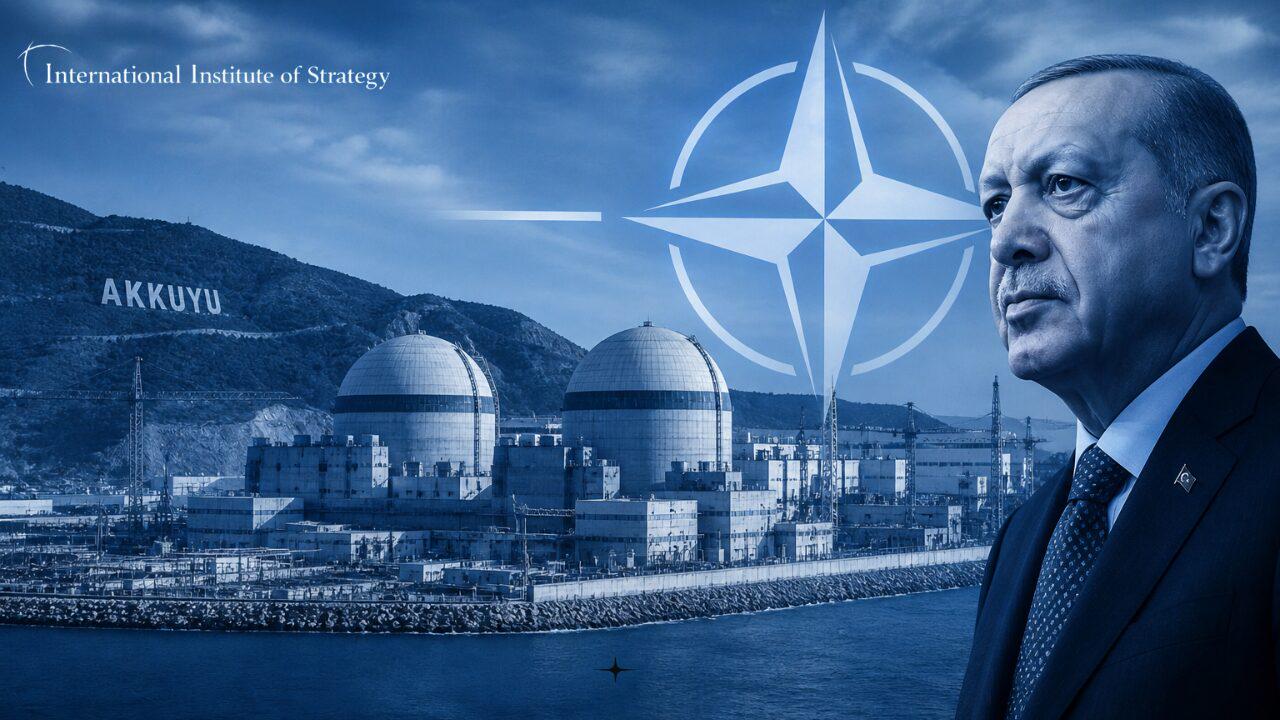
Before Akkuyu (Turkey’s first nuclear power plant) Becomes a Target, It Becomes a Liability – Article 5 is not an automatic shield
Posted by Themetalin
Before Akkuyu (Turkey’s first nuclear power plant) Becomes a Target, It Becomes a Liability – Article 5 is not an automatic shield
Posted by Themetalin
1 Comment
* Akkuyu is a Russian nuclear enclave inside NATO: Russian-owned, Russian-operated and Russian-controlled on Turkey’s Mediterranean coast.
* The plant embeds a hostile state operator in a member’s baseload electricity system and places it under Alliance cover, constituting a structural breach of NATO’s Article 3 resilience obligations.
* In crisis, Russia holds a practical veto over a NATO member’s electricity supply and nuclear safety without crossing thresholds or accepting attribution.
* Turkey’s leadership rejects permanent nuclear asymmetry, has floated domestic enrichment and pairs this doctrine with long-range missile development and aggressive regional signaling.
* For the EU, Akkuyu reverses the logic of reducing Russian energy leverage and re-imports Russian nuclear power into the European security space.
* For NATO and frontline states, Akkuyu is a dual-use, sanctions-sensitive node neutralized pre-kinetically through legal, regulatory, financial and cyber tools.
* Akkuyu stands as concrete and fails as a strategic asset. Turkey keeps a plant. Russia loses a lever.
* If Akkuyu ever shifts from protected civilian generation to operational enablement, Article 5 does not automatically shield Turkey. The first file NATO opens is Article 3: why a member embedded a Russian controlled vulnerability inside Alliance space and then expected solidarity to cover the consequences.