
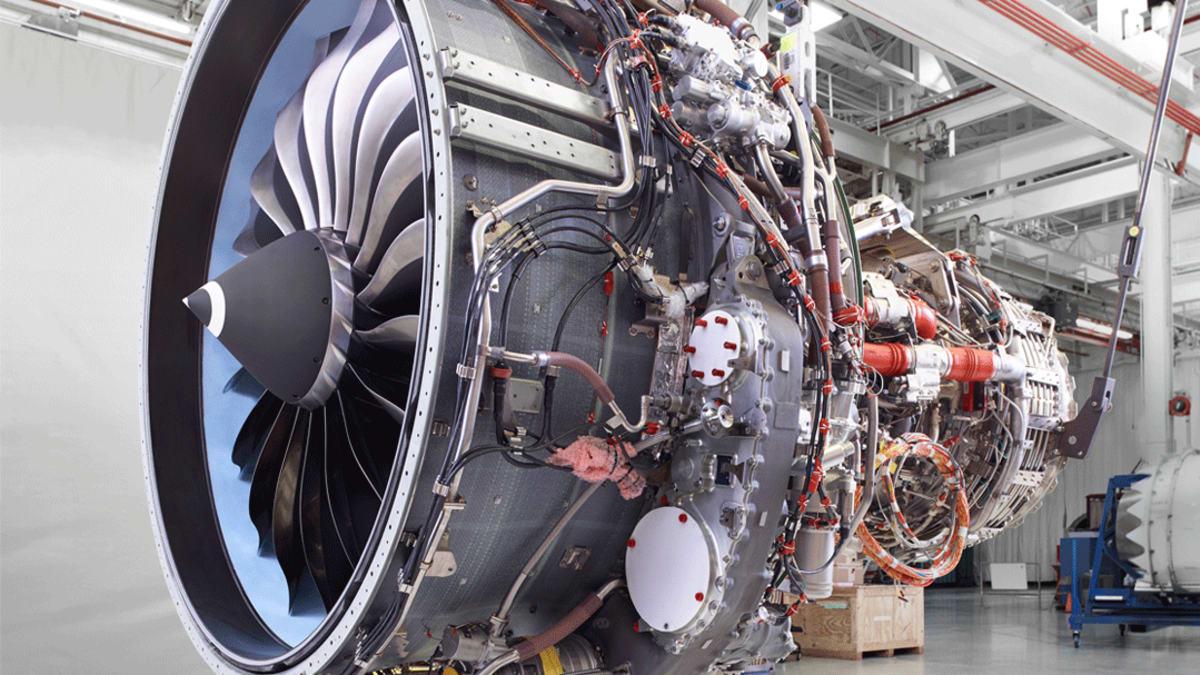
Why Jet Engines Aren’t “Made In China”: What China’s jet engine program tells us about the limits of industrial policy
Posted by logicx24
Why Jet Engines Aren’t “Made In China”: What China’s jet engine program tells us about the limits of industrial policy
Posted by logicx24
4 Comments
Submission statement – quoting from the article:
> In my recent article contrasting Chinese dynamism with American sloth, I described how the Chinese state-capitalist system has an unusual tolerance for social disruption, which, when paired with prescient leadership, enables massive societal uplift. Many of the comments, however, extrapolated this observation about state capacity into prophecies of inevitable American decline that I did not intend to imply. Perhaps the slight polemical detour gave some of the audience license to veer towards doomerism.
>
> So let’s be clear: this is an incorrect assumption. A united Western alliance possesses many structural advantages the Chinese state will struggle to replicate. Instead, I think China-hysteria is largely just a belated overcorrection. After two decades disparaging the idea that any other power could pose a challenge to Western hegemony, we’re now astounded by the very existence of competition.
> But this overreaction blinds us to nuance. China is not a national wunderkind: it is a technologically-advanced state that has an extraordinary capability to marshal national resources. Most of its successes involve utilizing this advantage to scale a mature technology, become its dominant provider, and use the synergies that affords to expand horizontally and vertically. This strategy finds success in some industries but meets with failure in others.
>
> The pattern of where it fails is informative.
>
> One illustrative example of failure is in jet engines. China has tried and failed for some fifty years to produce military and commercial jet engines at parity with the West. Why did it fail? Because, as I explore below, jet engines are almost uniquely designed to expose the weaknesses in the Chinese system. They’re a low-margin market focused on long-term reliability where manufacturing quality and consistency are paramount. Iteration speed is very slow and there’s a pervasive, internationally enforced, regulatory barrier for every finished product. These together neutralize the usual Chinese advantages in skilled labor, capital, and speed-to-scale. They also prevent traditional domestic protectionism from adding much value.
>
> Analyzing the Chinese failure to produce viable jet engines gives us important lessons about the nature of the West’s remaining comparative advantage.
I thought china excels at low margin markets by providing large economies of scale
Yet
Very interesting piece.
The wumao brigade will not be pleased.