
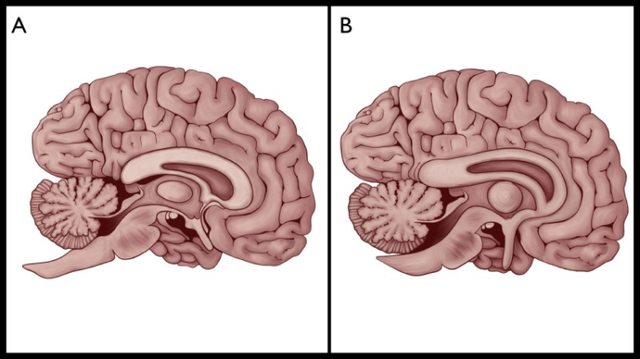
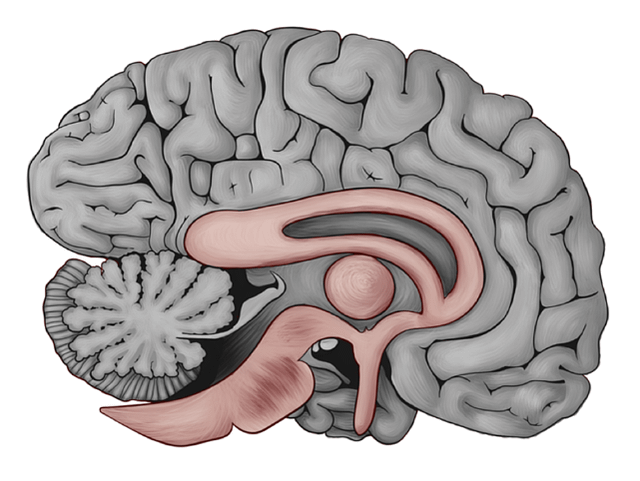
SS: The Eye of Horus, an ancient Egyptian symbol associated with healing and protection, has sparked various interpretations regarding its origin. In his documentary ‘Remembering The End Of The World’, comparative mythologist, David Talbott proposes a connection between the Eye and a celestial alignment from millennia ago, while others link it to symbolizing the waxing and waning phases of the Moon. However, a particularly captivating interpretation suggests that the Eye might represent human anatomy. An intriguing paper titled ‘The Eye of Horus: The Connection Between Art, Medicine, and Mythology in Ancient Egypt’, published in the National Library of Medicine, establishes an association between the Eye and the anatomy of the human brain. The brain region surrounding the pineal gland exhibits an astonishing resemblance to the Eye of Horus. Some theorists propose that by basing the Eye of Horus on the part of the brain containing the pineal gland, the ancient Egyptians were symbolically expressing the notion of a concealed mental or spiritual power within this gland. Dimethyl tryptamine (DMT) is released from the pineal gland (especially in very large quantities when one dies) and is known as the “spirit molecule”. René Descartes, deeply intrigued by the pineal gland, considered it the primary seat of the spirit and soul and the place where all thoughts are formulated. His philosophical framework postulated that humans possess both a physical body and a non-physical, “immaterial” mind.
Posted by -Joel-Snapes-
1 Comment
If I know anything from elementary school 30+ years ago they pulled the Brains out the nose with a coat hanger. Idk