
A senior U.S. State Department official from the Bureau of Democracy, Human Rights, and Labor (DRL) is set to visit South Korea to discuss the human rights situation of foreign workers with civic groups.
As the United States has identified South Korea’s “forced labor” issues as one of its non-tariff trade barriers, concerns are growing that labor conditions in industries heavily reliant on foreign workers — particularly agriculture and fisheries — could evolve into a trade risk.
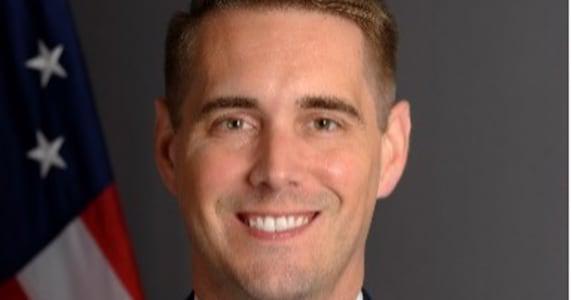
According to civic groups and related sources on the 18th, Riley M. Barnes, Deputy Assistant Secretary at the U.S. State Department’s Bureau of Democracy, Human Rights, and Labor, plans to visit South Korea in early June. During the visit, Barnes is scheduled to hold a closed-door meeting at the U.S. Embassy in Seoul with Korean civil society organizations dealing with foreign worker human rights issues.
The meeting is expected to focus particularly on the treatment of foreign fishing crew members and seasonal migrant workers. Barnes is also reportedly expected to hear opinions on whether the South Korean government is adequately monitoring potential forced labor involving foreign workers.
Civic organizations are expected to raise issues long reported in fisheries sectors such as seaweed and oyster farming, including excessive working hours, unpaid wages, poor housing conditions, and restrictions on worker movement.
A representative from a foreign worker rights organization stated, “Working-level teams dealing with migrant labor issues have held discussions before, but this is the first time a deputy assistant secretary has personally visited Korea to hear these concerns.” The representative added, “In particular, the U.S. tends to view the use of undocumented foreign labor in Korea as linked to illegal production practices or unfair competition.”
Human rights issues involving foreign workers in South Korea have recently emerged as a trade issue between Seoul and Washington as well.
In April last year, U.S. Customs and Border Protection (CBP), under the Department of Homeland Security, banned imports of salt produced at a salt farm in Sinan County, South Jeolla Province, citing forced labor concerns. It became one of the most notable cases in which a South Korean product was barred from entering the U.S. due to allegations of forced labor.
CBP can issue a Withhold Release Order (WRO) blocking imports if it determines that forced labor or human rights abuses exist anywhere in a product’s production or supply chain. Excessive overtime, wage exploitation, movement restrictions, and poor housing conditions at workplaces employing large numbers of foreign workers may be regarded as indicators of forced labor.
The Office of the United States Trade Representative (USTR) also mentioned South Korea’s forced labor issue in this year’s National Trade Estimate (NTE) Report as a form of non-tariff trade barrier.
The report stated, “South Korea does not have regulations prohibiting the importation of goods produced through forced or compulsory labor,” adding that such conditions “may artificially suppress labor costs and provide unfair advantages to certain goods or services produced in or exported from Korea.”
Barnes is regarded as a key official overseeing human rights and labor policy within the U.S. State Department. Since February, Barnes has also served as the U.S. Special Coordinator for Tibetan Issues. After Secretary of State Marco Rubio appointed Barnes to the Tibet role, the Chinese government criticized the move as “interference in internal affairs.”
As foreign worker human rights issues increasingly fall under U.S. trade scrutiny, industries highly dependent on migrant labor — including seaweed and oyster farming — are expected to face growing pressure. If the U.S. determines that forced labor is involved in the production process of specific goods, import restrictions similar to the Sinan salt case could follow.
Last year, U.S. President Donald Trump signed an executive order aimed at strengthening the competitiveness of the American seafood industry. The order directed authorities to investigate illegal, unreported, and unregulated (IUU) fishing activities, as well as foreign forced labor trade practices in major seafood-exporting countries.
Posted by Freewhale98
2 Comments
This would have teeth coming from Obama or Biden, because the allegations are probably real. From Trump, it just looks like shit
1. Summary
Trump administration sent investigators to Korea to find the evidence of “forced labor” on migrant workers. Trump administration has been focused on the human rights of migrant workers in Korea to justify their trade intimidation to the US Supreme Court.
2. How this related to the sub
(1) Tariff War: Trump administration is trying to justify their tariff on Korea as a form of sanction against human right abuses against migrants.
3. My opinion
Migrant worker rights are indeed a big problem. The official visiting Korea only have to buy a newspaper and read “Society” section to find “evidence” as it is filled with recent coverage of migrant worker abuse scandals that raising concerns in civil society. It’s just sad that it is abused to justify Trump’s vanity tariff project not documented for a proper human right report ( Trump administration drastically reduced US state department human rights report and removed mentions of human rights violations committed by Kim Jong Un ).