
I think I accidentally fell into one of the strangest video-game rabbit holes I’ve ever experienced.
While replaying the original game, I found the “37th Mandala” book inside Gordon Freeman’s locker.
At first I assumed it was random sci-fi flavor text. But I learned it was written by the Half-Life writer himself. I still looked into the word mandala, and looked into Wikipedia entries and learned many things in regards to The New Age Movement and how Carl Jung influenced it. Carl Jung researched many subjects in regards to the unknown such as archetypes, symbolic geometry, transcendence, altered states of consciousness, and representations of the psyche.
That alone already felt weirdly fitting for Half-Life.
But then things got stranger.
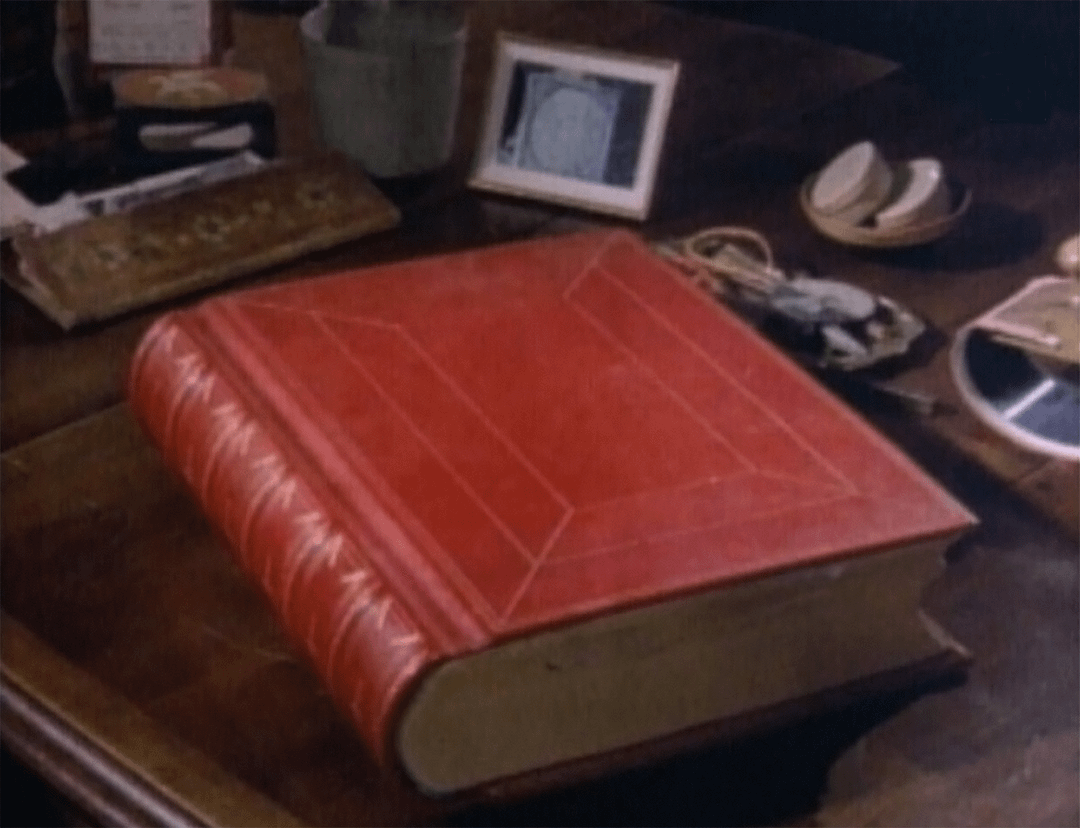
After reading about Jung and eventually learning about his *Red Book, (*which was a massive surreal journal involving visions, symbols, dream imagery, and encounters with the unconscious) I returned to Half-Life and noticed something I had completely ignored before.
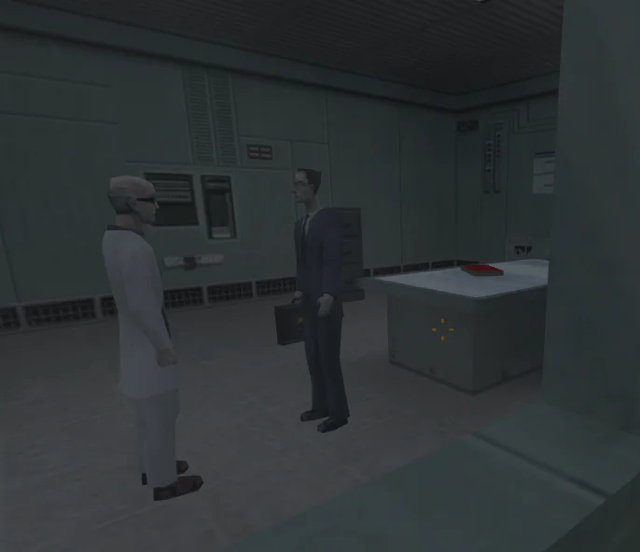
There’s a hidden room where the G-Man is seen talking privately with a scientist behind glass. On the table behind him sits a single red book isolated from everything else in the room.
Now obviously:
I’m NOT claiming Valve literally inserted Jung’s Red Book into the game.
But considering:
-the earlier “37th Mandala” reference
-Xen’s surreal dreamlike nature
-the G-Man’s almost archetypal role
-the game’s obsession with transcendence and crossing realities
…the symbolism started feeling less accidental.
Then I reached Xen again and noticed something even more interesting.
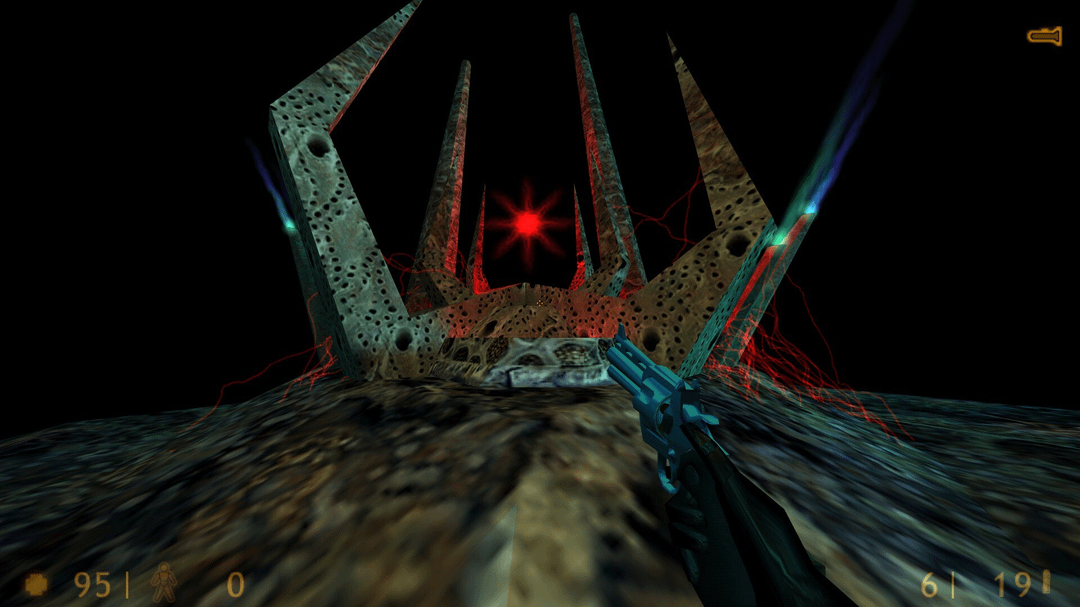
The portal structure before the Nihilanth fight forms an 8-pointed star/octagram.
At first I mistakenly thought it was a 6-pointed hexagram, but after closer inspection it’s actually an 8-point radial structure.
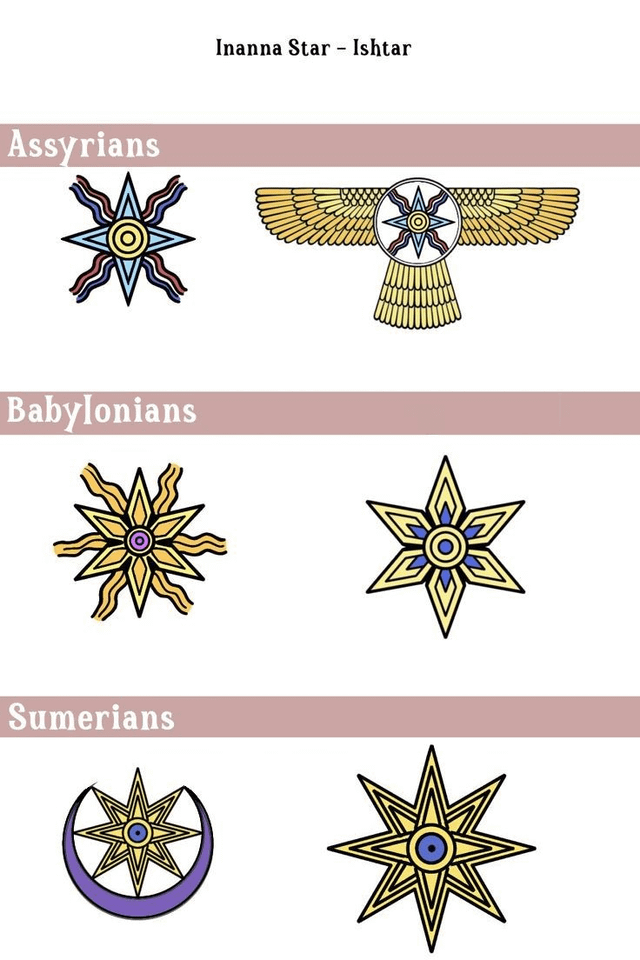
Someone pointed out to me that 8-pointed stars are historically associated with the Star of Ishtar/Inanna from Mesopotamian symbolism.
That immediately caught my attention because Ishtar/Inanna mythology heavily involves:
-descent into other realms
-gateways between worlds
-death/rebirth symbolism
-transcendence
-cosmic transformation
Which honestly sounds incredibly Xen-like.
Starting to see some of the connections here?
suddenly the visual language of Half-Life starts looking different.
Xen doesn’t feel designed like a normal alien planet.
It feels symbolic, ritualistic, dreamlike, one could even say psychologically constructed than than physical or connected to time and space itself…
The more I think about it, the more Half-Life feels like science fiction layered on top of archetypal or metaphysical imagery:
-the resonance cascade as forbidden knowledge
-Xen as a liminal plane between realities
-Gordon’s transformation into something mythic
-the G-Man acting like an observer outside normal time
-recurring geometric/symbolic imagery throughout the game
Marc Laidlaw himself has also spoken in interviews and writing about interests in surrealism, metaphysics, altered realities, and Philip K. Dick-style concepts, which makes me wonder how much of this atmosphere was intentional.
Again:
I’m NOT arguing that Half-Life secretly contains occult doctrine or hidden religious messaging.
I just think the game may consciously (or subconsciously) use esoteric visual language to make Xen feel metaphysical and psychologically alien rather than just extraterrestrial.
And honestly, once you start noticing it, it becomes difficult to unsee.
Curious if anyone else has found symbolic/esoteric details like this elsewhere in the series.
*Edit: According to all the information I have gone through, Carl Jung's "Red Book" was largely unknown until it's landmark publication in 2009 from Jung's descendants.
Half-Life was released in 1998.
If the placement of the Red Book had any relation to Liber Novus (the Red Book), then that is something crazy to ponder on.
Posted by Yamazaki999
4 Comments
I believe this post is relevant to this sub because it sheds light on something that was perhaps hidden in plain view to the public. I believe it to be possible that the developers of the Half-Life series to be in the know of Carl Jung’s Red Book before the book was released in 2009. Due to my findings, it compelled me to share it with the world and anyone else interested in this theory. I hope to find more evidence to either shed light or shut down this claim altogether.
Great post OP, I’m not familiar with that game but the patterns you see I’ve seen them a lot in other fictions too.
Ishtar is the light, i letter is the ray of light, Isis is another name for her (the dot is God, the starting point, the zero, then you get the ray). Light is God’s spouse we can say, what he sends, what “descends” in our world (the resonance cascade)
And light spectrum energy is what creates the first bit of matter, the quarks. It’s literally the mother of creation.
My theory about what the temporal paradoxes, those fictions (books, games, movies), what people call predictive programing, isn’t exactly predictive, it’s knowledge coming from angels, they are the ones creating the fictions to prepare us mentally.
It’s soft control we can say. Oh and since I said Control, this game is a gold mine of symbolism too.
I’ve repeatedly heard Half Life was inspired by Stephen King’s The Mist. Stephen King was inspired by HP Lovecraft. Quake was inspired by HP Lovecraft as well. Half Life was inspired by Quake as well… are you noticing the vague occultism and esotericism pipeline leading into Half Life without it being related to anything serious?
People dont give Laidlaw enough credit. He should be held up like Kirkbride is for Elder Scrolls. These guys put real soul, art, and literary impressiveness into low poly games of their time.
They did their time studying. Reading. Having their own idiosyncracies and styles. What youre seeing is Laidlaws art.
Its good stuff. Outright.
They were reading all the greats and all the contemporary and setting their own scratch on the wall.
It having that depth is from them.