
The idea for a Franco-German fighter jet first emerged nine years ago. After lengthy disputes, it is now clear that Europe’s largest defense project will not come to fruition.
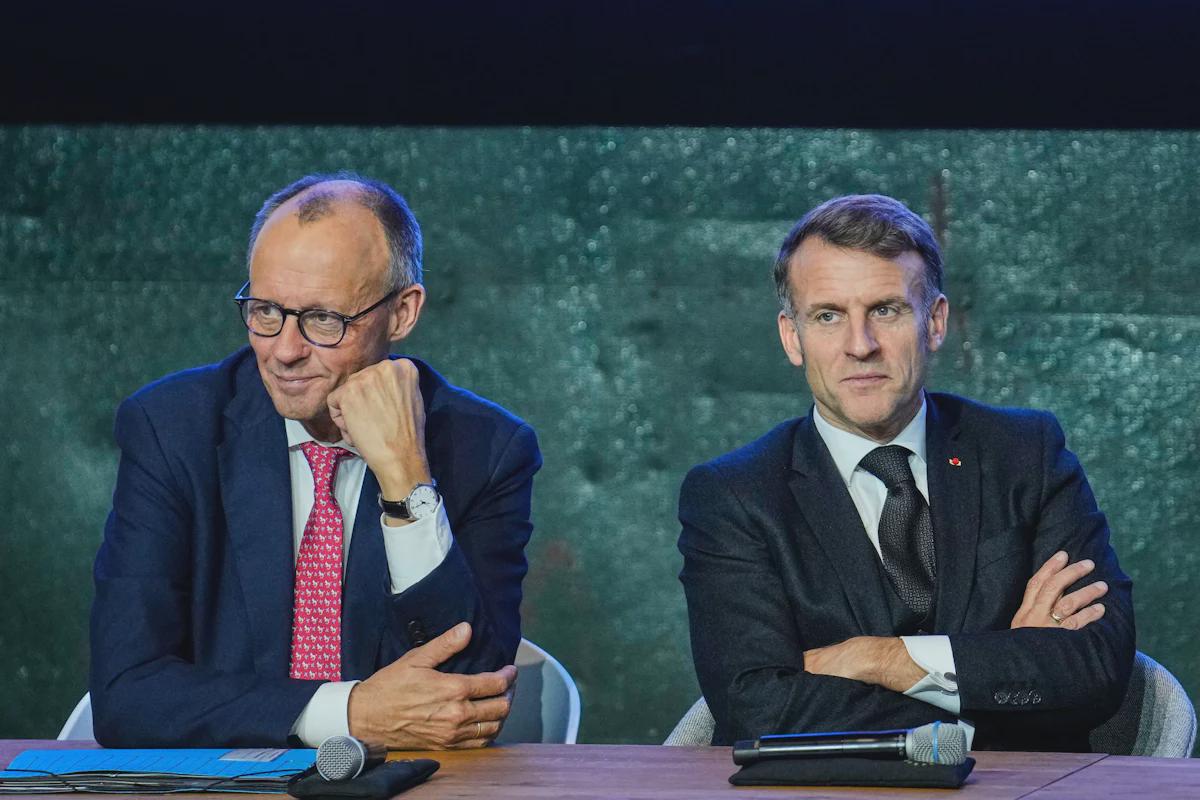
Berlin (dpa) – After years of preparation, the multi-billion-euro project to develop a joint German-French fighter jet has failed. According to German government sources, Chancellor Friedrich Merz and French President Emmanuel Macron have come to the joint conclusion that Dassault and Airbus are unable to reach an agreement on the construction of a joint fighter jet.
“They acknowledge this reality.” Merz therefore advised Macron not to pursue the construction of a joint fighter jet any further. However, the joint networking of various weapon systems, platforms, or sensors in a so-called “Combat Cloud” is to be continued. The Future Combat Air System (FCAS) is thus not completely off the table.
[Additional info from Tagesschau: According to government sources in Berlin, the two countries intend to continue jointly developing the overarching “system of systems” designed to integrate aircraft and drones. At the Franco-German Ministerial Council in mid-July, the two defense ministries are expected to present a work plan outlining several joint defense projects.]
Merkel and Macron gave the green light in 2017
Then-Chancellor Angela Merkel and Macron gave the green light for the prestigious project in July 2017. However, Airbus and Dassault’s visions of the fighter jet’s capabilities had recently diverged significantly.
Dassault had claimed an oversized share of the project as well as leadership. The German side, on the other hand, expressed the expectation that Dassault would “adhere to the existing agreements,” according to which the companies were to be equally involved. There had been repeated disputes over the division of responsibilities in the past as well.
Decision Postponed Several Times
The political decision on the project was postponed several times; now Macron and Merz have finally put a stop to it. Spain is also involved in the project through the manufacturer Indra.
For Germany and France, which like to portray themselves as the driving force of Europe, this is a bitter political setback. For years, Macron has been insisting on European sovereignty and joint defense projects. The fact that the most ambitious European defense project to date is now failing due to industrial policy disagreements with one of its closest partners does not align with the message of unity he would like to convey, and it is also a very personal failure for him as a co-initiator of the project.
Merz also cited differing requirements as a problem
FCAS stands for “Future Combat Air System” and, had it been implemented, would have been the largest and most expensive European defense project. The air combat system was intended to operate in conjunction with unarmed and armed drones and was therefore designed to be more than just a fighter jet. The plan was for it to replace the Eurofighter used by the German Armed Forces and the French Rafale starting in 2040. The total cost was estimated at more than 100 billion euros. Germany, France, and Spain, which was also involved, had been struggling for months to get the project off the ground.
Merz had recently cited as a core problem the fact that the French need a different fighter jet than the Bundeswehr. France requires a nuclear-capable and an aircraft carrier-capable aircraft in the next generation of fighter jets, which the Bundeswehr does not currently need. The German side ultimately proposed the option of implementing FCAS with two aircraft. France had rejected this.
Posted by ZweigDidion
3 Comments
A repeat of the typhoon situation.
Crazy
You can’t put two planes in one
And national companies hate working international
Who knew?
Just let the Swedes make them. They seem pretty good at it.