
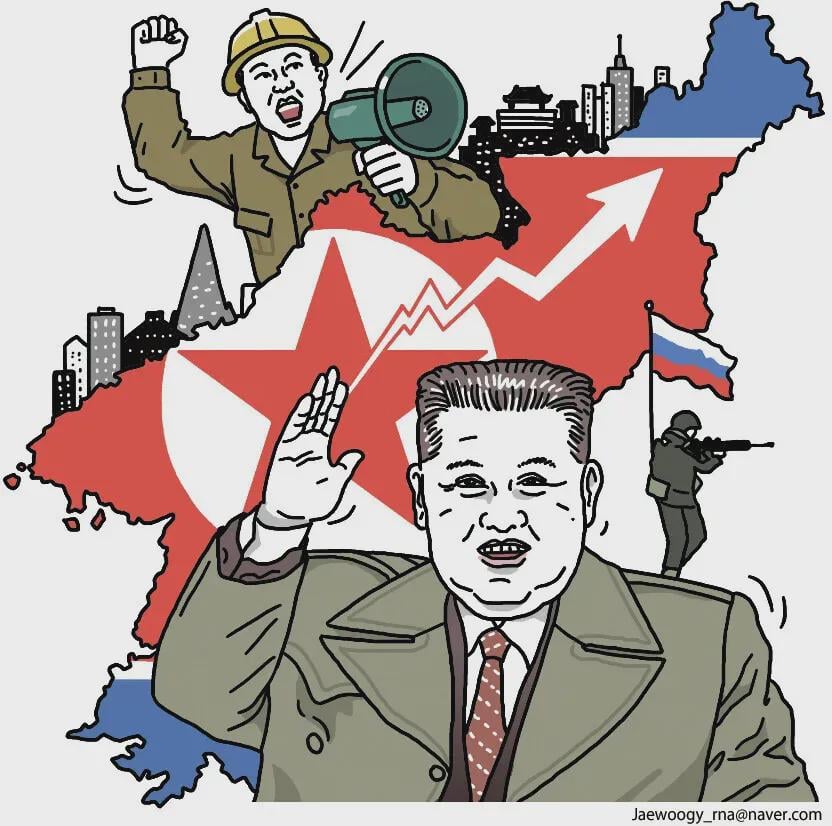
North Korea’s economic boom: If authoritarian systems become synonymous with economic boom, what will that mean for democracy?
Posted by Freewhale98
North Korea’s economic boom: If authoritarian systems become synonymous with economic boom, what will that mean for democracy?
Posted by Freewhale98
4 Comments
1. Summary
The author argues that recent unanticipated boom in North Korea’s economy is worth reflecting. The miraculous growth reinforces the perception that regimes without popular sovereignty, such as China, are better equipped to deliver economic growth.
2. How is this related to the sub
(1) The value of liberalism in the triumph of totalitarianism: The author argues that the economic failure of liberalism to help average people is fueling the demise of democracy and the resurgence of totalitarianism.
I’ve said here before but justifying democracy via economic prosperity, even if often a genuine connection, is a poor strategy when the moral argument is sitting right there and doesn’t need to claim any kind of necessary connection.
I don’t choose to cherish liberal values because I worship markets or prosperity, and I would be suspicious of someone who was so instrumental in their choice of values
Why the boom?
> The problem is that such growth reinforces the perception that regimes without popular sovereignty, such as China, are better equipped to deliver economic growth.
> More and more you hear people argue that China’s authoritarian model is best not only for economic growth, but ideal for responding to issues tied to all of our futures, namely the climate crisis, in what’s become known as “climate Maoism.” I worry about our survival, yes, but it’s difficult not to also worry about what might become of democracy down the line.
Journalists will do anything, *anything*, before actually diving into what the evidence for economic growth looks like.
The criticism of democracies dealing with climate change is more understandable, but I’d still argue that it’s not inherently a systematic issue.