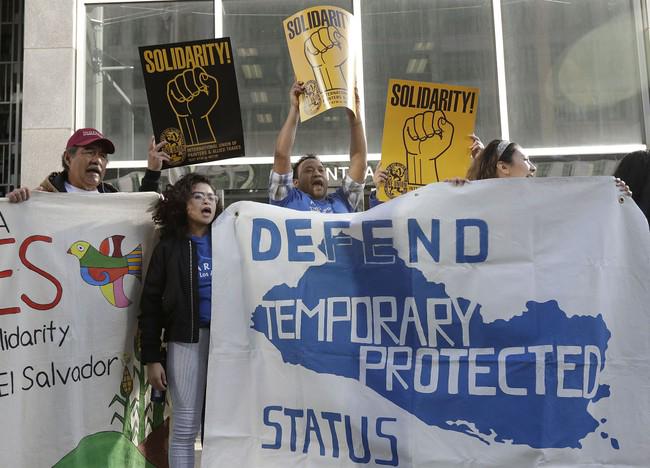
The Supreme Court on Thursday issued its decision in *Mullin v. Doe,* holding that most non-constitutional (i.e., statutory) challenges to Temporary Protected Status (TPS) terminations cannot even be heard by federal courts. Additionally, the Court held that the constitutional claim, that the decision to terminate TPS status for Haiti was based on racial discrimination, “will likely fail.” This constitutes a major win for the Trump administration in the immigration arena and will have significant implications for TPS going forward.
In a 6-3 decision authored by Justice Samuel Alito, the Court reversed lower court rulings that had blocked the Trump administration from terminating Temporary Protected Status (TPS) for nationals of Syria and Haiti. The Court held that the Immigration and Nationality Act (INA) largely bars federal courts from reviewing the Secretary of Homeland Security’s decisions to designate, extend, or terminate TPS, foreclosing most of the plaintiffs’ Administrative Procedure Act claims.
The Court also rejected — at least for purposes of preliminary/injunctive relief — the Haitian plaintiffs’ claim that the TPS termination was motivated by racial animus. Assuming without deciding that heightened scrutiny applied, the majority concluded the challengers were unlikely to succeed, pointing to the administration’s across-the-board policy of ending every TPS designation that had come up for review rather than evidence of race-based decision-making.

1 Comment
Click save….
The Supreme Court on Thursday issued its decision in *Mullin v. Doe,* holding that most non-constitutional (i.e., statutory) challenges to Temporary Protected Status (TPS) terminations cannot even be heard by federal courts. Additionally, the Court held that the constitutional claim, that the decision to terminate TPS status for Haiti was based on racial discrimination, “will likely fail.” This constitutes a major win for the Trump administration in the immigration arena and will have significant implications for TPS going forward.
In a 6-3 decision authored by Justice Samuel Alito, the Court reversed lower court rulings that had blocked the Trump administration from terminating Temporary Protected Status (TPS) for nationals of Syria and Haiti. The Court held that the Immigration and Nationality Act (INA) largely bars federal courts from reviewing the Secretary of Homeland Security’s decisions to designate, extend, or terminate TPS, foreclosing most of the plaintiffs’ Administrative Procedure Act claims.
The Court also rejected — at least for purposes of preliminary/injunctive relief — the Haitian plaintiffs’ claim that the TPS termination was motivated by racial animus. Assuming without deciding that heightened scrutiny applied, the majority concluded the challengers were unlikely to succeed, pointing to the administration’s across-the-board policy of ending every TPS designation that had come up for review rather than evidence of race-based decision-making.