
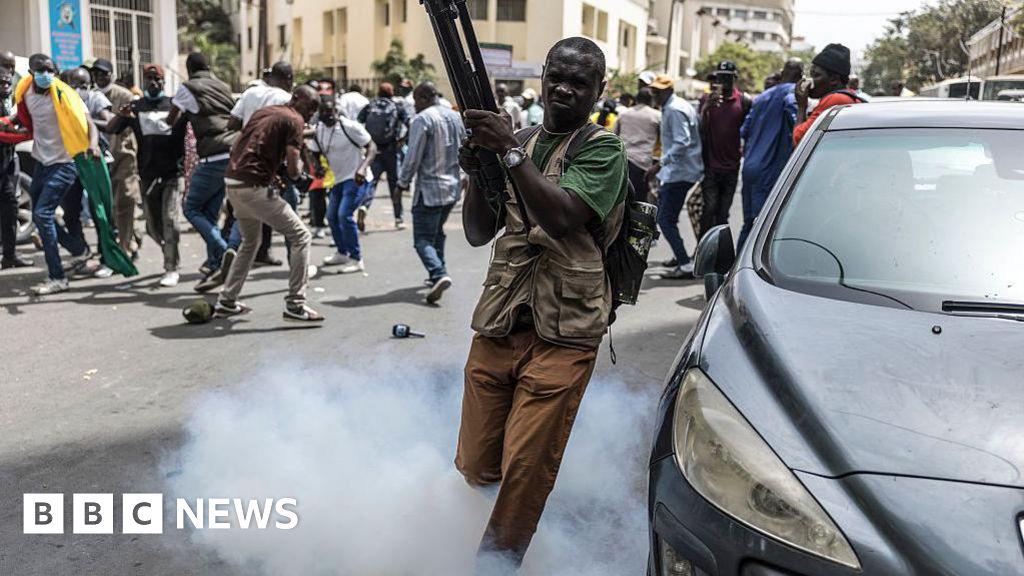
Submission statement: A sharp escalation in the feud between President Bassirou Diomaye Faye and ex-PM, now National Assembly President Ousmane Sonko, after his MPs passed a consitutional amendment aimed at restricting presidential powers and strengthening Parliament's powers, sparking violent protests in one of Africa's most solid democracies.
Senegal uses a semi-presidential regime where the president, elected to the universal suffrage for a seven-year term renewable once, has the ascendant over Parliament and the government. In 2024, the left-wing nationalist party PASTEF came into power under a precarious arrangement: Ousmane Sonko, its firebrand founder and leader, several times imprisoned under the previous governments, would cede the way to Bassirou Diomaye Faye, the architect and manager of PASTEF, to run as his proxy for the presidential election following Sonko's ban from office due to his multiple legal convictions, with the simple slogan "Diomaye c'est Sonko".
Diomaye was elected in a landslide in 2024 and appointed Sonko as his Prime Minister – the pair would lead PASTEF to another landslide win in the legislative elections organized later that year.
But tensions over the balance of power have grown between the two PASTEF figures, as their party struggles to deliver concrete improvements to the Senegalese. A popular bill doubling legal sanctions for homosexuality did not stem the tide, and Sonko was sacked by presidential decree in May 2026. Sonko returned to Parliament, and was triumphally elected as president of the unicameral Parliament.
One of Sonko's first acts as parliamentary leader was to advance and adopt a constitutional law reducing the powers of the President and increasing the powers of the Assembly, notably granting expanded investigation powers to parliamentary comittees and oversight on the management of natural resources, a crucial point as Senegal is exploring the exploitation of newly found oil&gas fields off its coast, which could bring in direly needed income but also raise questions about sovereignty and contracts with foreign corporations.
Senegal's most urgent challenge is to address its enormous debt – originally estimated at 80% of its GDP, it exploded to 132% after investigations uncovered that the liberal administration of Diomaye's predecessor Macky Sall cooked the books and concealed several billions to global financial institutions. Hard negotiations between the new Senegalese government and the IMF have expanded its internal political crisis and further complicated matters between Senegal and its financial partners, spooking investors and forcing one of the most impoverished countries in the world to reckon with hard budgetary choices to avoid a financial crisis.
Posted by RaidBrimnes
1 Comment
!ping AFRICA&DEMOCRACY
The financial situation in Senegal is starting to unravel, and the political crisis is deepening in large part due to severe disagreements between Diomaye and Sonko in dealing with the hidden debt crisis.
Senegal has largely been spared from regional turmoil, but a weakening of state capacity and/or a severe financial crisis could deeply destabilize the country.