
Beijing argues Japan-Philippines maritime border talks violate international law
China has stepped up efforts to assert its claims over the waters east of Taiwan, warning Japan and the Philippines that talks to delimit maritime borders in the area without involving Beijing are illegal.
A legal opinion issued this week by the China Institute for Marine Affairs said an agreement in May between Japan and the Philippines to begin talks on defining their maritime boundaries was “undertaken without consultation with China” and “violates international law”.
The Japanese and the Philippine maritime claims include overlapping economic exclusion zones east of Taiwan, which Beijing claims as part of its territory and has threatened to take by force if Taipei resists indefinitely.
“Japan and the Philippines should immediately cease their pursuit of bilateral delimitation and actively engage in negotiations with China,” said the institute, which is administered by China’s Ministry of Natural Resources.
The warning followed Chinese radio warnings this week to Japanese research vessels to cease operations near the Tokyo-administered Senkaku Islands, which lie north-east of Taiwan and are claimed by Beijing. China’s coastguard has also increased assertive activity this month.
China’s military in recent years has also stepped up drills around Taiwan, including in its eastern waters, raising concerns about rehearsals for a potential blockade as well as disruption to one of the world’s busiest shipping lanes through which most of east Asia’s energy imports and finished goods exports to Europe flow.
Tensions were heightened between China and Japan after Prime Minister Sanae Takaichi last year referred to a hypothetical situation in which a Chinese attack on Taiwan could be interpreted as an “existential threat” that would allow the Japan Self-Defense Forces to respond militarily.
China has restricted exports to Japan of rare earths — minerals critical to manufacturing advanced technologies — among other measures to punish Tokyo for the remarks.
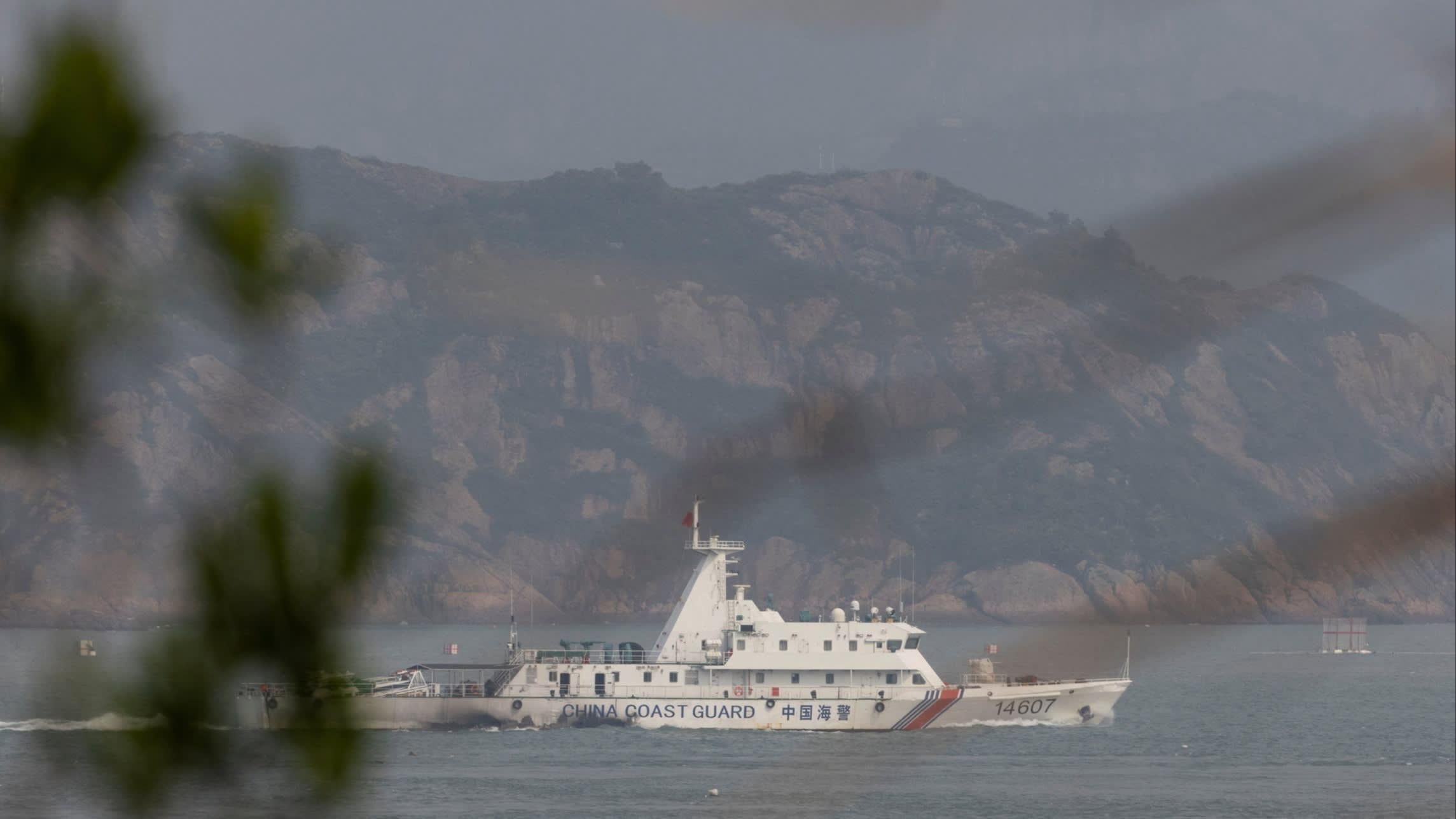
Beijing views the May agreement between Manila and Tokyo to start the maritime delimitation talks as a further provocation. Last month, it launched a “special maritime traffic enforcement operation”, sending its coastguard ships into the area east of Taiwan.
China said the patrol inspected 198 vessels passing through the area and “rectified violations” with three ships as well as conducting other activities, such as a hydrographic survey and patrolling near undersea cables.
China said the patrols were “entirely justified and necessary, and constitute legitimate actions to safeguard national sovereignty and maritime rights and interests”.
Taiwan’s Coast Guard Administration has said ships approached by mainland vessels should “not respond to the so-called boarding inspections”.
Japan’s foreign ministry and the Philippines presidential office did not immediately respond to requests for comment.
Beijing’s increasingly assertive stance on Taiwan also comes as US President Donald Trump has backed off on his trade war with China. Trump agreed with Chinese President Xi Jinping at a summit in Beijing in May that the two superpowers should pursue a policy of “strategic stability”.
Xi also warned Trump that the “Taiwan question” was the most important issue in US-China relations and that “if mishandled”, it could lead to “confrontation or even conflict”.
Trump has raised the possibility of using arms sales to Taipei as a bargaining chip in negotiations with Beijing, sparking concerns over the US security guarantee for Taiwan’s self-defence. The US announced a record $11.1bn arms sale to Taiwan in December, but a further $14bn package is still awaiting approval.
Under the Taiwan Relations Act, the US is obliged to maintain the military capability to resist any use of force that would jeopardise Taiwan’s security and to provide it with sufficient weapons for its own defence.
This week, China’s foreign minister Wang Yi warned during a call with his US counterpart secretary of state Marco Rubio to treat the Taiwan issue with “utmost caution”.
Posted by IHateTrains123