
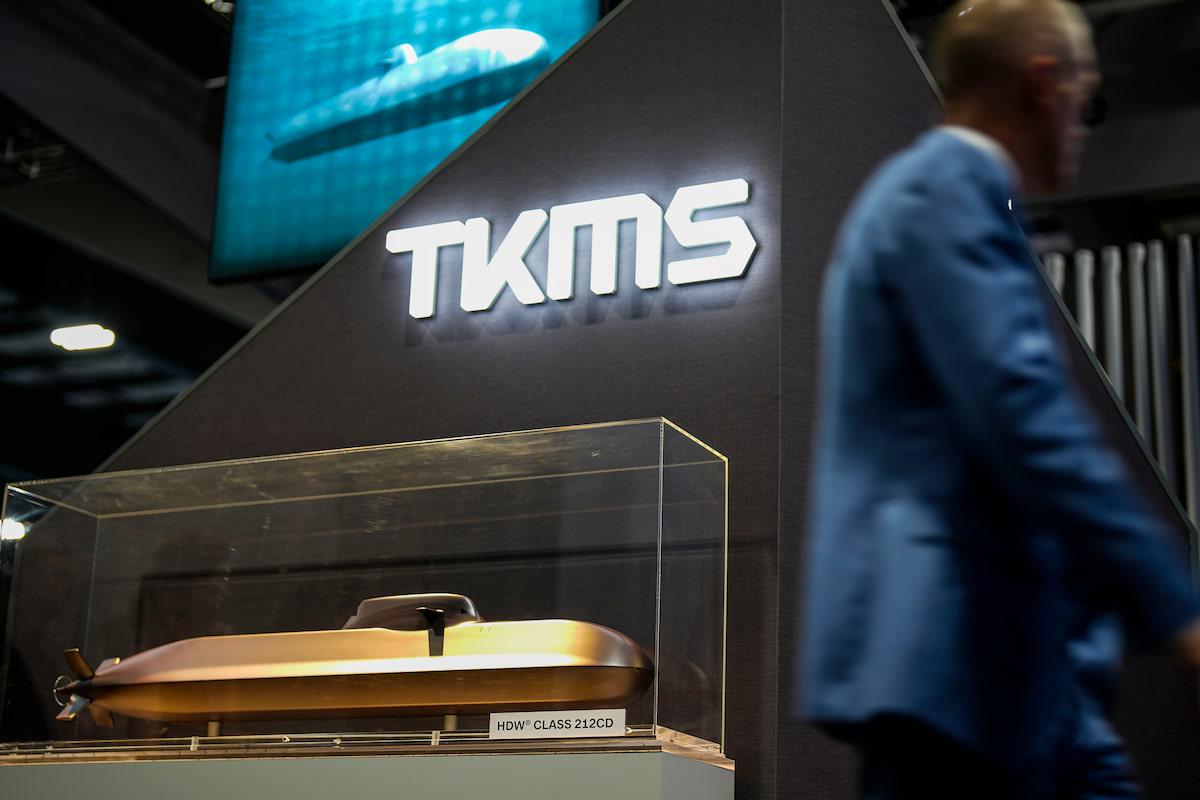
After a closely fought battle between Germany’s TKMS and South Korea’s Hanwha Ocean to build the next generation of submarines for Canada, the federal government has selected a preferred bidder.
Ottawa has chosen TKMS, The Globe and Mail reported on Monday. Prime Minister Mark Carney is set to make the official announcement later in the day in Halifax.
In choosing TKMS, Canada’s Liberal government has made one of the country’s largest defence procurement decisions: the acquisition of up to 12 new submarines that will operate well into the second half of this century. The contract is expected to be worth tens of billions for the submarines, and reaching up to $100-billion once operations, maintenance and upgrades are included. The new fleet will replace the Royal Canadian Navy’s four aging submarines that were bought second-hand from Britain almost three decades ago.
While both finalists offered platforms that met the navy’s operational capabilities in the Atlantic, Pacific, and the Arctic oceans, Ottawa’s decision ultimately reflects broader economic and strategic considerations.
By selecting Germany-based TKMS the federal government emphasized NATO interoperability, strengthening Canada’s long-term defence and industrial relationships with Europe, and protecting the nation’s Arctic region. From Ottawa’s perspective, in a rapidly shifting global economic and security environment, enhancing ties with Europe outweighs fostering new relationships across the Pacific.
The federal government made clear throughout the bidding process that industrial and economic benefits would play a significant role in its final decision. Leveraging the submarine purchase, Canada explicitly sought investment in the local auto industry – ideally a new assembly plant – from both Berlin and Seoul. However, neither the German nor Korean manufacturers were enticed to make a major direct investment in Canada, given Trump’s tariff rules and Washington’s determination to protect the U.S. auto industry.
The strength of Korea’s Hanwha bid was the promise of industrial capacity and diversification. For example, in early June, Korea unveiled “Project Beaver,” under which Hyundai Motor Company committed to manufacturing hydrogen-powered freight trucks and building charging stations in Canada beginning in 2030. Hanwha also signed an agreement with Canada’s Automotive Parts Manufacturers’ Association and Algoma Steel Inc. to build a Canadian-owned land-based facility producing military vehicles and industrial systems. These and other Hanwha initiatives were estimated to have economic benefits for Canada of more than $94–billion over the life of the project.
By contrast, the strength of Germany’s TKMS bid is technology transfer and integration into European defence networks. The German proposal would see the first submarines built in Europe, before transitioning to a complete local Canadian build for the later vessels. The bid aligns with Canada’s growing engagement with European defence initiatives, including its participation in the European Union’s Security Action for Europe (SAFE) $240-billion defence financing program supporting joint procurement and industrial co-operation. As the only non-EU participant in the initiative, Canada is uniquely positioned to deepen defence-industrial ties with Europe.
The decision to choose the German submarines has long-term strategic implications for Canada. Germany is one of Canada’s closest partners within NATO, and TKMS submarines already form the backbone of European naval fleets. Choosing the German bid allows Canada access to European defence and industrial networks at a time when the continent is investing in its own security capabilities. Selecting TKMS means long-term co–operation and technology transfer between Canada and European partners across the Atlantic and the Arctic.
TKMS’s selection as the preferred bidder does not guarantee a final contract. Ottawa and Berlin must now negotiate contractual, financial, and industrial arrangements before the acquisition is formally confirmed. If things do not go well, or if the Canadian side sees an opportunity to get a better offer, it is conceivable that the contest between Korea and Germany for the submarine contract may yet resume. However, by selecting TKMS as the preferred bidder, Ottawa has tipped it hand and revealed that strong ties to NATO and Europe are paramount in its decision-making.
Posted by IHateTrains123