
The Korea Broadcasting, Media, and Communications Commission announced on the 8th that it has designated and notified eight domestic and foreign platforms, including Naver, Kakao, Google, Meta, X, and TikTok, as large-scale information and communications service providers subject to obligations to respond to false and manipulated information under the revised Information and Communications Network Act.
These companies must establish procedures for receiving and handling reports of false and manipulated information, prepare self-regulatory operating policies, and publish transparency reports. The commission said it plans to inspect whether they are fulfilling their legal obligations and investigate and supervise their operations.
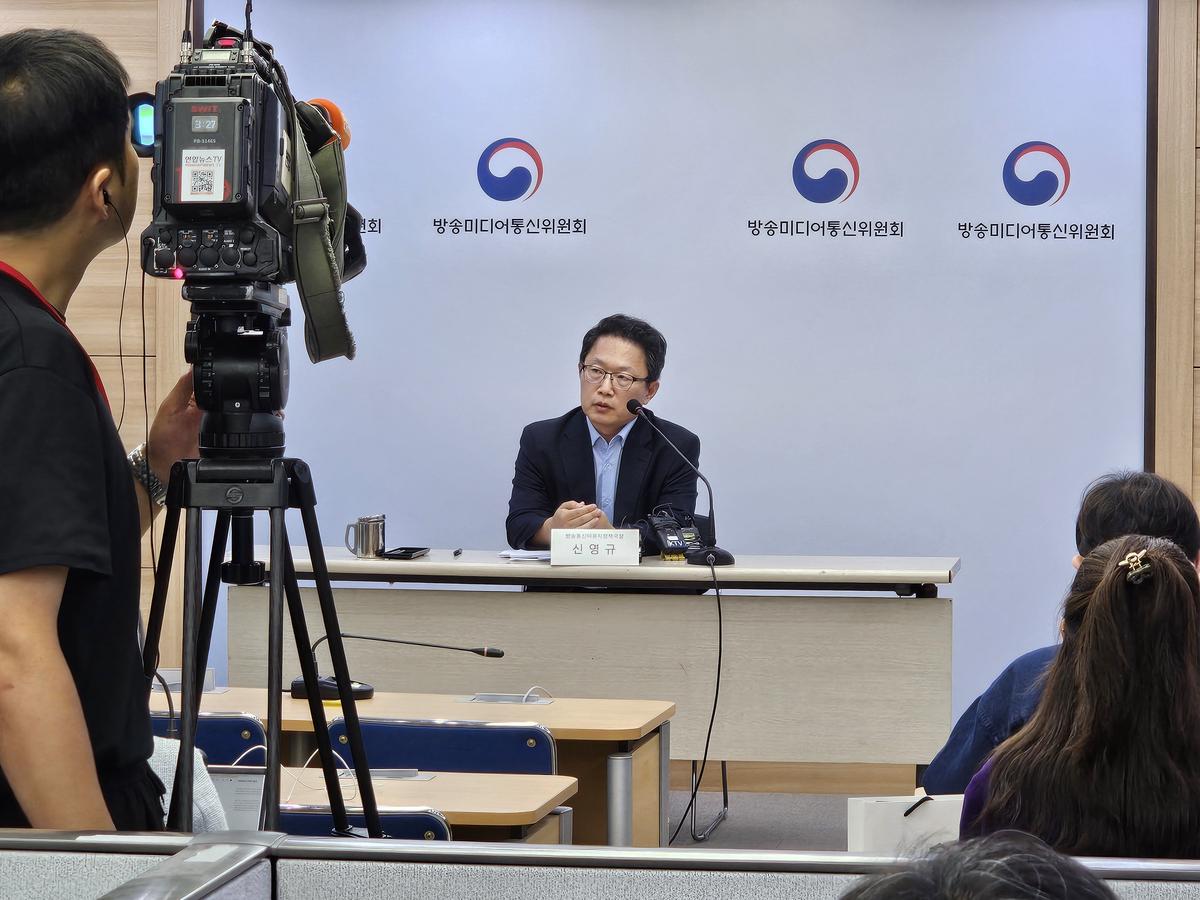
Shin Young-gyu, director general of the commission’s Broadcasting and Telecommunications User Policy Bureau, explained at a briefing held at the Government Complex Gwacheon that “the domestic companies subject to regulation are Naver, Kakao, Nate, and DC Inside, while the overseas companies are Google, Meta, X, and TikTok.”
Under the revised Information and Communications Network Act, these companies, which had an average of at least 1 million daily users over the three months immediately preceding the end of the previous year, must prepare self-regulatory operating policies to respond to false and manipulated information and operate procedures for receiving and processing reports.
They must also notify both the reporter and the person who posted the information of the receipt of the report and the result of any action taken, and publish transparency reports containing the status of their operations.
The commission said it plans to review the platforms’ self-regulatory operating policies to see whether they are properly fulfilling their legal obligations and also investigate and supervise their actual operations.
Regarding International Fact-Checking Network certification, the commission explained that JTBC is currently the only certified organization in Korea, while three additional organizations are undergoing the certification process.
Asked about criticism that some platforms still do not have sufficient functions for reporting false and manipulated information, Shin said, “We plan to review the companies’ self-regulatory operating policies and request their cooperation,” adding, “We have the authority to investigate and supervise after the fact whether companies are properly operating their self-regulatory policies.”
Posted by Freewhale98
1 Comment
1. Summary
The eight online platforms (Naver, Kakao, Nate, DC Inside, Google, Meta, X, and TikTok) must create self-regulatory policies for handling false and manipulated information, operate report reception and processing procedures, notify both the reporter and the original poster of report receipt and action results, publish transparency reports, and remain subject to oversight by the Korea Broadcasting, Media, and Communications Commission.
Importantly, **the law does not require the platforms to automatically remove content that is reported as false or manipulated**. Instead, it requires them to have clear procedures, operate their own moderation policies, process reports, disclose how those policies are enforced, and remain subject to government oversight regarding whether those procedures are properly implemented.
2. How is this related to the sub
(1) Online Disinformation: Korea implanted EU DSA-style law to regulate online platforms to counter online disinformation.
(2) Free Speech: New law is facing backlash from Americans and conservative politicians as they accuse the government of violating “free speech”. Trump administration is enraged and threatened sanctions if this law targets the “free speech” of American Big Tech companies.
3. My opinion
1987 constitution has rather narrow definition on “freedom of expression” compared to America’s free speech amendment. It bans censorship on press and publication but allows freedom of expression to be limited based on the principle of social tranquility, public morality and the respect for the rights of others.