
Original text: https://archive.fo/7dVw3
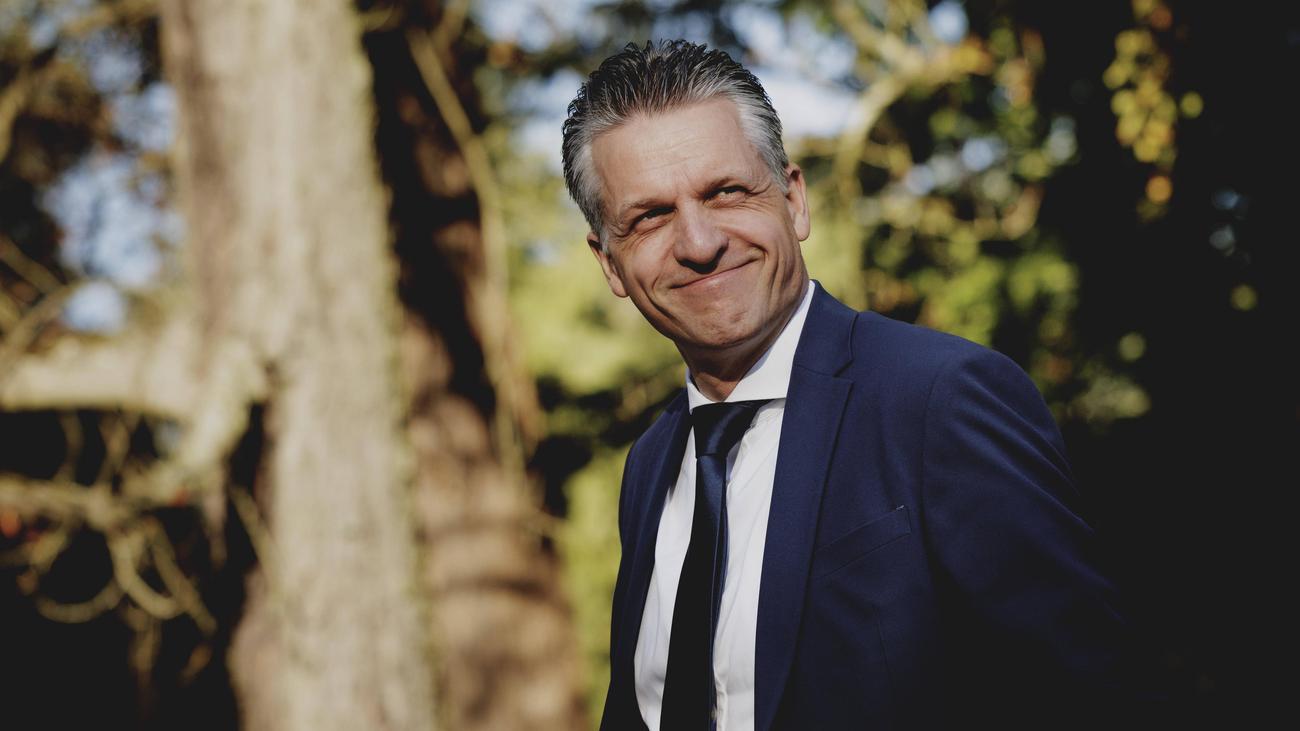
Thorsten Frei, a close associate of the Chancellor, is set to become the new leader of the Union parliamentary group. He has previously been involved in many of the government's mistakes.
So, the choice has fallen on the solution that was both obvious and—from the perspective of Chancellor Friedrich Merz—presumably the safest: Thorsten Frei—52, Catholic, and a father of three from Baden-Württemberg—is set to become the new parliamentary group leader of the CDU/CSU, succeeding Jens Spahn.
Reportedly, this was the position Frei had most wanted from the start of the Black-Red government. His second choice, it was said, would have been Interior Minister. He had to deal with the Chancellor first—working in the Chancellery, where the two share the same floor. Merz tends to surround himself with people he trusts and whose character he can gauge; Frei fits both criteria. Moreover, he comes from within the parliamentary group itself; from 2021 to 2025, Frei served as First Parliamentary Secretary (PGF)—the second most important role after the group leader.
On domestic policy, Frei is considered a hardliner: a few years ago, he contemplated abolishing the individual right to asylum. As the son of a police officer, security issues are close to his heart, and he recently advocated for bolstering the intelligence services.
On a personal level, he is respected and liked across party lines. Frei is someone everyone gets along with—tough on the issues, yet always friendly in tone. If some members of the parliamentary group are shedding a tear that the role didn't go to the CSU’s Alexander Dobrindt, it is because Frei was involved in many of the mistakes the government made during its brief term in office—and there were quite a few of them.
When the Union voted alongside the AfD in early 2025—even before its actual term in office began—it played out like a slow-motion accident. As Parliamentary Group Manager, Frei shared responsibility for managing the situation (the parliamentary group leader was Friedrich Merz); the CDU—supposedly so seasoned in the exercise of power—stumbled into the entire affair in a way that prompted a worrying question: Is this the force that intends to stop the AfD? The CDU prefers not to be reminded of the incident, but the SPD and the Greens have not forgotten it. So, is the supposedly safe solution really the more stable one?
Frei himself considers the concerns regarding his management skills to be unfair. The accusations that, as Head of the Chancellery, he spent too little time in the office and too much in the public eye actually stem primarily from his early days—specifically, an instance where he skipped a coalition committee meeting in favor of a local savings bank event. Moreover, Heads of the Chancellery inevitably serve as lightning rods for criticism; there is hardly one among them who hasn't, at some point, been labeled part of the problem rather than part of the solution. Frei maintains that he has learned a great deal over the past year.
For a long time, the machinery had been running roughly—with friction between the Chancellor (who spent much of his time abroad for good reason), the Chancellery, and the parliamentary groups. In January of this year, Merz dismissed his chief of staff, Jacob Schrot. To many in his party, this was a sacrificial move—and evidence that the Chancellor’s own learning curve was rather shallow. After all, a more extensive restructuring would have amounted to an admission by Merz that his initial staffing choices had been suboptimal.
Government operations only began to improve in recent weeks after Jens Spahn, Alexander Hoffmann (CSU), and Matthias Miersch (SPD) were brought into the so-called "Sherpa process"—the circle of preliminary negotiators who scope out and sort through issues before the party leaders make the final decisions.
Relations with the federal states remained rocky right up to the end, and over fundamental issues at that. The states remained unmoved and let the "relief bonus"—with which the coalition had hoped to delight employees at the employers' expense—fail in the Bundesrat. Across party lines, officials from the states noted that Merz, unlike many of his predecessors, had never sat in the circle of state premiers. That said, the same applied to Angela Merkel.
In the view of many within the CDU and CSU, the parliamentary group would have voted for Dobrindt as their new leader. Yet Markus Söder and Friedrich Merz made the decision regarding the new frontman pretty much on their own. Ultimately, it is said, the deciding factor for Söder was that he did not want Dobrindt to become too prominent a figure alongside himself—the central star of the Christian Social Union. Furthermore, many in his party believe Söder wanted to keep Ilse Aigner—the president of the state parliament in Munich—from taking over the ministerial post by promoting her straight to the role of Federal President instead. Having two CSU figures in top offices would simply be too much.
Nina Warken, the health policy spokesperson, did not get the job either. In recent days, CDU women had strongly urged the Chancellor to consider female politicians in the reshuffle. Warken herself, however, was reportedly not particularly enthusiastic about the prospect of working for the parliamentary group in the near future. Her moving into the Chancellery now is considered unlikely.
Matthias Miersch (SPD) and Jens Spahn had recently put on such a conspicuous display of "bromance" as a parliamentary group leadership duo that they were already getting on the nerves of some members in both caucuses. Yet it was genuine—and hard-won. A year ago, the government—and the relationship between the SPD and the Union—was at a low point; contrary to its pledge, the CDU had failed to appoint Frauke Brosius-Gersdorf as a constitutional court judge. Miersch and Spahn decided: We need to lock arms. In August, they held a joint strategy retreat in Würzburg with Alexander Hoffmann; the "spirit of the Hotel Rebstock" was subsequently praised and celebrated by all; in September, Spahn and Miersch took the night train to Kyiv.
Frei, however, will not be able to forge an instant bond with Miersch on a trip; the transition is taking place while business is in full swing. At least they already know each other in two capacities: from the parliamentary group and from their work on the reform package. As parliamentary group leader, Frei must now secure majorities for the reforms he previously orchestrated from the Chancellery. He will hardly be able to pin the blame on the Chief of
As the saying goes: The void he left behind replaced him completely. In this case, a strategically crucial void must be filled. It has not yet been decided who will succeed Frei at the Chancellery. Government sources stated that respect for the office of parliamentary group leader demanded that attention be focused "solely on this personnel decision." The succession at the Chancellery would be handled separately, with the Chancellor set to make a decision "swiftly."
Text translated by Google Translate, mistakes are my own.
Posted by IHateTrains123
1 Comment
The long and short of it is that Thorsten Frei is the new parliamentary group leader, although a well liked parliamentarian he does carry a significant amount of baggage as previously he pushed the CDU to vote with the AfD as parliamentary group manager.
!ping Germany