
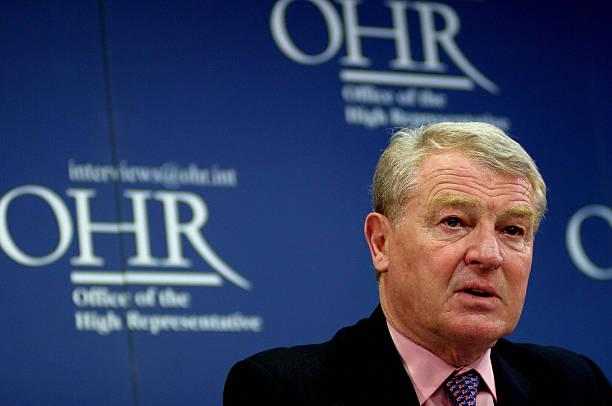
I'll use Paddy Ashdown's time in Bosnia as an example because it seems one of the clearer examples of this. For context, Ashdown was a Royal Marine turned politician and leader of the UK Liberal Democrats in the 90's. After Bosnia's war ended in 1995 he became the UN High Representative there in 2002, running the post-war stabilisation effort under the Dayton Agreement.
The position came with the “Bonn Powers”, which allowed the High Representative to impose legislation and sack elected officials with zero right of appeal. Ashdown used these powers extremely aggressively.
During his tenure, he removed around 90 politicians from office, sacked the head of an intelligence agency, alongside other public officials such as judges, and intervened extensively in the judiciary, police and civil service. He forcibly merged the separate ethnic police, customs and judicial services into unified state level institutions. After evidence emerged that Ratko Mladić had been protected by Republika Srpska's security establishment, Ashdown just abolished the entity armies and defence ministries outright and forced the creation of one unified Bosnian army by 2006. He also imposed a state-level tax administration and used his powers to force refugee returns and other post-war reforms.
In other words, an unelected international official was given extraordinary coercive powers and used them to force through institutional reforms intended to create a functioning, multi-ethnic liberal democracy that could eventually govern itself without international supervision.
Is this a viable model of liberal state-building? While it worked fairly well in Bosnia, it completely failed in Afghanistan. Could something resembling the “Bonn Powers” ever be replicated elsewhere?
Is there even a case for using authoritarian/coercive means temporarily in order to establish liberal institutions and rule of law?
Posted by Time_Sandwich7443
1 Comment
Freedom or death equality