
British defence group Cambridge Aerospace has raised $300mn to develop its missile and drone interceptor systems in a deal that values it at $3.4bn, cementing its status as one of the UK’s most valuable start-ups.
The funding round, the first time Cambridge has announced a capital raise, was led by San Francisco-based DFJ Growth, a prominent backer of Elon Musk’s SpaceX.
The deal takes the total funding Cambridge has raised since its founding in 2024 to more than $630mn, according to chief executive Steven Barrett. Other prominent backers include Spark Capital, Lux, Accel, Elad Gil and Lakestar.
Britain boasts just a handful of UK-headquartered defence tech companies valued at more than $1bn, including maritime specialist Kraken Technology Group.
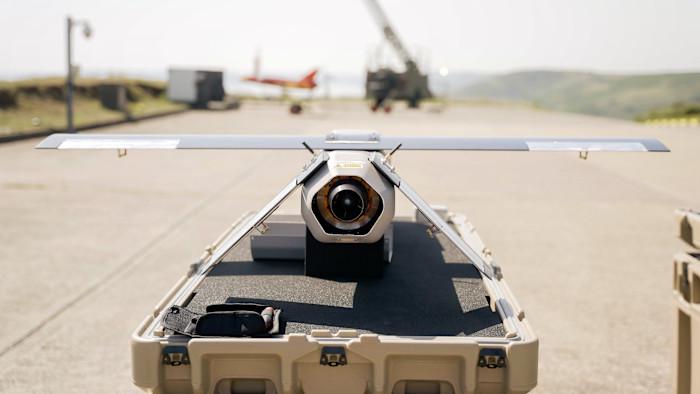
Cambridge plans to use the proceeds to invest in scaling up production of its two main systems, a rocket-powered interceptor missile called Starhammer built for high-speed targets such as ballistic missiles, alongside a low-cost anti-drone and cruise missile interceptor Skyhammer.
Skyhammer is already in production, with plans to produce 2,500 a month by the end of March next year. Starhammer is expected to come to market next year.
“We’re growing rapidly. We’ve got 250 people now working mostly in the UK so far, but we also have a growing presence across other countries,” said Barrett.
Barrett said the company had no current plans to appoint a new chair after Grant Shapps, the former Tory defence secretary, stepped down in June. Shapps was found to have breached the rules on ex-ministers’ business appointments. Shapps had insisted he was not fulfilling the role of chair in its ordinary sense of chairing the board and being a company director.
“The role was only ever titular in nature and as such we have no plans to appoint anyone new into that role,” said Barrett.
Unlike some of its defence tech peers, Cambridge has already received several contracts from the UK Ministry of Defence, including a multimillion-pound contract to supply its Skyhammer interceptors to the British Armed Forces and Gulf partners.
The Skyhammer is “an example of the low-cost interceptor missiles our Armed Forces [need] to deter adversaries and keep our country safe,” said defence secretary Wes Streeting.
Outside of the UK, the company has a presence in Germany, Poland, Norway, Ukraine and Australia.
Barrett said Cambridge was also in talks with the US government about providing its systems. Cambridge’s Skyhammer was tested by the US Army in a series of exercises by a brigade focused on air and missile defence across Europe and Africa, according to a May announcement.
Cambridge has previously raised unannounced rounds of funding including one earlier this year at a more than $1bn valuation after taking on new investment last year, the FT previously reported.
The war in the Middle East has underlined the cost asymmetry of firing expensive missiles from air-defence systems such as the US-made Patriots to neutralise Iran’s cheap Shahed drones, the same weapons Russia has used in its war against Ukraine.
“Inexpensive unmanned aerial drones have emerged as a very disruptive and effective offensive weapon,” said Randy Glein, managing partner at DFJ Growth.
Barrett said the company was able to produce its interceptors at lower cost and in greater volume due to using modern manufacturing methods such as 3D printing and AI. Cambridge has also brought in-house the production of key components and has developed its own solid rocket motors, called Nightstar.
Solid rocket motors have been in short supply globally given soaring demand for missiles and interceptors. Cambridge is building Europe’s largest factory for the rocket motors in Norfolk.
“We decided that we had to produce solid rocket motors not just for ourselves but for our sovereign UK and European supply chain and also the chemicals as well,” said Barrett.
Barrett also said Cambridge may explore acquisitions of other start-ups alongside its other growth plans as it aims to emerge as a leading next-generation defence contractor across different markets.
Posted by Desperate_Wear_1866
1 Comment
A British defence startup being able to quickly reach a valuation of £3.4 billion is a positive sign for the UK’s defence industrial complex and reflects well upon the broader British startup ecosystem.
Already receiving government contracts is a good sign, and could help Britain expand its own air defence capabilities while also scaling up for sales to Europe.