“So the question is, how do you price it for the really high users?” Roughly a third of households, he added, still don’t have water meters, instead paying a flat rate linked to the size of their property — giving them no economic incentive to restrain their consumption.
As for surge pricing during droughts, clearly it can’t magic new water supply into the system like a sudden jump in rates can pull Uber drivers into action. But, while Ofwat and Water UK say no such measures are being contemplated, they can be an effective way of managing demand, according to a [recent study on emergency rate increases](https://www.rff.org/publications/working-papers/conservation-and-distributional-consequences-of-pricing-scarce-water-during-droughts/) by Californian utilities.
Household water rates are clearly just one part of this problem. Britain’s water woes call for serious government action to strengthen standards and drive the necessary investment in infrastructure. The CEW report highlighted the often perverse policy incentives around water use for agriculture and industry, which use far more water than households in most major economies.
But the way we price this vital resource, whether for household or business users, is long overdue a rethink. The fact that this argument is being championed by Britain’s much-derided water sector shouldn’t deny it a hearing.
BritRedditor1 on
Very interesting on water pricing
Spartan-24 on
I think as far as America goes, we need to restructure southwestern water law. It’s insane some of the laws in a growing area with limited water supply.

4 Comments
Welcome back.
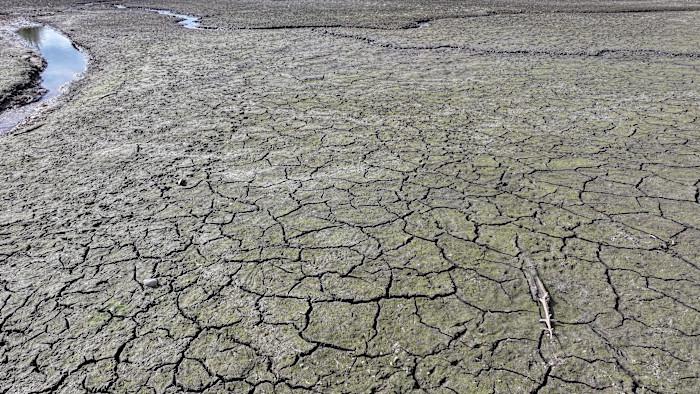
Last month was by far [the driest July](https://www.metoffice.gov.uk/about-us/news-and-media/media-centre/weather-and-climate-news/2026/historic-july-sees-record-dryness-unprecedented-sunshine-and-exceptional-warmth) in England and Wales since records began in 1836. Just 6.5mm of rain fell — a 10th of the long-term average, and less than half the previous record low.
Climate change is adding to the strain on a British water system that’s already creaking thanks to years of unsustainably high usage, [poor management](https://as.ft.com/r/032a34bc-b44a-4ce1-9258-bb93d0e50829) and [soft regulation](https://www.ft.com/content/f2a9978e-4317-4163-acfe-f2c0b1d9276b?syn-25a6b1a6=1).
Now the country’s widely loathed water companies are exploring new charging approaches that would mean higher bills for heavier users. The concept is proving controversial — but its introduction is long overdue, as I explain below.
Why water pricing needs to change
Just before Halloween in 2011, a fledgling ride-hailing start-up named Uber published a blog introducing users to a concept it called “surge pricing”.
In response to the huge demand from partygoers, Uber ride fees would increase by up to 100 per cent, to spur more drivers into action. This would ensure customers didn’t end up “alone at home while the zombies slowly surround you”, wrote then-chief executive Travis Kalanick.
Should British water consumers brace themselves for something similar? The past few days have seen a flurry of headlines about future “surge pricing” in the sector. Regulators are considering allowing new billing structures that could mean higher charges for heavy use, and permitting suppliers to use water scarcity as a factor in bill calculations — prompting speculation about rate rises during periods of drought.
The story comes at a delicate moment. The UK has been enduring one of its worst droughts in recent history, prompting Prime Minister Andy Burnham to label the country a “[tinderbox](https://www.ft.com/content/8e790ba0-0c3d-47dd-9955-0b98a808ae0c?shareType=nongift)”. Separately, discontent with its privatised water companies has been reaching new heights, after years of [inadequate infrastructure investment](https://www.ft.com/content/551e64c9-adc3-4a1b-a2e5-3718a1404191?shareType=nongift) that have led to widespread sewage spills.
Surfers protest against sewage pollution at Gyllyngvase beach in Falmouth, Cornwall © Emily Whitfield-Wicks/PA
Ofwat, the water regulator, said claims that suppliers could increase prices during a drought were “simply wrong”. The media coverage, it said, had misrepresented ongoing trials of new charging structures “that help customers save water and, in many cases, save money”.
Water UK, the sector’s trade group, gave a [plaintive response](https://www.water.org.uk/news-views-publications/views/no-drought-surge-pricing-heres-whats-actually-happening) to suggestions that the potential new billing systems will be another way for companies to line their pockets.
Water companies’ revenue is capped by the regulator, it pointed out, meaning that any changes in fees would reallocate the cost burden among customers rather than increasing the aggregate amount they pay. While it said no UK water company had proposed raising the cost of water during droughts, it added that the sector needed to “explore better and more modern ways of charging for water”, as the country faces dwindling supplies in the coming decades.
This sector has done much to earn the public distrust it now faces. In the 37 years since Margaret Thatcher privatised the 10 regional water authorities in England and Wales, the sector has [paid out tens of billions](https://as.ft.com/r/15a4bac0-63b5-4700-850b-deb2646f04d8) to investors while woefully underinvesting in infrastructure, with [toxic ecological results](https://www.ft.com/content/1fd567d6-1591-4256-8976-95fac46f522b?shareType=nongift).
But on the need for pricing reform, the water companies have a point.
[More than a quarter](https://www.gov.uk/government/publications/national-framework-for-water-resources-2025-water-for-growth-nature-and-a-resilient-future/2-current-and-future-pressures-on-water-resources-an-overview-national-framework-for-water-resources-2025) of groundwater bodies in England and Wales are currently being exploited at an unsustainable rate, according to government estimates. Climate change is adding to the problem, worsening droughts while also shortening the “recharge season” during which groundwater and reservoirs are replenished by heavy rain. Without action, the government says, the country could face a public water supply deficit of [up to 5bn litres per day](https://www.gov.uk/government/publications/national-framework-for-water-resources-2025-water-for-growth-nature-and-a-resilient-future/forewords-executive-summary-and-structure-national-framework-for-water-resources-2025)within 30 years.
A dried-up pond on Putney Heath, south-west London, last week © Getty Images
Similar problems, and far worse ones, are faced around the world — as was made starkly clear by a 2024 [report](https://watercommission.org/#report) from the Commission on the Economics of Water, an international expert group with co-chairs including World Trade Organization head Ngozi Okonjo-Iweala and climate scientist Johan Rockström. It argued that higher prices for water are needed, warning that “the widespread under-pricing of water today encourages its profligate use across the economy”.
Crucially, it noted, pricing reforms must be carefully targeted to reduce wasteful consumption by heavy water users, rather than slamming low-income households that already struggle to afford basic services.
Water authorities in much of the world have already been gradually moving towards so-called increasing-block tariffs, whereby larger amounts of water consumption come at a progressively rising price.
This approach is now, belatedly, being explored in England and Wales, where water providers have been running trials of new pricing schemes with Ofwat’s encouragement.
Affinity Water, for example, has tried out a model for some of its customers in south-east England, with each household getting 30,000 litres a year for free (the country’s average household water consumption is about 118,000 litres a year). Usage beyond the free allowance was charged at a progressively rising rate. Its peer South West Water has been experimenting with a model that it said would reduce bills for 90 per cent of customers, while raising them for the heaviest users.
Bottled water distribution points were set up in Kent this summer after supply disruptions driven by soaring temperatures and failing infrastructure © Gareth Fuller/PA Wire
“If you look at the distribution of water use, there’s a long tail of very, very high usage,” says Mike Keil, chief executive of the Consumer Council for Water, an independent public body that represents water and sewerage users in England and Wales.
“So the question is, how do you price it for the really high users?” Roughly a third of households, he added, still don’t have water meters, instead paying a flat rate linked to the size of their property — giving them no economic incentive to restrain their consumption.
As for surge pricing during droughts, clearly it can’t magic new water supply into the system like a sudden jump in rates can pull Uber drivers into action. But, while Ofwat and Water UK say no such measures are being contemplated, they can be an effective way of managing demand, according to a [recent study on emergency rate increases](https://www.rff.org/publications/working-papers/conservation-and-distributional-consequences-of-pricing-scarce-water-during-droughts/) by Californian utilities.
Household water rates are clearly just one part of this problem. Britain’s water woes call for serious government action to strengthen standards and drive the necessary investment in infrastructure. The CEW report highlighted the often perverse policy incentives around water use for agriculture and industry, which use far more water than households in most major economies.
But the way we price this vital resource, whether for household or business users, is long overdue a rethink. The fact that this argument is being championed by Britain’s much-derided water sector shouldn’t deny it a hearing.
Very interesting on water pricing
I think as far as America goes, we need to restructure southwestern water law. It’s insane some of the laws in a growing area with limited water supply.
just build more water