
The ongoing trade dispute with the U.S. is an ‘existential threat’ for the Canadian economy and Prime Minister Mark Carney should consider starting this fall's parliamentary sitting with a Throne Speech, says former Liberal MP Joe Jordan.
Liberal MPs are strongly in support of Prime Minister Mark Carney’s move to suspend trade negotiations with the United States, but are concerned that if the two sides do not resume talks, it could have a “very frightening” and long-term impact on Canada’s economy. Some are predicting negotiations will restart by Sept. 8.
“Very frightening, absolutely very frightening,” said Liberal MP Judy Sgro (Humber River-Black Creek, Ont.), chair of the House International Trade Committee, in an interview with The Hill Times. “And I think we, as Canadians, need to stand together and help each other. Whatever that means, we’ve got to be able to do it and to help each other weather the storm.
“I’m an optimist, and I believe that before Sept.8, when we start to introduce our counter-tariffs, we will be back at the [negotiation] table.”
The trade talks that had been going on for about a year between Canada and the U.S. ended on Aug. 21, when the Canadian side walked away from the negotiating table.
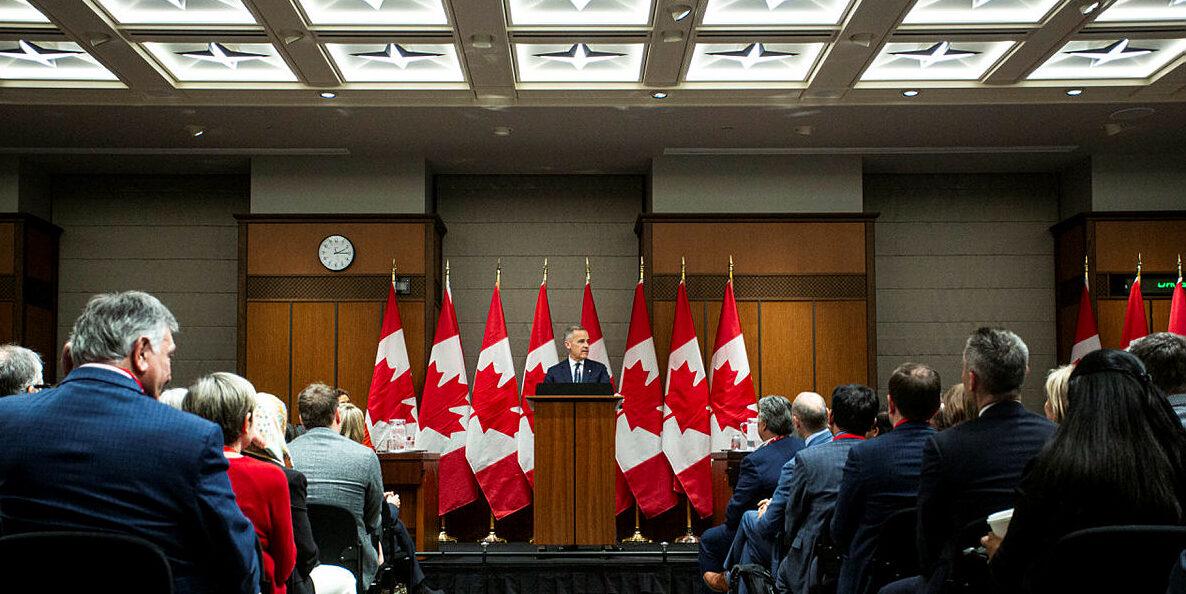
In his Aug. 22 press conference in the West Block, Carney (Nepean, Ont.) described the final draft agreement as “unfair” and “uneconomic.” He also said that some of the points in the proposed offer—including those touching on French-language protections and Canada’s ability to maintain trade relationships with other countries—would have undermined our sovereignty.
The U.S.’s terms “undermined the net benefits for Canada, and called into question the reliability of any deal. In short, they asked too much, and they offered too little,” said Carney.
Bloomberg reported that Canada’s Ambassador to the U.S. Mark Wiseman “likened the negotiations to a handshake deal to buy a house—only for the prospective buyer to learn appliances weren’t included, the furnace had no warranty, and neither the garage nor yard is on the same property, and ultimately walk away.”
The American government, however, has pointed a finger at the Canadian side for proposing last-minute conditions that were unacceptable to Washington.
“We had agreed to, as I’ve shared before in the press, really the best deal available to any country on the planet with respect to Canada,” U.S. Trade Representative Jamieson Greer told CBC News on Aug. 27.
“When [Canadian officials] came back, they had some additional views. They had some additional requests. They had some additional things that were too much for the United States.”
After talks collapsed, the U.S. imposed 50-per-cent tariffs on $20-billion of Canadian products. In retaliation, this country has also imposed up to 50 per cent worth of tariffs on American imports to Canada, which will come into effect on Sept. 8. The feds have also announced a $7.5-billion package to help domestic industries affected by Trump’s new tariffs.
Carney and Canada-U.S. Trade Minister Dominic LeBlanc (Beauséjour, N.B.) held a virtual meeting with the Liberal caucus on Aug. 20—the day before talks broke down—that left MPs with the impression that negotiations were moving in a positive direction and that a deal would most likely be signed, according to two Liberal MPs who attended the meeting but declined to offer any on-the-record comment because the meeting was confidential.
However, LeBlanc reminded MPs more than once during this meeting that they should not consider a deal done until it was actually signed, two Liberal MPs told The Hill Times. LeBlanc and Carney also answered MPs’ questions during this meeting.
On Aug. 23—two days after Carney said he was ending the talks—the prime minister and LeBlanc held another virtual meeting with Liberal MPs. The caucus was briefed on why the Canadian side walked away, and what the government’s strategy would be going forward. Liberal MPs who attended these meetings told The Hill Times that they were satisfied with the briefing. No one who spoke to The Hill Times expressed concerns about Carney’s decision.
The sense MPs got at the Aug. 20 meeting was that “the major points were ironed out. [There were] minor—still secondary—points that needed to be ironed out, and I think that’s where it fell apart. Too many secondary points were pushed ahead by the Americans,” said a Liberal MP who was provided the opportunity to speak on a not-for-attribution because both meetings were confidential.
Meanwhile, Sgro—a 10-term MP and a former cabinet minister—said she’s very “disappointed” that the negotiations had collapsed, but supported Carney’s decision not to sign the deal. She said it is difficult to negotiate with the Trump administration when the American government keeps surprising Canadians by changing the terms of an agreement.
Sgro said the federal government has plans in place to support industries affected by the tariffs, but hoped that the outstanding issues would be resolved before those measures are needed. She added that these are still early days after the suspension of negotiations, and that the government will have to remain flexible in responding to the needs of the industries most affected.
Sgro also said discussions are taking place among political parties about lowering the temperature, developing strategies to resolve the outstanding issues with the U.S., and working together to address the challenge.
“People have to know that we’ve got their back, and we’re going to do the very best we can to help everybody weather the storm,” said Sgro. “We’ll all be doing the very best we can to try to find solutions to the various issues that have come up. It’s in everybody’s interest—both the United States as well as Canada—to resolve these issues and to build, and continue to build a great North American economy together.”
A third Liberal MP said that all caucus members support the government’s handling of the trade file and, based on the national polls, around 71 per cent of Canadians echo that sentiment. They said the government will mitigate effects, and that they may have to put in some special spending programs.
Ford’s comments, Trump’s name games could make reviving talks tricky, says a Liberal MP
Greg Lyle, president of Innovative Research, said the Liberals are currently polling positively with Canadians because of the rally-around-the-flag effect, but things could change in the medium to long term. He cited projections from some economists that suggest that more than 90,000 jobs could be lost as a result of these tariffs, and that this scenario would have a negative effect on inflation, which will further complicate the situation. Also, the impact of AI will compound the negative effect on the job situation, he said.
If Canadians are asked in three years if they are better off now than they were at this point in time, many will say ‘no,’ according to Lyle.
“And then the question will be, ‘Should Carney have done more or less to help you?’ And it will be very difficult for him to get people not to say he should have done more,” said Lyle.
A fourth Liberal MP said that walking away from the negotiation table was the only option left because the proposed deal did not meet the benchmarks set by Ottawa. They said the government will next have to renegotiate the Canada-U.S.-Mexico Agreement, and that accepting the proposed deal on tariffs would have left this country in a weaker position heading into other trade talks. They said that while everyone is currently supportive of the government’s decision, it remains to be seen whether that support will continue over the longer term.
“Once the pain settles in, are people going to continue to be as patriotic and as supportive? That’s a million-dollar question,” said the MP, who also spoke on a not-for-attribution basis to share their candid views.
“Had we taken that deal, we’d have undermined ourselves in a very, very big way.”
The MP said that, aside from recent comments from Ontario Premier Doug Ford—which included the premier saying publicly that Trump has “a lot of room to kiss my ass”—the Canadian side has maintained the “high road.” However, Trump’s remarks about changing the name of Lake Ontario have further muddied the waters, according to the MP, making it more difficult to lower the temperature and revive any semblance of negotiations.
Former Liberal MP Joe Jordan, in an interview with The Hill Times, described the trade issue as an “existential threat” because about a trillion dollars worth of goods and services are exchanged between the two countries each year. He said that because of the significance of this issue, Carney should start this fall’s parliamentary sitting with a new Throne Speech in which the government should identify the problem, who will be impacted, and the measures that will be taken to mitigate its negative impact on the Canadian economy.
“That’s a tool in the parliamentary toolbox, and it might be appropriate to give us some serious consideration,” said Jordan, who in the past served as parliamentary secretary to former prime minister Jean Chrétien, and is now a senior associate with Bluesky Strategy Group.
Posted by IHateTrains123
1 Comment
It’s highlighted in the article, but really so much of this rides on if Canadians are willing to tolerate what could be a *deep* recession if the trade war goes on. The one inviolable truth of Canadians that one thing that they all pretty much agree on is that they are *not* Americans, that Canada is different from America (and having lived here now for 3 years it very much is), Trump truly trying to make Canada a vassal is a red line for sure for most Canadians.
I guess gen z Canadians is the big question, there is a big chunk of them that see the lower taxes, higher salaries, the better weather, and questions what Canada actually does for them.