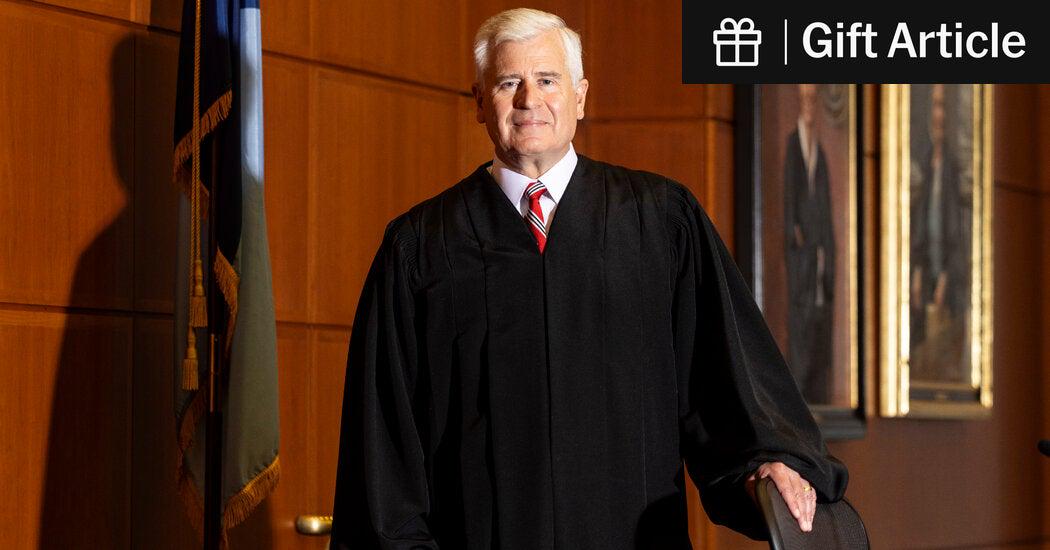
*In a rare interview, Patrick Schiltz, who served as the federal court’s chief judge last winter, called the administration’s actions “a grave threat to the rule of law.”*
> Judge Patrick J. Schiltz’s warning was stark.
>
> Immigration and Customs Enforcement had violated nearly 100 orders issued by Minnesota’s Federal District Court during the month of January, including some mandating the release of undocumented immigrants from detention.
>
> The violations needed to stop immediately. “ICE is not a law unto itself,” Judge Schiltz wrote in his Jan. 28 order.
>
> Judges around the country took notice, not only of the scale of the allegation but because such a harsh reproach was coming from the pen of Judge Schiltz, a George W. Bush appointee with almost 20 years of experience on the bench. He clerked for Supreme Court Justice Antonin Scalia in the 1980s and has enjoyed close ties to the conservative legal establishment for decades. This was not the profile of a judge likely to engage in a high-stakes standoff with the White House.
>
> In a rare 90-minute interview seven months later [with the NYT], Judge Schiltz said his order had been prompted by concern that the Trump administration’s disregard for court orders was clogging his courthouse to a near standstill, contributing to rising tensions in the protest-filled city and, ultimately, putting the constitutional order at risk.
>
> What happened in Minnesota’s federal court, he said, “created a grave threat to the rule of law.”
> “I would say aloud to myself, ‘This just never happens,’” he added, referring to the violated orders and other unusual behavior by the Justice Department. He was in his chambers, which has signed photos of Chief Justice John G. Roberts Jr. and Justice Samuel A. Alito Jr. on the wall. Earlier in his career, he helped found a law school at a Catholic university in Minneapolis, and wrote a [renowned law review article](https://scholarship.law.vanderbilt.edu/cgi/viewcontent.cgi?article=1969&context=vlr) about the moral perils of the legal profession.
>
> Judge Schiltz, who served as the district’s chief judge from mid-2022 through June 2026, declined to discuss ongoing cases. But he and six other members of Minnesota’s federal bench agreed to speak to The New York Times about last winter’s tumult, to describe how an intense national spotlight, a deteriorating relationship with the Justice Department and a flood of lawsuits had combined to put their court under tremendous pressure.
> **“We are allowed to speak out about judicial independence,” said Judge Nancy E. Brasel, whom Mr. Trump appointed in 2018. “And so we should, in order to keep it.”**
> District court judges work alone, but as the number of cases ramped up, the judges recalled seeking one another’s counsel, meeting regularly and consulting in running email threads. Eventually, some of their clerks made an informal spreadsheet showing whom to consult on particular legal questions. Some judges built templates of legal orders so they could respond quickly to some of the detention issues that were arising again and again.
>
> **The judges said they stayed glued to their devices, fearful of missing a petition. Judge Katherine M. Menendez said she responded to one request on her iPad from the coat room of a restaurant. At dinners with friends, Judge Schiltz said he would apologetically explain why he needed to check his phones constantly. “The cost of me enjoying a movie could be somebody waking up in New Mexico the next day when they shouldn’t have,” he recalled.**
> Behind the scenes, the district’s judges were dealing with a deluge of violent threats. After major rulings, the phones in judges’ chambers would sometimes ring nonstop, with clerks logging hundreds of incoming communications each day. Judge Jerry W. Blackwell shared one anonymous email vowing to “kill u soon.” The volume of hostile communications led the bench to create its own internal system for tracking people responsible for multiple threats, supplementing the U.S. Marshals Service, which normally handles judicial security.
>
> The U.S. attorney’s office, headed by Mr. Rosen, was [losing career attorneys](https://www.nytimes.com/2026/01/13/us/prosecutors-doj-resignation-ice-shooting.html), some of whom quit in response to how the Justice Department was handling the civilian killings. The administration tried to shore up head count by borrowing lawyers from the Pentagon and the Department of Homeland Security. In a hearing before Judge Blackwell, [one melted down](https://www.nytimes.com/2026/02/04/us/politics/prosecutor-immigration-outburst.html), saying that the system was “broken.”
>
> In the interview, Judge Schiltz said that normally government agencies act as “partners” to judges in tackling challenges to the system.
>
> “But they weren’t this time,” he said. “We were really on our own.”
> In the interview, Judge Schiltz said that many of the government’s violations of his court orders appeared to be inadvertent, the result of sloppiness and a lack of legal staffing to accompany the immigration surge.
>
> “My impression was that most, if not all, of the noncompliance was due to incompetence,” he said, “not due to conscious defiance of orders*.”*
>
> At the same time, he said, the violations needed to be taken seriously. The lack of resources led to a result, he said, that should have been anticipated, and that threatened the foundations of the legal system.
>
> Obedience to court orders, Judge Schiltz said, is why people feel secure owning a home, saving money, getting married and having children.
>
> “You walk down the street, and you assume you’re generally safe because of the law,” he said. “It’s the rule of law. If you don’t have it, you have either anarchy or you have authoritarianism. You have Russia or you have China or you have North Korea.”
He’s wrong about the last part. The “lack of resources” to respond to these petitions wasn’t accidental.
BigBrownDog12 on
Best we can do is have the AG be the President’s attorney

2 Comments
*In a rare interview, Patrick Schiltz, who served as the federal court’s chief judge last winter, called the administration’s actions “a grave threat to the rule of law.”*
> Judge Patrick J. Schiltz’s warning was stark.
>
> Immigration and Customs Enforcement had violated nearly 100 orders issued by Minnesota’s Federal District Court during the month of January, including some mandating the release of undocumented immigrants from detention.
>
> The violations needed to stop immediately. “ICE is not a law unto itself,” Judge Schiltz wrote in his Jan. 28 order.
>
> Judges around the country took notice, not only of the scale of the allegation but because such a harsh reproach was coming from the pen of Judge Schiltz, a George W. Bush appointee with almost 20 years of experience on the bench. He clerked for Supreme Court Justice Antonin Scalia in the 1980s and has enjoyed close ties to the conservative legal establishment for decades. This was not the profile of a judge likely to engage in a high-stakes standoff with the White House.
>
> In a rare 90-minute interview seven months later [with the NYT], Judge Schiltz said his order had been prompted by concern that the Trump administration’s disregard for court orders was clogging his courthouse to a near standstill, contributing to rising tensions in the protest-filled city and, ultimately, putting the constitutional order at risk.
>
> What happened in Minnesota’s federal court, he said, “created a grave threat to the rule of law.”
> “I would say aloud to myself, ‘This just never happens,’” he added, referring to the violated orders and other unusual behavior by the Justice Department. He was in his chambers, which has signed photos of Chief Justice John G. Roberts Jr. and Justice Samuel A. Alito Jr. on the wall. Earlier in his career, he helped found a law school at a Catholic university in Minneapolis, and wrote a [renowned law review article](https://scholarship.law.vanderbilt.edu/cgi/viewcontent.cgi?article=1969&context=vlr) about the moral perils of the legal profession.
>
> Judge Schiltz, who served as the district’s chief judge from mid-2022 through June 2026, declined to discuss ongoing cases. But he and six other members of Minnesota’s federal bench agreed to speak to The New York Times about last winter’s tumult, to describe how an intense national spotlight, a deteriorating relationship with the Justice Department and a flood of lawsuits had combined to put their court under tremendous pressure.
> **“We are allowed to speak out about judicial independence,” said Judge Nancy E. Brasel, whom Mr. Trump appointed in 2018. “And so we should, in order to keep it.”**
> District court judges work alone, but as the number of cases ramped up, the judges recalled seeking one another’s counsel, meeting regularly and consulting in running email threads. Eventually, some of their clerks made an informal spreadsheet showing whom to consult on particular legal questions. Some judges built templates of legal orders so they could respond quickly to some of the detention issues that were arising again and again.
>
> **The judges said they stayed glued to their devices, fearful of missing a petition. Judge Katherine M. Menendez said she responded to one request on her iPad from the coat room of a restaurant. At dinners with friends, Judge Schiltz said he would apologetically explain why he needed to check his phones constantly. “The cost of me enjoying a movie could be somebody waking up in New Mexico the next day when they shouldn’t have,” he recalled.**
> Behind the scenes, the district’s judges were dealing with a deluge of violent threats. After major rulings, the phones in judges’ chambers would sometimes ring nonstop, with clerks logging hundreds of incoming communications each day. Judge Jerry W. Blackwell shared one anonymous email vowing to “kill u soon.” The volume of hostile communications led the bench to create its own internal system for tracking people responsible for multiple threats, supplementing the U.S. Marshals Service, which normally handles judicial security.
>
> The U.S. attorney’s office, headed by Mr. Rosen, was [losing career attorneys](https://www.nytimes.com/2026/01/13/us/prosecutors-doj-resignation-ice-shooting.html), some of whom quit in response to how the Justice Department was handling the civilian killings. The administration tried to shore up head count by borrowing lawyers from the Pentagon and the Department of Homeland Security. In a hearing before Judge Blackwell, [one melted down](https://www.nytimes.com/2026/02/04/us/politics/prosecutor-immigration-outburst.html), saying that the system was “broken.”
>
> In the interview, Judge Schiltz said that normally government agencies act as “partners” to judges in tackling challenges to the system.
>
> “But they weren’t this time,” he said. “We were really on our own.”
> In the interview, Judge Schiltz said that many of the government’s violations of his court orders appeared to be inadvertent, the result of sloppiness and a lack of legal staffing to accompany the immigration surge.
>
> “My impression was that most, if not all, of the noncompliance was due to incompetence,” he said, “not due to conscious defiance of orders*.”*
>
> At the same time, he said, the violations needed to be taken seriously. The lack of resources led to a result, he said, that should have been anticipated, and that threatened the foundations of the legal system.
>
> Obedience to court orders, Judge Schiltz said, is why people feel secure owning a home, saving money, getting married and having children.
>
> “You walk down the street, and you assume you’re generally safe because of the law,” he said. “It’s the rule of law. If you don’t have it, you have either anarchy or you have authoritarianism. You have Russia or you have China or you have North Korea.”
He’s wrong about the last part. The “lack of resources” to respond to these petitions wasn’t accidental.
Best we can do is have the AG be the President’s attorney