
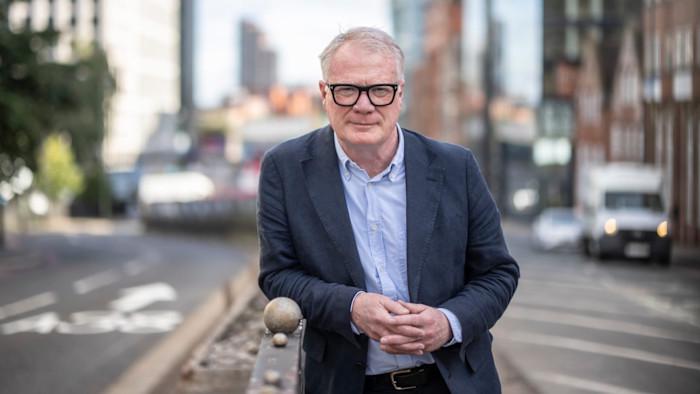
UK chancellor John Healey has been urged by the Labour mayor of the West Midlands to water down Britain’s electric car production targets to prevent damage to carmakers and their suppliers across the region.
Richard Parker told the FT he had written to Healey to urge him to protect the automotive industry by relaxing as much as possible Britain’s ambitious zero-emission vehicle (ZEV) mandate requiring 80 per cent of all new cars sold to be all-electric by the end of the decade.
“There isn’t that demand for electric vehicles, and imposing such a burden on the car industry that is not just crucial to our regional economy . . . is a burden that they will find really difficult to bear,” he said.
The government has launched a consultation on allowing motorists greater freedom to buy hybrid options by reducing the current all-electric target, which climbs every year, to either 50, 60 or 70 per cent by the end of the decade.
Hybrid vehicles will make up the remainder, with the government sticking to its pledge to end the sale of new petrol and diesel vehicles by 2030.
Parker claimed there was near-unanimous support from the car industry and its suppliers for the 50 per cent option.
Despite a rise in EV sales on the back of rising fuel prices, carmakers have struggled with lower margins on the vehicles and faced increased competition from Chinese rivals’ more affordable offerings.
Jaguar Land Rover (JLR), which is owned by India’s Tata Motors, recently announced that it would cut 4,000 jobs, or roughly 10 per cent of its global workforce, while Aston Martin has also carried out a restructuring in the face of flagging sales in China and higher US tariffs.
The mayor said that the current mandate could lead to the industry “failing” and urgently needed to be relaxed. JLR employs around 30,000 in the Midlands with far more workers in the wider supply chain in the region.
“Why would we choose to take policy decisions that will damage our industry when it’s an industry that’s really important to our economy here,” he said.
“If you are expected to produce cars that there isn’t a market for, then it is very likely to mean that all of, or a combination of . . . job losses, reducing future investment in plant and production and reducing spend on R&D [and] the compound effect of those is important.”
Ministers have no plans to change their cut-off point of 2035 when the sale of hybrids will end, after which only fully electric new vehicles will be sold. The ZEV mandate has no impact on second-hand vehicles already on the road.
Nissan’s European boss Massimiliano Messina last month called for a significant watering-down of the mandate, saying that “40 per cent will be better [but] 50 per cent is something that to us makes sense financially”.
But others have pushed back against relaxing the targets at a time when nearly 30 per cent of new car sales are now EVs following rising petrol prices.
Håkan Samuelsson, chief executive of Geely-owned Volvo Cars, said “bringing down the ambitions” now would be mistimed considering the “strong momentum into electrification”. “It’s a bit unnecessary … I don’t think it will stop consumers going electric,” Samuelsson told the FT.
Ministers are currently mulling whether or not to bow to demands from the EU to impose tariffs on Chinese EV imports, which have become increasingly popular with British consumers.
Jonathan Reynolds, business secretary, has said the situation is “under review”, acknowledging that tariffs would be welcomed by some manufacturers but are opposed by others with large exports to China such as JLR.
Posted by Desperate_Wear_1866