
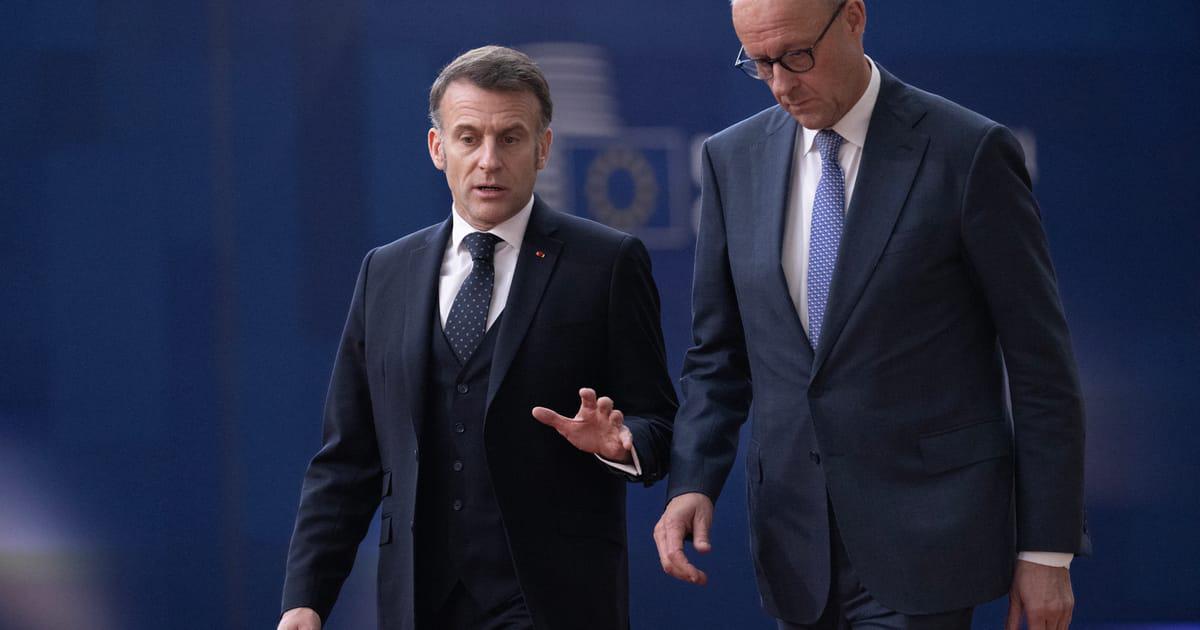
France and Germany said Wednesday that they will release diesel stocks that were already committed in March as part of the G7 pledge to tap stockpiles of oil products, leaving it uncertain as to whether any new barrels will be released in addition, two diplomats familiar with the matter told POLITICO.
The comments suggest Europe's promise to U.S. President Donald Trump last week to release millions of barrels of the transport fuel was less generous than it sounded.
The G7 club of rich countries committed Friday to release a "substantial" amount of diesel in the next 20 days to bring down global prices after senior Trump administration officials threatened to impose an export ban on the fuel if European countries didn't unlock their reserves.
But in a closed-door meeting of EU energy officials Wednesday, the countries acknowledged that the release wouldn't include new barrels of diesel but rather barrels already pledged under a wider European commitment to release 100 million barrels, two-thirds of which were refined products, the diplomats said. That deal was brokered by the International Energy Agency in March weeks after the outbreak of the war in Iran.
The exact quantities Germany and France will release remains unclear, but they will represent a portion of the remainder of the stocks committed in March, the diplomats and a German government spokesperson said.
Of the 2.65 million tons of oil, diesel and jet fuel promised, Germany has so far released only 600,000 tons onto the market. It remains unclear how much France has contributed of its own commitment to release 14.6 million barrels of oil products. However, Paris has indicated privately that it still has 8 million barrels left under the March commitment, which it will contribute under the latest push, two other diplomats told POLITICO.
The countries, which boast some of the largest reserves of refined oil products in Europe, have been criticized by the Trump administration for not contributing the full share committed in March. Germany attributes that to weak demand for the barrels, according to a document seen by POLITICO.
It's not clear whether countries will ultimately decide to commit additional barrels, with one European official telling POLITICO Monday that the fresh commitment "necessarily implied" a fresh release. France on Wednesday signaled it could release 2 million barrels of diesel on top of the quantities agreed in March — as part of the G7 vow to prioritize releases of the motor fuel over the next 20 days — but stopped short of offering a clear commitment, two diplomats said. An extraordinary meeting of the IEA will take place today, two other people familiar with the matter said.
The move came amid confusion from other member countries over who was committing how much and when, with some Eastern European countries like Bulgaria also expressing concern that blowing through reserves to combat prices would leave them exposed in the event of a supply crisis, the people said.
A spokeswoman for Germany's economy and energy ministry confirmed on Tuesday that Berlin would be releasing no new barrels.
"The G7 has asked the IEA to monitor a swift and complete implementation of the commitments made for March 2026," the spokeswoman told POLITICO. "Against this background, and taking into account commitments already fulfilled, the obligations are to be implemented through a coordinated release of 100 million barrels via the IEA."
She added "as of now, no additional quantities" would be released.
Posted by John3262005
1 Comment
This announcement comes days after [Japan](https://www.reuters.com/business/energy/japan-has-no-plans-new-oil-release-national-reserves-official-says-2026-10-05/) also said that there are no plans for new oil release from national reserves as the country had already released supplies.
Seems like the release that Trump wanted is going to be a whole lot less during the next couple of months
Guess we will see if the other G7 countries will say the same thing