
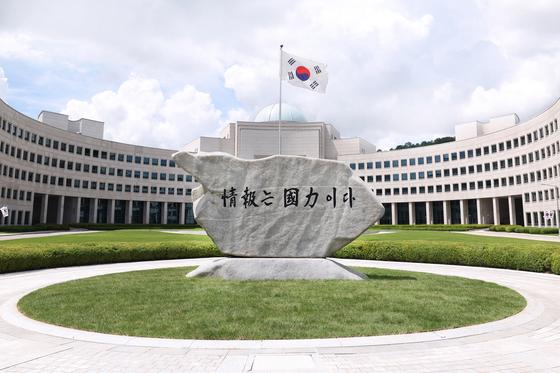
It has been learned that the United States informed South Korea in writing that it would exclude the National Intelligence Service (NIS) from a South Korea-U.S.-Japan working-level meeting held in Washington in June. It is highly unusual for the United States to refuse the participation of an allied intelligence agency and to communicate that decision in writing rather than only verbally. Because allegations had been circulating in the United States at the time that the NIS was involved in the so-called “crackdown on Coupang,” some observers interpret the move as reflecting U.S. dissatisfaction.
According to multiple well-informed sources on Oct. 8, the United States notified the South Korean side ahead of the 5th South Korea-U.S.-Japan Working Group Meeting on Countering North Korean Cyber Threats, held in Washington, D.C., on June 25–26, that the NIS would not be permitted to attend. The notification was reportedly delivered both verbally and in writing.
Around 60 officials attended the meeting, including representatives of the diplomatic authorities and relevant government agencies of South Korea, the United States and Japan who work on North Korean nuclear and cyber issues. Observers say that specifically excluding the NIS, which plays a central role in responding to North Korean cyber threats such as hacking, appears to carry significance beyond a routine adjustment of the participant list.
The United States, however, reportedly did not provide a specific reason for excluding the NIS. What drew attention was that the notification came shortly before the U.S. House Judiciary Committee released an interim report concerning Coupang on July 1. At the time, there was a widespread perception in parts of the U.S. Congress and administration that the NIS had been involved in what was described as a “crackdown on Coupang.” The Judiciary Committee report stated that “the National Intelligence Service (NIS) pressured Coupang over the investigation and the seizure of devices.”
The NIS rejected that claim, saying, “Coupang’s assertion that this series of actions was carried out under the direction or orders of the NIS is clearly false.” Some analysts therefore say that the U.S. decision to exclude the NIS may not have been unrelated to the strained atmosphere between the two countries over the issue.
The NIS maintains that its exclusion from the meeting was a one-time measure and that there are currently no problems in intelligence cooperation between South Korea and the United States. An NIS official said, “Misunderstandings can sometimes arise between any countries because of differences in national interests. What matters is how they are resolved in a timely manner,” adding, “At present, there are no misunderstandings between the South Korean and U.S. intelligence authorities.”
Posted by Freewhale98
2 Comments
1. Summary
Americans angered by Coupang crisis deny access to intelligence-sharing meeting for Korea’s NIS.
2. How is this related to the sub
(1) Rule of law: Americans continue to pose threats to rule of law in Korea as they intimidate officials to shield their company from legal consequences for their crime.
(2) Anti-Korean sentiments among American ruling elites: American ruling family continues to harbor anti-Korean sentiments and take vengeance on them.
In response to this, Lee Jae Myung will once again threaten Ukraine with more consequences.