
The White House has reinstated the UK’s access to the latest AI models for safety testing after lobbying from ministers, The Telegraph can reveal.
The UK’s AI Security Institute (AISI) will now be able to access the latest models from US tech companies before they are released, allowing British officials to run safety tests.
Last month, the White House asked Anthropic, OpenAI and other major AI companies to stop sharing their models with AISI, in a major blow to Andy Burnham’s attempt to become a world leader in AI regulation.
After the order from Donald Trump’s Office of the National Cyber Director, Anthropic restricted UK officials from reviewing its new Claude Mythos 5.1 model.
The Telegraph understands that decision has been reversed after lobbying from Kanishka Narayan, the AI minister, and AISI will be given pre-release access to models from Anthropic, Google Deepmind and OpenAI, the creator of ChatGPT.
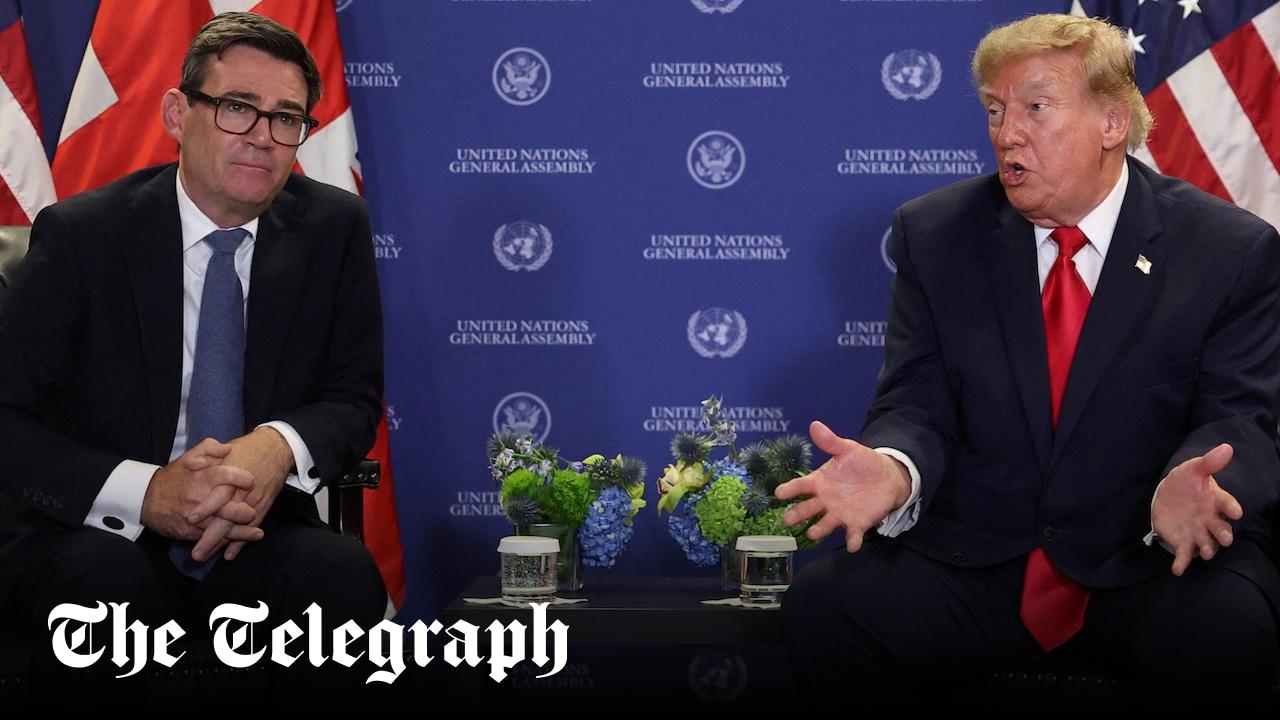
Mr Burnham’s push for international regulation of AI models comes despite Mr Trump’s warning that “globalist” organisations should not interfere with the development of models by American companies.
Mr Trump told the United Nations General Assembly last month that he wanted to “encourage” AI, “not rein it in”.
He said: “Americans have never been a nation that retreats from a frontier or shrinks from a challenge, no matter how great or how daunting that challenge may be.”
However, in a speech on Monday, Mr Narayan will warn that tech companies cannot be left to regulate themselves, and will announce a series of new measures to reduce the risk of AI to the Government, companies and the public.
He will announce changes to Labour’s Cyber Security and Resilience Bill, which will strengthen the requirement for companies working on critical national infrastructure projects to report to the Government any security breaches using AI.
Ministers are also planning to increase the Government’s use of frontier AI – the most recent and advanced models – to protect Whitehall departments from cyber attacks.
On Sunday, it was reported that the heads of MI6, MI5 and GCHQ had warned ministers that AI had empowered hostile actors and terrorists who could use it to shut down sensitive sites or obtain confidential information.
Mr Narayan will also announce more support from the National Cyber Security Centre (NCSC) – an offshoot of GCHQ – for companies to defend themselves from AI-powered attacks.
Cybersecurity officials in the NCSC, Cabinet Office and Department for Culture, Media and Sport will be given greater resources to investigate and respond to incidents.
A source said the speech would be a “genuinely significant intervention” on the risks posed by AI companies and their products, while signalling that Britain would defend itself using AI where necessary.
Britain has attempted to pitch itself as a global leader on AI regulation through the AISI, which is more advanced than its international competitors.
Mr Burnham said during his speech to the UN that Britain would use its presidency of the G20 next year to press for further global collaboration on AI.
He told world leaders he hoped the UK would act as an “honest broker” to draw up “a single set of global principles and standards” for the development of AI models.
He said: “In a divided world, we have the ability to bring people together – and we will.
“We are going to step into that role. And we are going to start with one of the most significant challenges and opportunities of our age – frontier AI.”
He claimed that the UK was working “hand in glove” with American AI companies – a statement that was undermined when the White House blocked Britain’s regulator from accessing the latest models.
Posted by John3262005
1 Comment
Seems like good news for the UK
Especially for Andy Burnham’s attempt to become a world leader in AI regulation.
Hopefully, Trump doesn’t change his mind again