
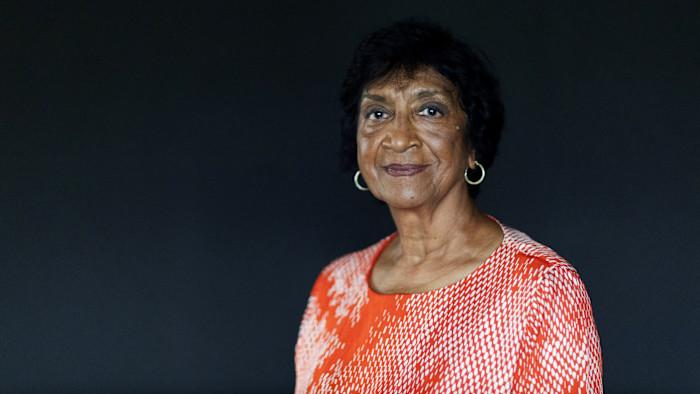
This article by the FT describes the career accomplishments of this year's Nobel Peace Prize laureate, Navi Pillay, a South African lawyer.
This article is interesting because it also goes into detail on Navi Pillay's childhood in Apartheid South Africa.
The most interesting piece of this article for me was learning that Pillay has described the government in Afghanistan as representing "gender Apartheid". I managed to find this letter she wrote making the argument here: https://passblue.com/2026/03/01/women-and-the-taliban-apartheid-by-another-name
Reading these two articles together is fascinating because it shows the experiences of Apartheid turning into a global international response to Apartheid which will hopefully turn into a future global response to Apartheid-like regimes like in Afghanistan.
Some quick notes on Apartheid and Indian South Africans to make the reading easier:
– Apartheid was the culmination of centuries of racist policies to plunder Black people in South Africa. It focused on segregation and social laws which would essentially lock into place the plunder, exploitation and unfair advantages accumulated by White South Africans under colonialism for the long term.
– Formal Apartheid began in 1948. Navi Pillay was born in 1941 and so she lived through the whole thing from start to finish.
– Indian South Africans were also discriminated against during Apartheid and the pre-Apartheid era.
– The Indian Community in South Africa was an important part of the Anti-Apartheid struggle. Mohandas Gandhi founded the Natal Indian Congress which later entered association with the ANC (effectively merging). Besides Gandhi there are other heroes who are well known and revered in South Africa, but not well known elsewhere. An example is Ahmed Kathrada. In government, Indians have always been part of cabinet and held significant ministries. The first Chief Justice appointed by Mandela was Indian, Ismail Mahomed. Given that they are less than 2% of the population, Indians in SA have really done well and been very well represented politically and economically since the end of Apartheid. But overseas the story of Indian South Africans is not well known.
– Something you might find interesting: In SA the word Black has several meanings. Sometimes it means "of indigenous African heritage" as used in the rest of the world and would not include Indians, whose ancestors are from Asia. Other times it just means "non-White" or "those who were excluded under Apartheid". Especially in political contexts, it is common to refer to Indians as Black. This is why in her essay on gender Apartheid, Pillay refers to herself as a Black woman. This would be entirely unsurprising to a South African reader and they would not even notice it.
So the relevance of these two articles is to explore what it means for an Indian woman who lived through all of Apartheid, who is a global champion for human rights and an accomplished lawyer to determine that the Taliban is practising Gender Apartheid in Afghanistan.
Posted by Top_Lime1820