
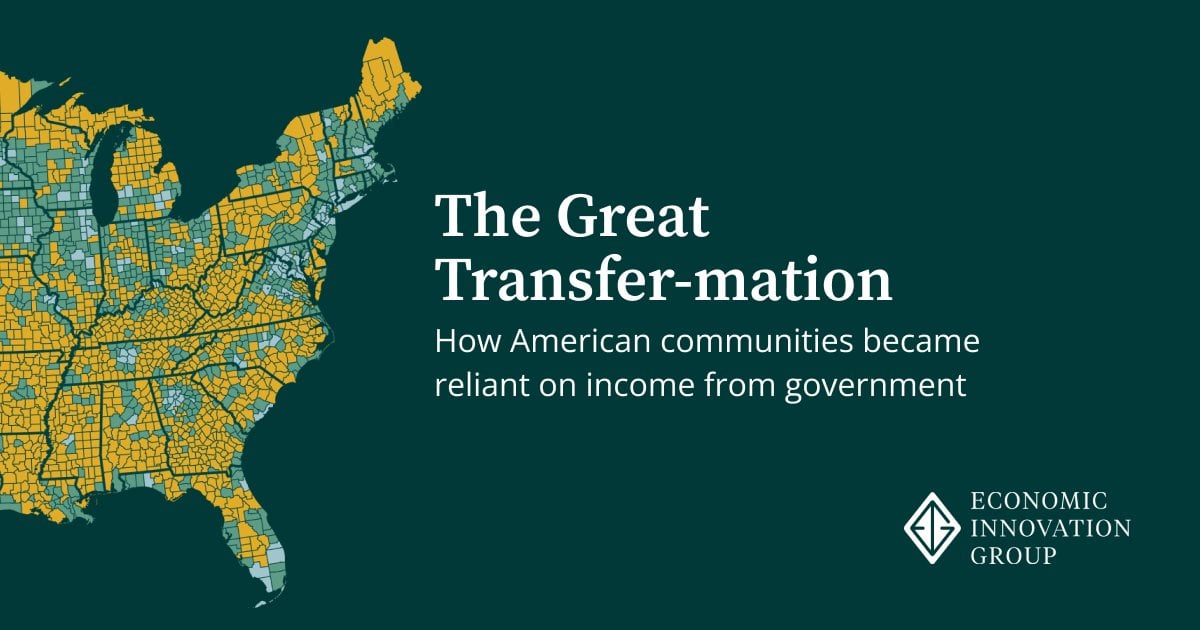
The Great Transfer-mation: How American Communities Became Reliant on Income from the Government
Posted by PerturbedMotorist
The Great Transfer-mation: How American Communities Became Reliant on Income from the Government
Posted by PerturbedMotorist
2 Comments
I think the belief that if the winners had simply compensated the losers of the China Shock/de-industrialization we could’ve avoid Trumpism is severely misguided. It seems like the winners (high-productivity urban areas) have been compensating the losers (low-productivity rural areas), especially since the Global Financial Crisis. Part of the story is ballooning healthcare costs, which might be mitigated by healthcare reform, but given the concentration of these areas in swing states (as the [WSJ](https://www.wsj.com/politics/elections/americans-government-aid-social-security-medicare-unemployment-34e92b19) points out) there is no political appetite whatsoever to make any sort of productive move to tackle deficits: not even towards the pro-growth agenda EIG advocates for in their other work.
!ping SNEK