
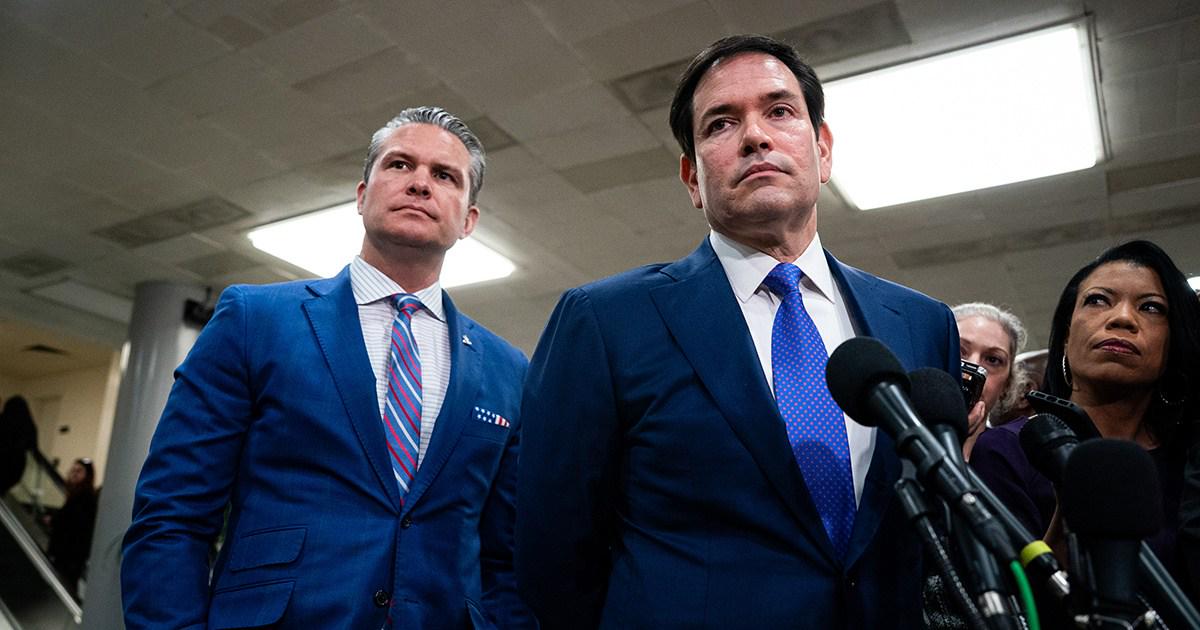
In late August, President Donald Trump announced what he called the “biggest oil deal in world history.” Since then, the full text of the accord — which grants the U.S. sweeping access to Venezuela’s oil reserves — has been one of the most sought-after secrets in Washington, D.C.
ProPublica has reviewed a copy of the 18-page strategic partnership agreement signed for the United States by Secretary of State Marco Rubio and Defense Secretary Pete Hegseth. The document reveals carefully constructed terms that favor U.S. interests at every turn and cements the power of a small group of people handpicked by the Trump administration to govern and profit from the deal. The role of the Venezuelan government and the potential benefits to its people are largely absent from the text.
One of the most criticized aspects of Trump’s announcement has been his choice of a partner: Alejandro Betancourt, a globe-trotting Venezuelan oligarch who has faced money-laundering investigations in three countries.
The Trump administration is taking a 35% stake in Betancourt’s firm, North American Blue Energy Partners, by acquiring shares in a Barbados-registered parent company. The deal document provides little information about the owners and investors behind the parent company, who could receive enormous wealth from the arrangement.
The agreement also safeguards Betancourt’s position as chief executive of NABEP and says the U.S. government will work with the parent company to appoint a powerful seven-member board to govern the venture for an initial 15-year term. Those aspects of the deal, according to people with knowledge of how it came together, were designed to prevent future U.S. and Venezuelan leaders from dismantling the enterprise.
Orlando Alvarado, a name not disclosed by the Trump administration as a party to the accord, signed the agreement on behalf of the parent company, alongside Betancourt, Hegseth and Rubio. Alvarado has held senior roles in multiple Betancourt businesses, including as chief financial officer of an energy firm that became embroiled in scandals a decade ago. According to the Miami Herald, federal prosecutors identified Alvarado as an unindicted co-conspirator in a scheme to embezzle money from Venezuela’s national oil company.
NABEP spokesperson Terry Wade said that “neither Mr. Betancourt nor Mr. Alvarado has ever been charged with any crime in any country, and any claims against them are baseless.”
Key aspects of the plan differ from the Trump administration’s public pronouncements. Trump has said the deal will secure America’s energy dominance for the next century. But the text indicates that U.S. purchasing rights expire in half that time and that the underlying operating rights appear to run afoul of Venezuelan laws limiting oil concessions to 25 years.
The agreement does ensure the United States a deep discount from fair-market value on 20% of NABEP’s oil, as Trump has said. It does not, however, explicitly guarantee that Betancourt’s company is obligated to pay the estimated $200 billion in royalties and tax payments to Venezuela that the White House has said would benefit the country.
There are also significant caveats related to Trump’s central selling point to Americans — that the deal will bring a gusher of low-cost oil imports.
The agreement gives the U.S. the right to purchase 20% of NABEP’s oil at a discounted rate of $30 a barrel, or less than a third of what oil has sold for in recent months, according to one of three supporting documents reviewed by ProPublica.
But this fee does not account for the cost of getting Venezuela’s oil out of the country. Much of Venezuela’s raw crude is so thick that it won’t flow through pipelines unless it is first blended with 20% or more of oil thinner products. Under the deal, the potentially significant cost of importing millions of barrels of those blending materials is not included in the price.
The White House, the State Department, the Pentagon and the energy company NABEP all defended the agreement, saying in statements that their new public-private venture will provide meaningful and lasting economic benefits to both countries that cannot be captured in a legal document.
The newly revealed details of the agreement are nonetheless likely to raise more questions about whether the unorthodox marriage of the United States and a foreign energy baron can bring lasting benefits to either country — and which private parties might benefit along the way. Trump’s oil deal is likely to face scrutiny in both the United States and Venezuela, especially if Democrats win one or both chambers in the midterm elections, according to former U.S. diplomats and congressional staff.
In public comments, Delcy Rodríguez, who won the backing of the Trump administration to serve as Venezuela’s interim president, praised the accord as “historic.” She has asserted that Venezuela will retain sovereignty over its natural resources and defended the choice of Betancourt.
People with knowledge of the Trump administration’s behind-the-scenes decision-making and negotiations with Betancourt spoke to ProPublica on condition of anonymity because they were either not authorized to do so or were fearful of retribution.
One reason that the precise terms of the deal have remained hidden until now is that the signed agreement is marked as a “sensitive” government document. That classification is commonly used to shield a variety of federal records from public release, including those containing personnel information, details about ongoing law enforcement operations and matters protected by attorney-client privilege. The document also contains a confidentiality clause barring Betancourt’s company from disclosing the “existence and terms” of the U.S. government agreement.
One person familiar with the deliberations said that people close to the Trump administration seemed keen to partner with Betancourt’s company because of the privacy and flexibility it offered. That appeared to give NABEP an advantage over publicly traded oil companies, which would be obligated to shareholder reporting requirements.
Posted by John3262005
1 Comment
After reading the article, everything people said about the deal is true
Because wow….
Loss for words really