
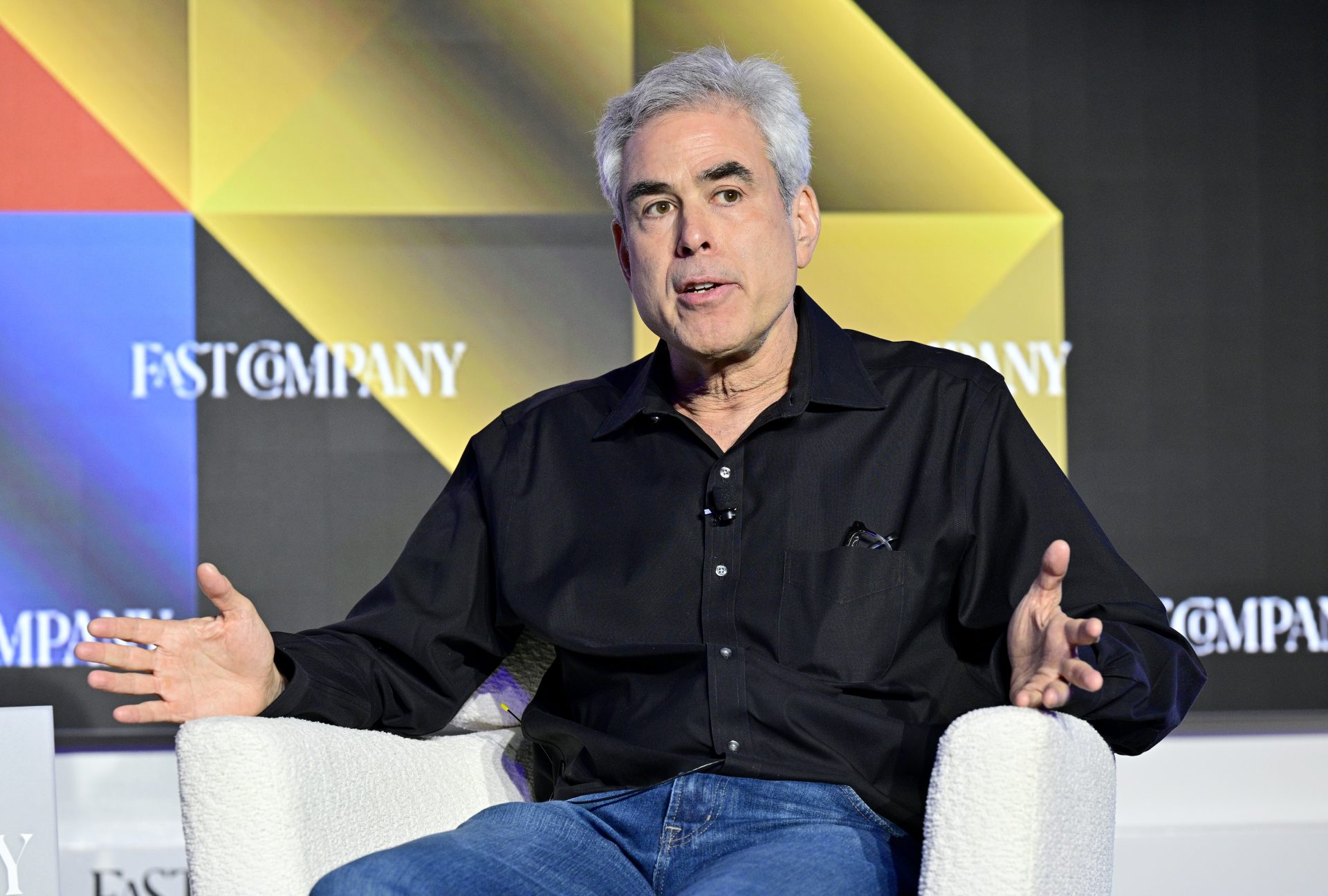
Mark Zuckerberg has experienced his fair share of corporate controversies, most notably the Facebook-Cambridge Analytica scandal of 2018. But the revelation that his company Meta attempted to take down psychologist and social media critic Jonathan Haidt is just the latest example of Big Tech’s abuse of power.
Haidt is a prominent supporter of social media bans for children under 16, and his book Anxious Generation was influential in convincing governments across the world to implement the policy. Clearly, such anti-tech advocacy is threatening for Meta. Internal company meeting notes released in a court filing show Meta researchers appearing to brainstorm how they could discredit Haidt in the eyes of the media, the public, and academia. In them, Curtiss Cobb, the company’s current vice president of central research, appears to ask: “How do we get the academic community to disavow Haidt? Can’t co-opt them, so how do we enrage them?”
Some in the academic community have been rightfully outraged by the company’s actions. Statistician Andrew Gelman, whom Meta apparently considered recruiting to write a “takedown” of Haidt, called the revelation “absolutely horrible — we’re talking about some of the richest and most powerful people in the world conspiring to interfere with the open processes of science, journalism, and the law.”
The powerful people he mentions weren’t Meta’s executive leadership, but — like Cobb —members of one of its research teams. At the time of the discussions, Cobb was Meta’s vice president of research for monetization, public affairs, and demography and survey science. He holds a Stanford sociology PhD and has published research on sampling bias in marketing data and surveys. Two other apparent participants in the discussions, “Bryce” and “Lauren”, also appear to have been sociology PhDs and worked on the same Meta team. This wasn’t some Silicon Valley tech clique. It was practically an academic conference.
Why were these social scientists attempting to manipulate their own community and attack one of their own? Careerist self-interest is an obvious explanation, but Haidt’s peculiar academic standing may also have played a role.
Haidt is something of a black sheep among professors. He co-founded Heterodox Academy in 2015 to combat the lack of political diversity in academia, which in practice translated to a lack of Right-leaning perspectives. This, in many academics’ eyes, was enough to discredit him. How Fascism Works author Jason Stanley has declared that “‘Viewpoint Diversity’ is simply a dog-whistle for right wing ideological take-over.” He has also accused Haidt of spreading propaganda that helped elect Donald Trump.
Reactions to the story have been revealing. Many academics were unwilling to criticize Meta without trashing Haidt in the process. Psychologist Alexander Crenshaw and epidemiologist Gideon Meyerowitz-Katz both took shots at him, with Crenshaw effectively treating Haidt and Meta as morally equivalent and labeling him a “fake scientist”. Psychologist Candice Odgers, a longtime critic of Haidt, argued that his “repeated suggestions that digital technologies are rewiring our children’s brains” are not supported by science. When she faced accusations that her criticism may have been funded by Meta, she emphasized that this was false, while offering no corresponding criticism of the company’s actions.
Haidt’s research can and should be subject to honest criticism. Plotting to orchestrate attacks on an academic figure who threatens your company’s interests, however, is not honest criticism.
The documents don’t establish that Cobb and his colleagues were personally motivated by political hostility toward Haidt. Discrediting a researcher who wants to ban your company’s product is reason enough. But it’s worth asking whether they saw Haidt as a particularly acceptable target because of his standing within academia.
When Cobb asked, “Can’t co-opt them, so how do we enrage them?”, he wasn’t looking for scholars who already disagreed with Haidt. These social scientists were contemplating how to turn their own academic community against him, appealing to existing disagreements and resentments. If I were as hyperbolic as Stanley, I might declare that “social media ban skepticism is simply a dog-whistle for tech corporation profiteering.” I won’t, because the evidence doesn’t justify that leap. But there’s something distastefully ugly about professional social scientists plotting to exploit their own community for corporate ends. There was more than enough hostility toward Haidt. Meta’s social scientists just thought they could put it to work.