
Masayoshi Son and SoftBank are about to add a $11 billion high-yield debt to their accounts, but the fund will likely only stay for two days before it has to be transferred to Sam Altman.
On September 21, multiple media outlets reported that SoftBank plans to issue approximately $10 billion in dollar-denominated bonds and 1 billion euros in euro-denominated bonds, with maturities ranging from 3.5 years to 7.5 years. The raised funds will be used to pay the OpenAI investment due in October, and will also replace part of the previous short-term loans.
If the issuance proceeds smoothly, this transaction will surpass the $10.93 billion record set by 7-Eleven in 2021, becoming the largest non-financial corporate bond transaction in the Asia-Pacific and Japan region, and even rank among the largest global corporate bond issuances in 2026.
The interest on this sum of money is very high. According to the Financial Times, the yield discussed in the early stage for the dollar-denominated bonds ranges from 9% to 10%. Roughly calculated based on the $10 billion scale, SoftBank needs to pay about $900 million to $1 billion in interest for this part of the debt every year.
To support OpenAI, Masayoshi Son has borrowed a lot of money this year. According to Bloomberg statistics, SoftBank has raised approximately $37 billion from the bond and loan markets this year. In the public bond market, it has also become the world’s largest junk-rated corporate borrower in 2026.
Masayoshi Son’s current borrowing costs are getting higher and higher, and the market is reassessing SoftBank’s credit. In January this year, the yield on SoftBank’s dollar bonds maturing in 2031 was only 6.7%, but it has now risen to 8.2%; credit default swaps (CDS) have hit a three-year high.
After Sam Altman announced that OpenAI will not go public this year, SoftBank’s share price once plunged 13%, and its pullback from the year’s high once exceeded 40%.
Now, Masayoshi Son has walked to the side of the most important gambling table in his life again, continuing to place his bets.
Every step that OpenAI’s IPO road is delayed, Masayoshi Son has to pay for it first.
1
Let’s first look at why Masayoshi Son needs to borrow this sum of money, and whether this money is really expensive.
The dollar-denominated bonds that SoftBank plans to issue are divided into three tranches with maturities of 3.5 years, 5.5 years and 7.5 years, and the euro-denominated bonds are divided into two tranches with maturities of 4 years and 6 years. All of them are unsecured bonds, which are repaid mainly relying on the credit of SoftBank Group.
The top two dollar loans in Asia this year are both for raising funds for AI. The first one is the $40 billion bridge loan signed by SoftBank in March, and the second one is the $29.6 billion syndicated loan obtained by ByteDance in September.
Compared with ByteDance, SoftBank’s borrowing is indeed more expensive.
ByteDance’s loan has a term of 3 years, which can be extended to 5 years. The initial spread is SOFR plus 68 basis points. Calculated based on the 3.85% SOFR in mid-September, the indicative interest rate is about 4.53%.
The discussed yield on SoftBank’s dollar bonds this time is almost twice that figure.
The price given by banks to ByteDance is almost close to the benchmark interest rate, but the price given by the bond market to Masayoshi Son is the price for a gambler.
What the market sees is that Masayoshi Son’s investment in OpenAI is getting deeper and deeper.
At first glance, 9% to 10% is almost the most expensive tier of money that a 10-billion-level enterprise can borrow.
However, when you break down this debt, it is actually not as expensive as it seems at first glance.
U.S. corporate bonds are usually based on the yield of U.S. Treasury bonds of the same maturity, plus the credit spread of the issuer.
The yield on U.S. Treasury bonds itself is at a high level this year. In September, the yield on 10-year U.S. Treasury bonds once exceeded 5%. AI companies are also issuing bonds intensively, giving investors more choices, and the general environment for borrowing money is more difficult than in the previous two years.
During the same period, the average yield of U.S. BB-rated high-yield bonds was about 6.4%. The discussed price of SoftBank’s new bonds is about 2.6 to 3.6 percentage points higher than this broad category of assets.
Although this spread is not low, SoftBank has always borrowed money at a higher cost than others.
In April this year, the coupons of the three tranches of dollar bonds issued by SoftBank were 7.625%, 8.25% and 8.5% respectively. The discussed price of 9% to 10% this time is only about 1 to 2 percentage points higher than a few months ago.
Considering that the scale of this issuance exceeds $11 billion, and it also superimposes the risk of OpenAI’s delayed listing, it is not abnormal for investors to demand more returns.
So this sum of money is quite expensive, but not that exaggerated.
But expensive as it is, why does Masayoshi Son still borrow it?
In fact, this sum of money has both a forced side and a side where he actively adds leverage.
First, this $10 billion must be paid. In the investment agreement signed between SoftBank and OpenAI, the third tranche of $10 billion will be delivered on October 1, and the funds will be transferred away when the time comes.
But the $40 billion bridge loan signed in March does not mature until March 2027. However, SoftBank prepaid $25.9 billion of the outstanding balance in September, and plans to cancel the remaining $10 billion limit after the bond issuance.
SoftBank is not unable to borrow money, but actively uses long-term bonds to replace temporary loans.
Masayoshi Son has always been unwilling to sell assets he values prematurely, and prefers to use borrowing to solve funding problems rather than equity.
SoftBank could have continued to use the bridge loan, or use cash, sell shareholdings or mortgage Arm. In the end, Masayoshi Son still chose unsecured bonds with higher costs.
The cost is paying more interest, but the advantage is that the repayment period is extended to 3.5 to 7.5 years, and there is no need to sell or mortgage the core assets in hand.
Second, SoftBank has invested so much in OpenAI that it is difficult to turn back.
After completing the payment in October, SoftBank’s cumulative investment in OpenAI will approach $65 billion. What it obtains is preferred stock. OpenAI lacks public market liquidity before listing, and it is difficult to exit on a large scale.
Once OpenAI’s financing is blocked, its valuation, listing progress and subsequent financing will be affected. If SoftBank stops following the investment, its equity may also be diluted by other investors.
The more you invest, the higher the cost of stopping.
Everyone knows Masayoshi Son’s plan: as long as the value of OpenAI increases enough in the future, it can cover the current investment cost.
What SoftBank is doing now is to raise long-term funds before making the payment. It wants to turn a sum of money that needs to be paid soon into debt that can be repaid slowly over the next few years.
2
Masayoshi Son is willing to extend the debt period, and his ultimate goal is still to wait for OpenAI to go public.
What he values is OpenAI’s market value of trillions of dollars, and the capability prospects of GPT-6 Astra have also shown more possibilities for commercial prospects.
If one day OpenAI reaches the current market value of nearly $5 trillion of NVIDIA, the 13% stake held by SoftBank will be worth $650 billion, nearly ten times its cumulative investment. Of course, this does not include the layout and returns of the upstream and downstream of the AI territory.
In this plan, the $11 billion financing is not a large amount, and the interest close to 10% is also acceptable.
The Financial Times reported in May this year that OpenAI’s shareholding has brought SoftBank about $25 billion in investment returns, boosting SoftBank’s full-year performance. But this part of the profit mainly comes from valuation changes. As long as OpenAI is not listed for one day, SoftBank can only continue to wait and pay interest on schedule.
On the other hand, Sam Altman also needs Masayoshi Son to continue to pay.
According to OpenAI’s internal forecast, the company’s cumulative negative free cash flow from 2026 to 2030 may approach $278 billion, with total expenditure reaching $856 billion. Training models, purchasing chips and building data centers all require continuous investment.
Sam Altman also has no shortage of investors. OpenAI is in discussions with investors for a new round of financing, and the valuation may exceed $1.2 trillion.
Masayoshi Son is waiting for OpenAI to go public as soon as possible to convert his shareholding into tradable stocks; while Sam Altman needs him to continue to make additional investments before listing.
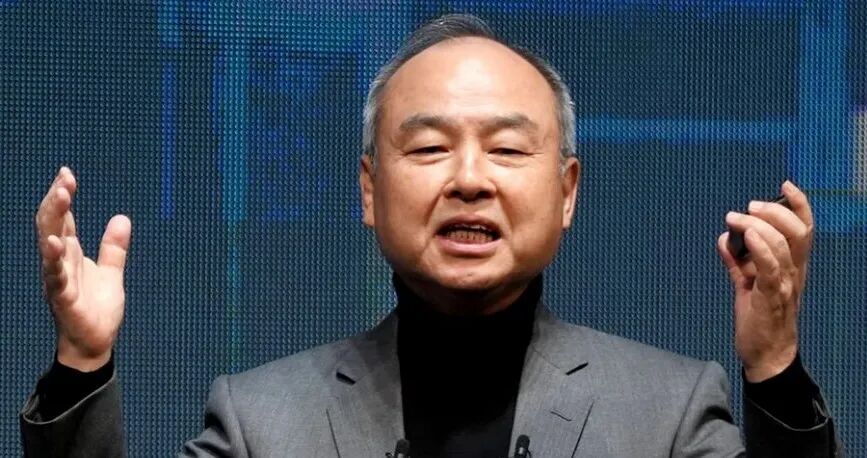
In fact, for Masayoshi Son, OpenAI is no longer just an equity investment. OpenAI is the fulcrum of SoftBank’s entire AI territory.
Media estimates that Arm and OpenAI already account for about two-thirds of the value of SoftBank’s investment portfolio. Around these two companies, Masayoshi Son has invested money in chips, data centers and energy projects. SoftBank holds Arm on the chip side and acquired Ampere, and has laid out SB Energy and Stargate on the infrastructure side.
OpenAI is not only SoftBank’s most important investment target, but also an important customer of these projects. With OpenAI’s orders and brand, Masayoshi Son looks for funds for data centers and strives for higher valuations for his subsidiaries.
As OpenAI delays its listing, the market is beginning to recalculate how long Masayoshi Son’s entire AI territory will have to wait and how much more money it will burn.
SB Energy, under SoftBank, originally planned to go public in September, seeking a valuation of more than $50 billion. It plans to build the world’s largest data center project in Ohio, with OpenAI as an important customer, but no data center has been put into operation yet.
According to media reports, SB Energy has postponed its IPO because it failed to find enough buyers in the original price range.
Nuclear energy company Holtec encountered the same problem.
Holtec originally planned to raise up to $900 million through an IPO, with a target valuation of about $10.2 billion. On September 17, the company announced that it would postpone its listing, and listed “uncertainty in data center development” as the main reason.
All these projects require huge capital investment first, and then wait for AI companies to rent them. If OpenAI’s expansion slows down, the commissioning of data centers and power demand may be pushed back, project revenue will come later, and financing will be more expensive.
The impact of OpenAI on Masayoshi Son is a whole chain: OpenAI’s delayed listing means that the $65 billion shareholding continues to lack liquidity; OpenAI’s slow expansion extends the order fulfillment time of SB Energy; blocked data center financing will in turn slow down SoftBank’s layout in chips and energy.
Masayoshi Son can still borrow money. But the business territory built around OpenAI is no longer as easy to sell as before.
3
Masayoshi Son has only believed in one thing all his life: place heavy bets in a concentrated manner, and then wait. What he is waiting for is called the “big result”.
In 2017, Masayoshi Son was interviewed by David Rubenstein. The host asked him about the process of raising funds from Saudi Arabia: I heard that you convinced the Saudi Crown Prince to invest $45 billion in just one hour?
Masayoshi Son corrected: “45 minutes, $45 billion.”
He added: “$1 billion per minute.”
According to Masayoshi Son’s own account, he put forward even more ambitious conditions to the Crown Prince: invest $100 billion in my fund, and I will bring you back $1 trillion.
Making grand promises, raising huge sums of money, and placing heavy bets. Masayoshi Son has followed this process for 30 years.
When he said these words, he had already tasted the taste of almost losing everything.
In the same interview, Masayoshi Son recalled that when the bubble was at its hottest, his personal wealth increased by $10 billion a week, and for a time he was richer than Bill Gates for three days; half a year later, SoftBank’s share price fell by 99%, and the company was on the verge of bankruptcy.
He did not exit. His net worth shrank from $76 billion to just over a billion dollars. He pledged his own stocks to banks to borrow money to transfuse blood, and bet his remaining ammunition on broadband, an industry that the whole industry was losing money on. Others called him a madman, and his response was to continue placing bets — as long as he was still at the table, he hadn’t lost everything.
Around that crash, he made his most famous investment later.
In 1999, he met Jack Ma, talked for less than six minutes, and decided to invest $20 million. At that time, everyone thought he was crazy, but he could afford to consume it. The worst outcome was nothing more than admitting losses and leaving the market. As long as he didn’t leave the table, there was always a possibility of surviving until a miracle came.
Of course, Masayoshi Son’s judgments are not always correct, and he admits that himself. But his strength has never been that he can see things accurately, but that he does not leave the table even after admitting the losses.
In 2019, WeWork’s first IPO failed. Masayoshi Son admitted that his investment judgment was problematic and ignored the founder Neumann’s problems in corporate governance. But at that performance presentation, he still insisted that WeWork was a good business and believed that profits would rise sharply. SoftBank continued to provide financial assistance, but WeWork eventually filed for bankruptcy protection in 2023.
Only at that time, time was his ally. Now, when investing in OpenAI, time is not on his side.
At that time, he bet his own money, scattered and invested in hundreds of companies, with no maturity date and no creditors. Even if the market value fell by 99%, he only needed to account for himself. As long as he didn’t leave the table, it was free to wait as long as he wanted.
The contradiction is that this time the cake is too big, and the bet to be placed is also too big.
When betting on OpenAI, Masayoshi Son decisively sold his profitable assets in hand.
In October 2025, SoftBank sold all the NVIDIA shares it held at that time, cashing out $5.83 billion to raise funds for AI investments including OpenAI. Two months later, Masayoshi Son talked about this transaction at a forum in Tokyo, saying that he didn’t want to sell a single share, but he just needed money more for projects like investing in OpenAI.
He described himself as selling NVIDIA “crying”. If he had enough money, he would have wanted to hold it all the time.
Masayoshi Son himself has reached the edge of no retreat.
According to the plan announced by SoftBank, after the completion of the last investment in October this year, its cumulative investment in OpenAI will reach $64.6 billion. This will be Masayoshi Son’s largest single investment in a single company so far, more than twice the $31 billion he spent on acquiring Arm in 2016.