
Nvidia (NASDAQ: NVDA) dominates the artificial intelligence (AI) chip market, which helps explain why it continues to clock handsome growth even after becoming significantly larger than it was when the AI boom began.
The good news for Nvidia investors is that its AI-fueled growth is sustainable. The company has been pulling the right strings to ensure that it remains the dominant force in AI chips despite intensifying competition. That’s precisely why the company expects a substantial jump in revenue from its latest Vera Rubin chips, which Nvidia has started shipping to customers.
Missed AI’s “Act 1”? Act 2 Could Be 16x Bigger. Most investors think they missed the AI boat because they didn’t buy Nvidia in 2005. But according to our analysts, we’re only at the end of “Act 1″—the R&D phase. “Act 2” is the global rollout. Continue »
Let’s look at the reasons why Vera Rubin could help Nvidia sustain its phenomenal growth.
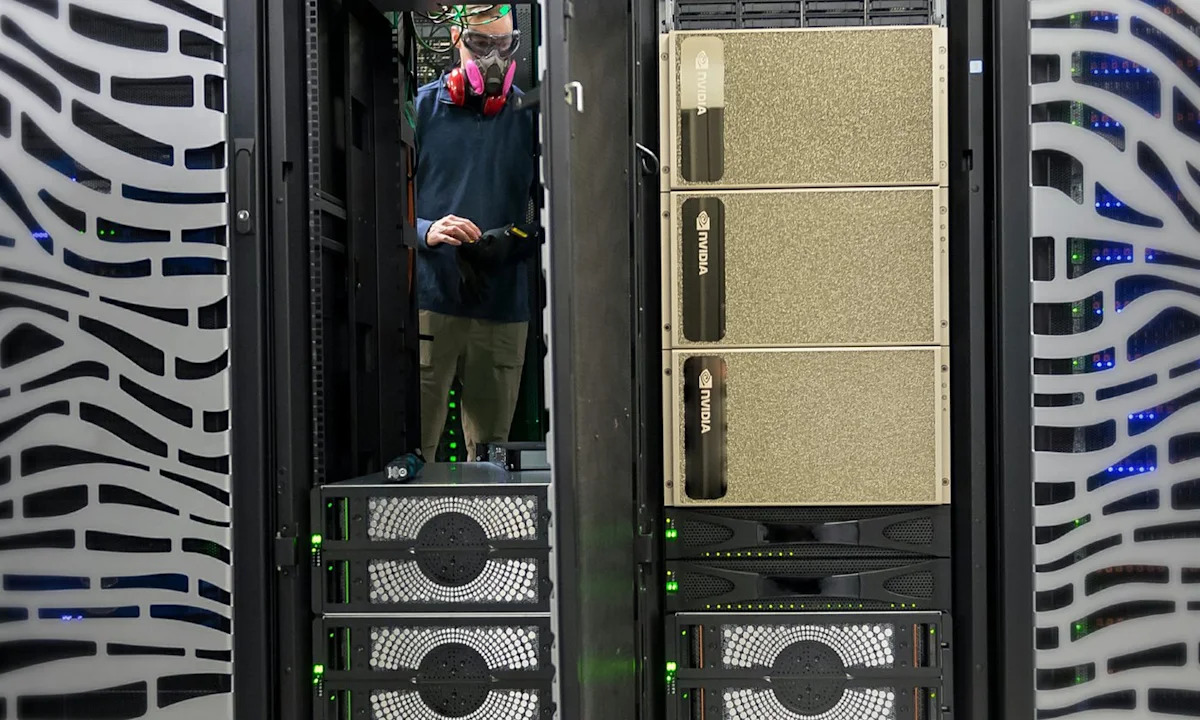
 Image source: Nvidia. Nvidia will make significantly more money from Vera Rubin systems
Nvidia CEO Jensen Huang remarked on the company’s August earnings call that its revenue opportunity from the latest Vera Rubin chips is significantly larger compared to the previous generation Blackwell chips. He noted:
In the case of Hopper, we were at about $18 billion per gigawatt. For Grace Blackwell, we’re about $25 billion per gigawatt. And for Vera Rubin, it’s about $40 billion per gigawatt. And the productivity is X factors increase in each generation. And so customers want to race to the next generation as fast as they can.
Nvidia has expanded its addressable opportunity with Vera Rubin by offering a more comprehensive server rack system that includes its latest server central processing unit (CPU), the Vera GPU, optical networking elements, and a language processing unit (LPU) for accelerating inference tasks. It is worth noting that the shift from Blackwell to Vera Rubin is poised to drive a larger increase in revenue per gigawatt (GW) than the shift from Hopper to Blackwell.
However, the incremental cost that Nvidia customers will incur to deploy Vera Rubin systems will be more than offset by the performance and efficiency gains delivered by the company’s latest-generation chip. Specifically, Nvidia claims that Vera Rubin’s performance-per-watt is 10x higher than Blackwell’s. Of course, Vera Rubin will consume twice as much power as the Blackwell systems, but even then, the overall gains are much higher.
As such, I won’t be surprised to see Nvidia’s Vera Rubin systems seeing solid demand from hyperscalers and AI companies looking to reduce the total cost of operating AI data centers.
Story Continues
Nvidia’s earnings growth could outpace expectations
Nvidia’s earnings could jump by 95% in fiscal 2027 to $9.31 per share, according to consensus estimates. Analysts expect the pace of Nvidia’s earnings growth to slow down over the next couple of fiscal years, though it is still expected to deliver significant bottom-line improvements.
 Data by
However, Nvidia’s earnings growth could exceed expectations, driven by the stronger pricing that it is commanding for its Vera Rubin chips. But even if Nvidia’s bottom line jumps to $21.34 in fiscal 2029 and it trades at 21.4 times earnings, in line with the tech-focused Nasdaq-100 index’s forward earnings multiple, the stock could jump to $457 in just over two years.
That implies a potential jump of 121%, suggesting that this AI stock could soar impressively over the next two and a half years. However, bigger gains can’t be ruled out, as Vera Rubin could drive stronger earnings growth for Nvidia, making the stock a no-brainer buy as it trades at just 13 times forward earnings.
Should you buy stock in Nvidia right now?
Before you buy stock in Nvidia, consider this:
The Motley Fool Stock Advisor analyst team just identified what they believe are the 10 best stocks for investors to buy now… and Nvidia wasn’t one of them. The 10 stocks that made the cut could produce monster returns in the coming years.
Consider when Netflix made this list on December 17, 2004… if you invested $1,000 at the time of our recommendation, you’d have $353,560!* Or when Nvidia made this list on April 15, 2005… if you invested $1,000 at the time of our recommendation, you’d have $1,115,850!*
Now, it’s worth noting Stock Advisor’s total average return is 852% — a market-crushing outperformance compared to 203% for the S&P 500. Don’t miss the latest top 10 list, available with Stock Advisor, and join an investing community built by individual investors for individual investors.
*Stock Advisor returns as of November 6, 2026.
Harsh Chauhan has no position in any of the stocks mentioned. The Motley Fool has positions in and recommends Nvidia. The Motley Fool has a disclosure policy.
Jensen Huang Says Nvidia’s Next-Gen Vera Rubin Chips Will Generate $40 Billion in Revenue per Gigawatt, Up From $25 Billion for Grace Blackwell. What That Means for Nvidia’s Growth Runway? was originally published by The Motley Fool