
Thursday 19 November 2026 4:53 am
| Updated:
Wednesday 18 November 2026 4:12 pm
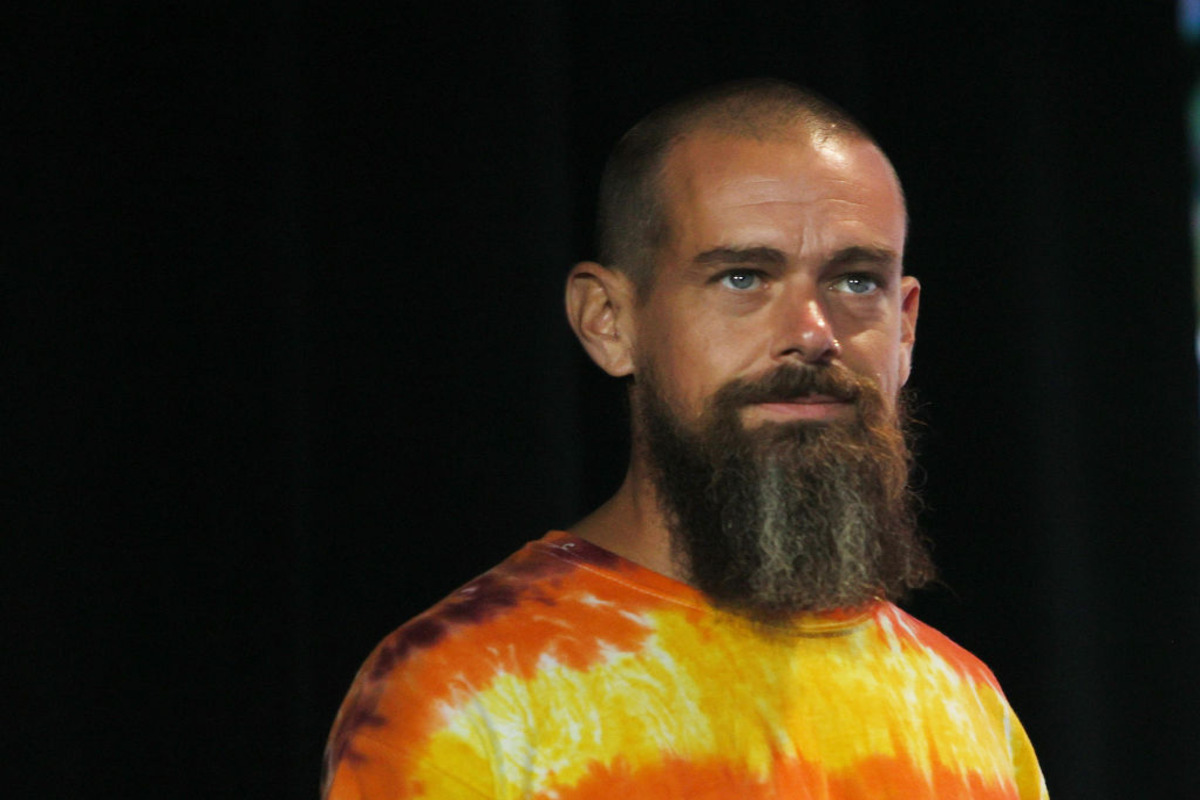
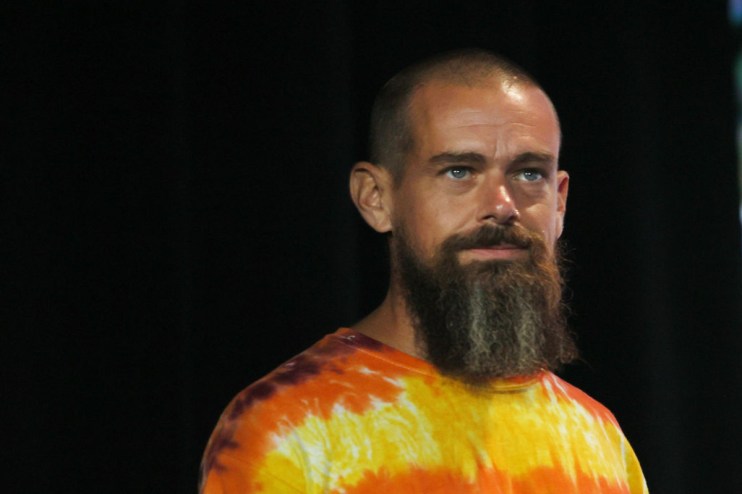 Twitter co-founder Jack Dorsey, who was born on 19 November 1976
On this day, 19 November 1976, Jack Dorsey, the co-founder of Twitter (or twitter) was born. Eliot Wilson tells us more
Several things can be true about innovation at the same time. Some ideas are crackles of electricity in the ether, ground-breaking inventions that come from that category we call genius; some are the product of refining a single element until it reaches a level of ubiquity that we cannot imagine being without it. Some inventions embed themselves in our lives and become indispensable, but might never turn a profit. And sometimes, like Archilochus’s hedgehog, you only need to know one big thing. Welcome to the modern world.
It started in a brainstorming session – or during a break from one. South Park, in San Francisco’s South Beach area, had been such a popular base for technology companies in the 1990s that it had been dubbed “Multimedia Gulch”. After the dot-com crash in 2000, many companies running on hope and blarney faced their reckoning, but by the mid-2000s South Park was resurgent.
One new arrival was Odeo, a podcast publishing and aggregation platform set up by Evan Williams and Noah Glass in July 2005. But just as it was getting off the ground, Apple integrated podcast support into iTunes, putting Odeo’s core business model under pressure. The company needed a pivot, so in early 2006, Odeo’s employees grabbed their messenger bags, thought idly about their lunchtime burrito and assembled for a brainstorming session.
A playground brainstorming session
Revolutions sometimes begin on the sidelines. When there was a break in proceedings, three of the Odeo team got the Mexican food they’d been contemplating and headed out to – where else? – a children’s playground in South Park itself to talk over their best ideas.
Dom Sagolla was a 32-year-old software engineer from Hackensack, New Jersey. With him Florian Weber, Odeo’s Ruby on Rails engineer, previously working remotely from Hamburg.
The third man was a restless 29-year-old programmer from St Louis. He’d spent two years studying computer science and mathematics at the University of Missouri-Rolla before transferring to New York University; he then dropped out just a semester before graduating. His real fascination – niche even by California tech community standards – was dispatch routing: the process of companies assigning their employees, vehicles or services to customers in the fastest and most efficient way.
Growing up in St Louis, he had listened to police dispatchers and become absorbed by the collation and processing of information which allowed the dispatchers to deploy police units when and where they were needed: he was listening to the beat of a city’s heart.
His name was Jack Dorsey, he celebrates his 50th birthday today, and just over 20 years ago, sitting on a slide in the children’s playground, he explained the pitch for an idea that had been percolating for some time. What if, he asked, you could use ordinary short message service technology, tried, tested and commonplace by 2006, to communicate within a small, defined group? It could be to exchange ideas in the kind of creative session they’d just broken from, or it could be much more whimsical, a kind of digital postcard to let your friend know what you were doing.
Read more
Whoop signs four-year Formula 1 deal to track drivers’ heart rates
‘twittr’ is born
There was curiosity. Maybe it had potential. When Dorsey explained the idea to the founders at Odeo, Noah Glass suggested a name for the project: twttr. Its five characters made it the same length as American SMS short codes, and it was a nod to the video and image-hosting platform Flickr, set up two years before.
The project started in February 2006 and took a matter of weeks. At 12.50 pm PST, on 21 March, Dorsey published the world’s first tweet: “just setting up my twttr”. It was trialled as an internal system for Odeo employees, before being opened to the general public on 15 July. Shortly afterwards, Evan Williams paid $7,500 for the previously occupied domain name, and twttr became Twitter.
Twitter has been rebranded X by new owner Elon Musk for more than three years now, and is more controversial than Dorsey or his colleagues could have anticipated, but its life over the past 20 years has raised many of the issues mentioned at the beginning. It might not be ubiquitous, but in 2023, when Musk was making his clumsy advances, it had 421m users: roughly one in 20 of the global population. Some claim it is now even higher, perhaps reaching 600m in 2024, which would be one in 14 of us. It is part of our social architecture, though David Cameron was not necessarily wrong when he said warily in 2009, “Too many tweets might make a twat”.
The creation of a consumer need
At the same time, Twitter/X.com created rather than fulfilled a consumer need. It was not the wheel, or the internal combustion engine, or the electric lightbulb. It was, in a sense, more inspired than that: it persuaded customers it was something they had always wanted and needed, and gave it to them. That made Dorsey a rich man, currently worth an estimated $7.2bn.
Yet it began as a strange service, with some genuinely unable to understand what need it fulfilled or how it could ever be monetised. Evan Williams recalled: “They called it a social network, they called it microblogging, but it was hard to define, because it didn’t replace anything. There was this path of discovery with something like that, where over time you figure out what it is.”
Elon Musk has proved that X.com can be an immensely powerful tool of propaganda, not just because of what you say but because of what he can hold back or prioritise. But he has also demonstrated it was no fluke, nor a licence to print money. Between April and October 2022, he fought to buy Twitter, and in the end it cost him $44bn. A year later he valued it at $19bn. The picture is more complicated but that is a hefty hit.
It has come a long way, from a man fascinated by the coordination of services and delivery, to one of the fiercest battles of the soi-disant culture wars, overseen by one of its most erratic generals. But that has been the nature of social media. No-one has quite known what will happen next. And we still don’t.
Eliot Wilson is a writer and historian. He is a senior fellow for national security at the Coalition for Global Prosperity and a contributing editor at Defence on the Brink
Read more
UK tech race at risk from ‘far too cautious’ government, warns watchdog
Similarly tagged content:
Sections
Categories
People & Organisations