
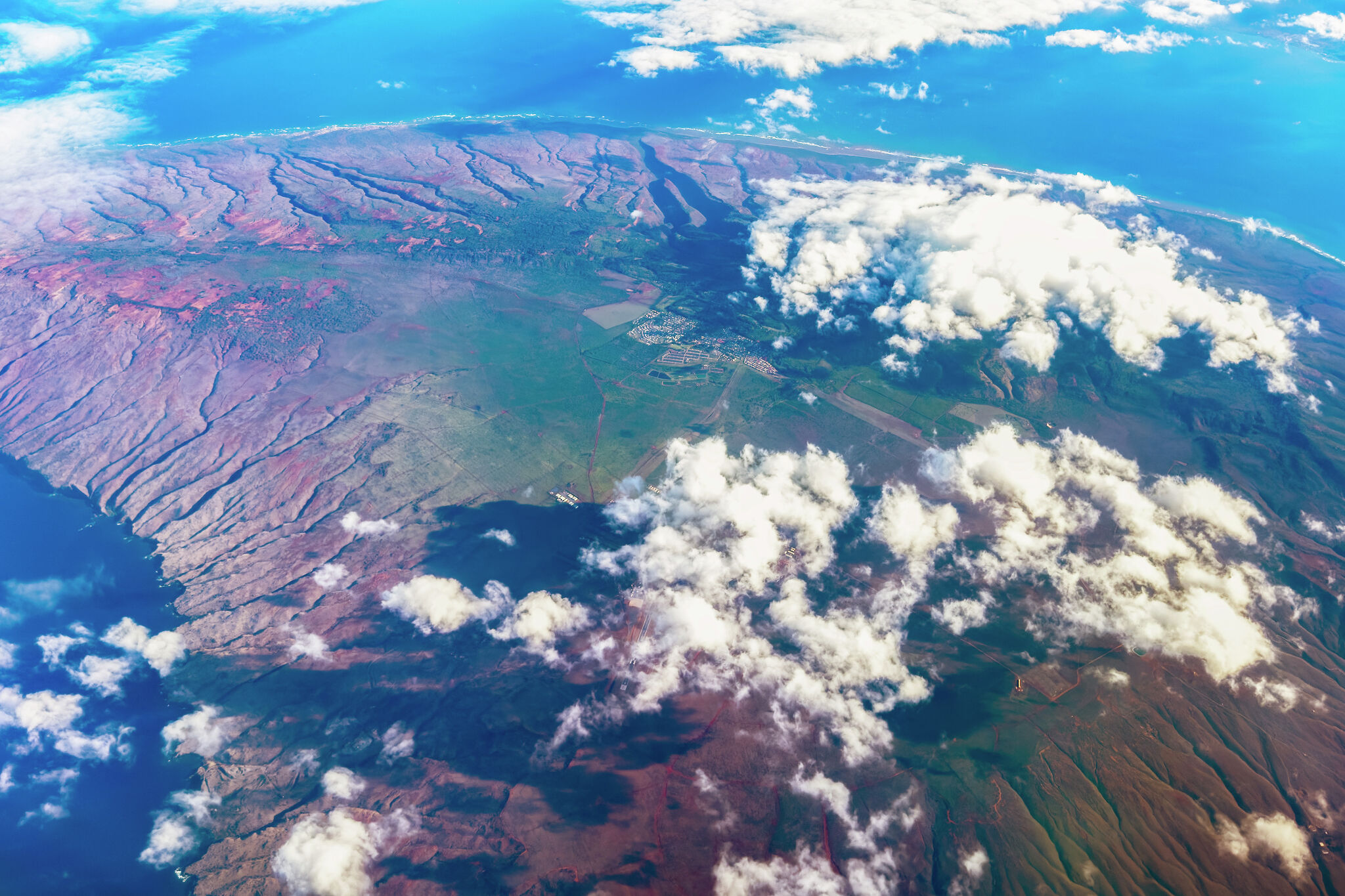
Lanai is known for its pineapple plantation past, but Hermina Morita remembers a different chapter of the island’s history. Growing up in Koele, an upland area just outside Lanai City, she was part of a close-knit community where the last paniolo (Hawaiian cowboys) and their families continued living after the ranch closed in 1951. Children moved freely between neighbors’ homes, and families looked after one another.

In its heyday, Koele ranch had more than 30 buildings, including stables, a store, a school, a church, a post office and workers’ homes. Today, nearly all of it is gone, replaced by a luxury resort that does not allow children.
Morita says most of the ranch community’s buildings were demolished to make way for the Lodge at Koele, which opened in 1990 under Castle & Cooke, then headed by Dole billionaire David Murdock. The only surviving structures are the church and two of the ranch-era buildings, known as the Forbes House and the Ranch Office and Store, which were relocated to the side of the resort property in the late 1980s. The Lodge at Koele was later renovated and reopened as Sensei Lanai, a Four Seasons Resort in 2019, seven years after billionaire Larry Ellison purchased 98% of the island from Murdock.
Article continues below this ad
Paniolo (Hawaiian cowboys) James Kauila and Sam Koanui Piimoku on the ranch at Koele.
Hawaii State Archives
Now, Pulama Lanai, the land management company owned by Ellison, plans to relocate the two remaining ranch buildings again as part of its new resort expansion. The plans have reignited a decades-old debate about preserving the island’s past.
“Once those buildings are removed and taken out of the area, that whole history of Lanai can never be recovered,” Morita told SFGATE. Her family had lived in both houses.
The dispute underscores a larger concern on an island where nearly all the land is controlled by a single billionaire: how to preserve Lanai’s history as successive owners reshape the island to fit their own visions. Some residents fear that moving the ranch’s last two buildings will erase more than physical history, severing their connection to the land, its history, stories, traditions and people of Koele’s past.
Article continues below this ad
“It just keeps getting worse and worse,” Martha Evans, a longtime educator who lived in Koele, told SFGATE. “… As usual, the company just steamrolls everything.”
“Our sense of place is tied to the land,” Evans said.
Aerial photo taken in 1924 of the Koele ranching community, where the Sensei Lanai resort is today.
US National Archives
On an island controlled by a billionaire
The proposed Sensei Lanai resort expansion plans involve adding up to nine villas and approximately five spa treatment buildings on 11.5 acres (where the two homes are), while converting about 83 acres of former golf course land into park land that may include a sculpture garden. Pulama Lanai is also seeking zoning changes that would allow new commercial activities, including catering and special events.
Article continues below this ad
During the approval process, a handful of current and former Lanai residents, including Morita and Evans, submitted testimony opposing the relocation of the two historic buildings. Morita, who previously helped document the island’s ranching history, believes earlier commitments to preservation have been overlooked.
She pointed to another Lanai Ranch building, the Koele schoolhouse. Murdock-owned Castle & Cooke relocated the building and was expected to preserve it, following public outcry in response to the original resort development. Instead, it was neglected and eventually demolished around 2018.
Morita worries that the remaining ranch buildings could lose their historical significance if they are moved again, particularly as the area is “threatened by” what she called “Larry Ellison’s aesthetics.” His design sensibilities can be seen through the sculpture collection spread across the resort’s grounds.
The two ranch buildings as they appeared in 2025, sitting off to the side of the resort.
Google Maps
Evans lived in the Forbes House shortly after marrying. She also knew a couple who lived in the other ranch house. The husband was one of the ranch’s last cowboys, and his wife helped care for Evans’ daughter. When the woman learned the original resort development threatened her home, she told Evans: “I’m going to tie myself to the house.”
Article continues below this ad
For Evans, the prospect of moving the buildings again brings back those painful memories.
“It tears at my heart to know that there are people in this world who have no consideration for what came before,” she said. “Their main motivation is to put their stamp on that piece of land, their stamp on the aina [land], and it’s not right.”
The issue reflects a broader issue of how the land and its residents are treated. “I am sick and tired of empty promises that people make,” she said. You know, those homes are historical sites. The land there is a historical site. The land doesn’t belong to him or to his company. He may have title, but the land does not belong to him.” She then quoted the Hawaiian proverb, “He alii ka aina, he kauwa ke kanaka. The land is alii [chief]; the people are its servant. I truly believe that.”
Pulama Lanai is the island’s largest employer. Both Morita, who now lives on Kauai, and Evans, who lives on Oahu but still has a home on Lanai, believe more Lanai residents would be publicly opposed if they didn’t fear losing their jobs, which would force them to move.
Article continues below this ad
“You’re not going to testify if you work for Pulama Lanai,” Morita said.
The approval process continues
In September, the Hawaii Land Use Commission voted 6-0 to approve land reclassification of approximately 170 acres from agricultural and rural to urban land, with conditions. One addressed the two historic buildings.
The condition states that Pulama Lanai must “relocate and preserve [the two buildings] in the petition area in consultation with SHPD (the State Historic Preservation Division) and the community.” The condition also calls for “consideration” of converting the buildings into a museum or interpretive space but does not require it.
Article continues below this ad
The photo illustrates where hotel development will expand (also where the two buildings currently stand) and the area that will be rezoned urban.
County of Maui
The project has now moved on to the Maui County Council, which is scheduled to consider two zoning bills for first reading on Nov. 25, following a recommendation by its Housing and Land Use Committee in October. Final approval would require a second reading.
At the Oct. 21 Maui County Council committee hearing, Pulama Lanai representatives reiterated their commitment to relocating and preserving the buildings. “We would also be preserving them and turning them into an interpretive space or museum,” Keiki-Pua Dancil, the company’s senior VP of strategy and stewardship, said at the meeting.
However, Dancil described moving the structures “outside of the state petition area,” conflicting with the Land Use Commission’s condition that they remain within it. SFGATE reached out to Pulama Lanai for clarification, but the company declined to comment for this story.
Article continues below this ad
Land Use Commission Executive Officer Daniel E. Orodenker told SFGATE the condition requires “that they be relocated within the Petition Area” — the 170 acres — and cannot be moved elsewhere.
Pulama Lanai has not publicly identified an exact relocation site, nor has it been required to as part of its approval, leaving the buildings’ future location and exact preservation plan uncertain.
Morita believes that if the buildings are allowed to move, they must remain within the bounds of where the Koele ranch community existed, so future generations can understand the history and connection to the land.
“My point is it shouldn’t move at all,” Evans said. “They have enough for their resort.”
Article continues below this ad
For Evans, another relocation would mean losing something that cannot be restored by preserving the buildings alone.
“It erases a whole era,” she said.
Editor’s note: SFGATE recognizes the importance of diacritical marks in the Hawaiian language. We are unable to use them due to the limitations of our publishing platform.