
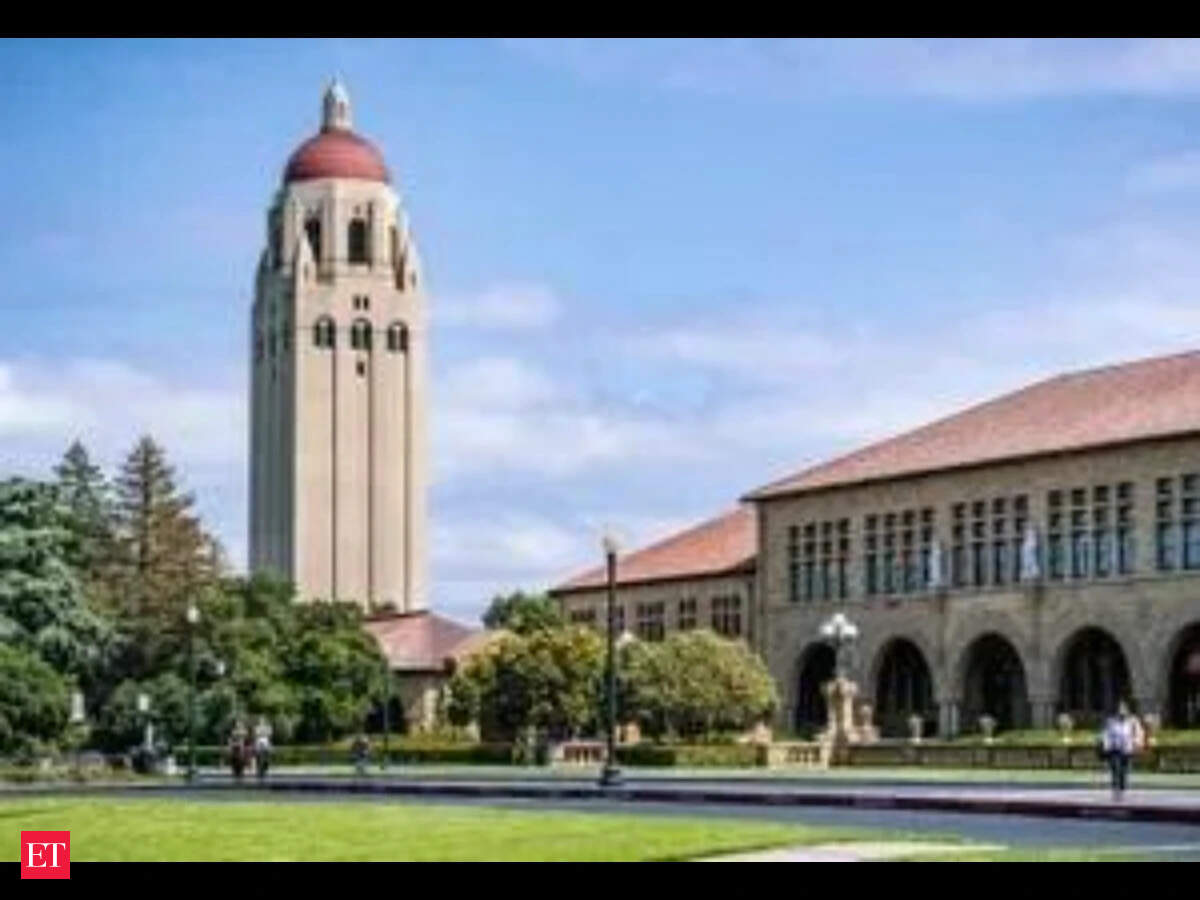
In 1998, two Stanford students arrived at a professor’s home with an idea for a better internet search engine. They did not yet have an incorporated company, but they had a product they wanted to show.
The meeting took an unexpected turn when the professor and his friend each agreed to invest $100,000. The company they backed was Google, and those early checks would eventually be worth billions.
What convinced them to invest in Google?The students were Larry Page and Sergey Brin. They had been working on a search engine that judged the importance of websites partly by how many other sites linked to them.
Their idea caught the attention of David Cheriton, a Stanford professor, and his friend Andy Bechtolsheim, an engineer who had already made his mark in Silicon Valley as a co-founder of Sun Microsystems.
 Live EventsAccording to Stanford University School of Engineering, Bechtolsheim understood the search concept quickly. His experience with scientific publishing had taught him how much value could be measured through the number of times other researchers cited a paper.
The students also explained their plan to make money through sponsored links and relevant advertisements. Bechtolsheim quickly saw the business potential.
“They explained their business model of sponsored links for relevant ads and five cents a click. I did the math … a million clicks a day, they can’t go broke … and I said, okay, let’s get going.”
He went to his car and returned with a $100,000 check made out to “Google, Inc.” There was one unusual detail: Google Inc. had not yet been legally established.Cheriton was impressed by the students as well. He decided to match Bechtolsheim’s investment, putting another $100,000 into the venture. Together, their checks gave Page and Brin $200,000 to move forward.The company did not even exist yetThe unusual timing of the investment became part of Google’s early story. Bechtolsheim had written a check before the founders had incorporated the business. The name on the cheque also helped give the future company its name.
A Stanford Engineering profile later described the moment as a full-circle connection for Bechtolsheim, who had studied at the university before building his career in technology.
He had invented the SUN workstation as a graduate student and went on to establish Sun Microsystems in 1982 with Vinod Khosla, Scott McNealy and Bill Joy.
The workstation offered engineers high-end computing at a much lower cost than the large machines available at the time. Bechtolsheim’s experience building products and spotting gaps in the market shaped how he viewed new ideas.Two checks, two very different fortunesThe value of those early Google investments grew enormously as the company expanded.
A Stanford University School of Engineering account estimated that Bechtolsheim’s original $100,000 stake could be worth more than $1.5 billion. A Benzinga profile of Cheriton described his Google investment as part of a fortune estimated at more than $10 billion.
Cheriton was not simply a professor who happened to invest in a promising student project. He had already worked in computer science and technology. In 1996, he and Bechtolsheim co-founded Granite Systems, a networking company later acquired by Cisco for $220 million.
Their Google investment, however, became one of the most talked-about early bets in technology.
What did the investors see in the founders?Bechtolsheim has said there is no single formula for business success. But he has repeatedly pointed to innovation and solving the right problem as central to building a successful company. For Cheriton and Bechtolsheim, the meeting in 1998 offered a chance to back two students whose search engine had a clear purpose and a business model they could understand. The company was not yet incorporated, and its future was far from guaranteed. Still, both men were willing to take the risk. Their $100,000 checks became part of the story of how Google got its start. The information is taken from Stanford University, Benzinga and The Doc Market.
Add  as a Reliable and Trusted News Source