
How to clean up India’s filthy cities | As the country gets richer it consumes more — and throws away more, too
Posted by ONETRILLIONAMERICANS
How to clean up India’s filthy cities | As the country gets richer it consumes more — and throws away more, too
Posted by ONETRILLIONAMERICANS
1 Comment
# The situation
> PANJIM, THE capital of the Indian state of Goa, is known for its pretty churches and Indo-Portuguese homes. But 20 years ago it looked like any other Indian city: filthy. Some 1,500 community waste-collection bins overflowed with mixed rubbish. Their contents were dumped beside a nearby village, growing into a mountain of garbage. Eventually, in the monsoon of 2005, the trash-heap collapsed, sending refuse into homes. Revolted, villages revolted; the site was closed. City officials looked for another site but no one would take their waste.
> Panjim today is a very different place. The city replaced its system of bins with door-to-door collection. Blocks of flats must segregate their rubbish into wet (mostly, food) waste used for compost and biogas, and 16 categories of dry, including one just for coconuts. (Goans consume five to eight coconuts per person each month; the national average is less than one.) The state has a no-landfill policy.
> It took time, political will, carrots and sticks, but by 2021 99% of the waste collected in Panjim was segregated at source, 80% was processed and 90% of streets efficiently swept, according to a report by NITI Aayog, a government think-tank, and the Centre for Science and Environment (CSE), another think-tank in Delhi. A system born of crisis is today cited as an example of “best practices” for other cities to follow.
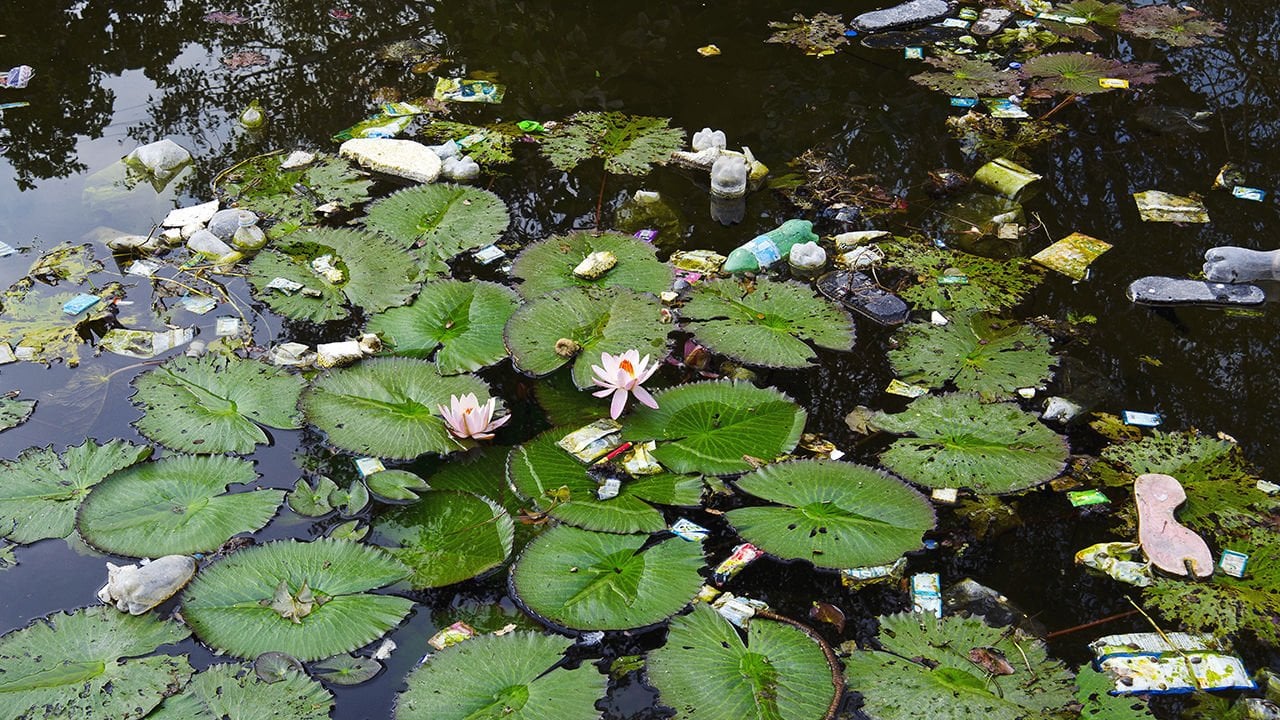
> Yet these models remain isolated bright spots. Much of India is covered under a shroud of plastic bags, snack packets, drink bottles and organic and human waste. A fifth of the population has no waste collection. Piles of garbage fester at street corners and along main roads and railway tracks. The problem is becoming more urgent: urban India generated some 50m tonnes of municipal solid waste in 2021. That is likely to jump to 125m tonnes by 2031, according to CSE. “We have achieved rocket science but we are not able to achieve [a] three-bin system,” laments Shobha Raghavan of Saahas Zero Waste, a waste-management firm.
# How to fix it
> The way to fix India’s rubbish crisis is difficult but it is not complicated. The most important element is waste-sorting by homes, offices and shops. Cities should start with modest aims, asking for wet and dry segregation, before adding categories for recyclables and sanitary waste. Simple nudges, such as collecting different types of waste on different days, can help. Efforts to educate citizens and incentivise compliance must be consistent, too.
> All this requires political will. Goa was fortunate: its efforts to clean up have been supported by leaders of various political stripes. “Now for Goa, this is irreversible,” says Sanjit Rodrigues, an official who has spearheaded the state’s waste-management overhaul.
> But elsewhere in India “there is no political ownership of the agenda,” says Srikanth Viswanathan of Janaagraha, an NGO. Elected officials in cities have limited power. At the level of states, politicians have little interest in something as unsexy as waste management. “I have not seen a single politician win or lose an election on the issue of garbage and sanitation,” says Ankur Bisen, the author of “Wasted”, a book about sanitation in India.
Also see [“India should liberate its cities and create more states”](https://www.economist.com/leaders/2024/06/20/india-should-liberate-its-cities-and-create-more-states)
!ping YIMBY