
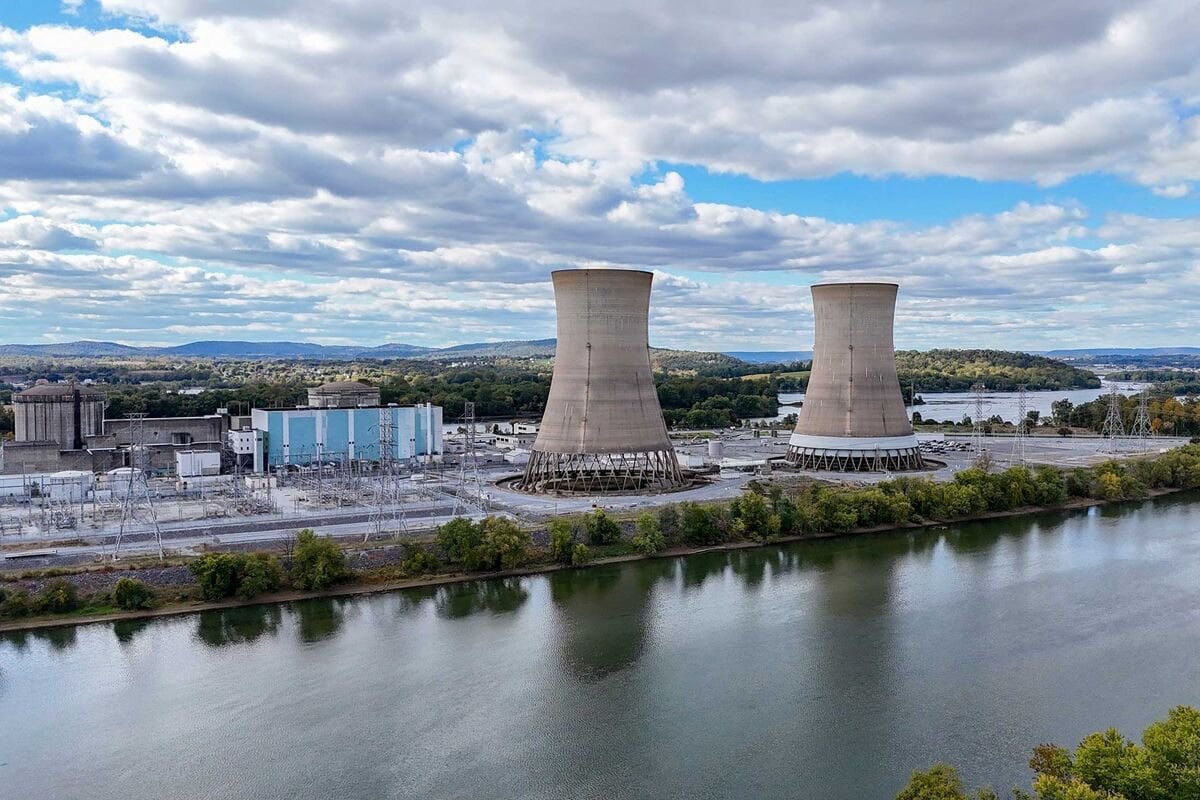
Can the US Power Industry Meet AI’s Steep Energy Demands? | Thanks to AI, data centers are popping up across the country. But the climate price for all this energy use is steep
Posted by ONETRILLIONAMERICANS
Can the US Power Industry Meet AI’s Steep Energy Demands? | Thanks to AI, data centers are popping up across the country. But the climate price for all this energy use is steep
Posted by ONETRILLIONAMERICANS
2 Comments
> Delivering power to homes and companies is supposed to be a boring and predictable business. While it’s true that the US population has been increasing and electrifying more things as it does, that growth in power use has been offset by energy savings as buildings, factories and appliances become more efficient. Indeed, electricity consumption in the US has changed little since the start of the 21st century. Until now.
> Suddenly, America needs more juice—for factories and homes, electric vehicles and heating, and especially data centers and artificial intelligence. The surge in power demand is unlike anything utilities have seen in decades, perhaps not since World War II. That’s going to complicate the country’s already bumpy shift to clean energy, and Donald Trump’s imminent return to the White House promises to shake up the transition even more. By all accounts, the industry isn’t ready. “The impact of AI on the power grid came on fast,” says Timothy Fox, an analyst at ClearView Energy Partners. “We’re seeing load-growth projections that are unprecedented.”
> **US power demand is expected to climb almost 16% over the next five years, more than triple the estimate from a year ago**, according to Washington, DC, consulting firm Grid Strategies. That’s an enormous shift, since America’s demand for electricity has risen less than 1% a year for more than two decades. According to Grid Strategies, load growth will hit 3% in 2024.
> Although other industries can handle fast growth, electricity is different. Big infrastructure projects such as power plants and transmission lines can take a decade to build and can run for a half-century or longer.
> Consider what’s happening in Georgia. The Peach State has a strong manufacturing base and an ever-increasing number of large data centers—more than 50 in total. Over the past year, the state’s largest power company has more than doubled its forecast for demand from committed and potential customers building large power-hungry projects. In 2023, Georgia Power said those projects would need 17 gigawatts of electricity by the mid-2030s, but in November it updated that figure to more than 36GW. For context, a single gigawatt can power about 750,000 homes.
> The surge is prompting utilities and their big power-using customers to make some unexpected decisions. After years of watching coal plants retire in droves as power producers sought to curb their planet-warming emissions, some utilities are reversing course on climate goals. Customers are clamoring for so much electricity that operators are keeping their dirtiest fossil fuel plants running longer than expected.
> FirstEnergy Corp., based in Akron, Ohio, plans to continue operating its Fort Martin and Harrison coal-fired plants in West Virginia, abandoning an earlier pledge to stop using the fuel by 2030. Other coal plants across the US that were scheduled to close in the next several years are getting life extensions as utilities contend with the increased demand.
!ping AI&ECO&GET-LIT
Have we considered not using AI?