> The growing influence of China in Africa has raised several questions about what is driving its lending policies and what might be the effects on growth in recipient countries. There is a large body of literature that investigates these issues, but less is known about the channels through which Chinese lending might promote development. In this paper, we explored one potential channel, that is, the intensity of GVC participation, measured as the share of traded intermediates value added in borrowing countries’ gross exports. This is relevant because one of the features of Chinese lending, compared to traditional bilateral and multilateral lenders, is the concentration on infrastructure sectors—particularly transport and communications. The literature suggests that infrastructure improvement can substantially reduce trading costs, particularly in relation to intermediate goods (Hummels and Shaur, 2013).
> Therefore, we investigated whether Chinese infrastructure loans were associated with an increase in GVC participation by African countries, using Chinese loans to sectors other than infrastructure and WB loans to either infrastructure or non-infrastructure sectors as the benchmark.
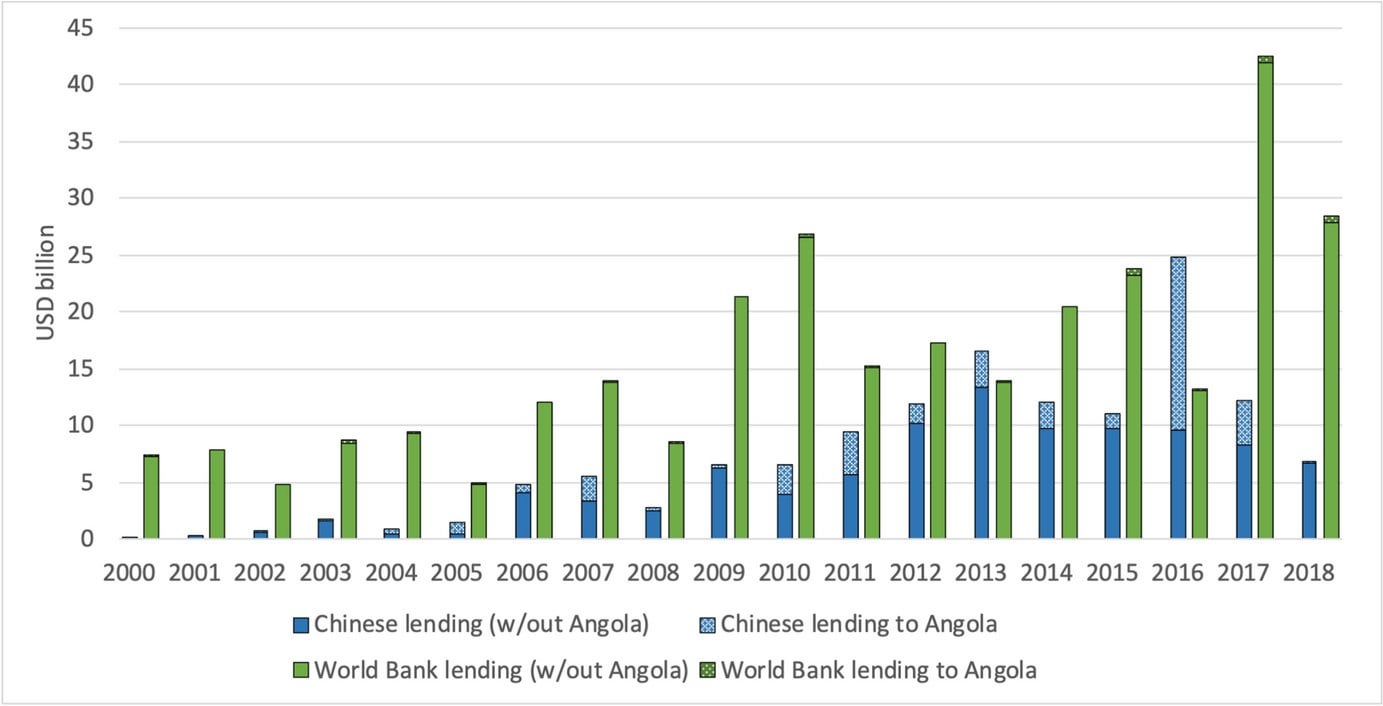
> Our results, based on loan level data on Chinese and WB lending in 37 African countries between 2000 and 2018, provide several contributions to the existing evidence. First, we show that Chinese infrastructure lending is followed by a significant and persistent increase in GVC participation, that is, in the relevance of trade in intermediates with respect to total trade. This result is specific to Chinese lending for infrastructure and is not observable in other sectors or for lending from other sources (i.e., WB).

1 Comment
> The growing influence of China in Africa has raised several questions about what is driving its lending policies and what might be the effects on growth in recipient countries. There is a large body of literature that investigates these issues, but less is known about the channels through which Chinese lending might promote development. In this paper, we explored one potential channel, that is, the intensity of GVC participation, measured as the share of traded intermediates value added in borrowing countries’ gross exports. This is relevant because one of the features of Chinese lending, compared to traditional bilateral and multilateral lenders, is the concentration on infrastructure sectors—particularly transport and communications. The literature suggests that infrastructure improvement can substantially reduce trading costs, particularly in relation to intermediate goods (Hummels and Shaur, 2013).
> Therefore, we investigated whether Chinese infrastructure loans were associated with an increase in GVC participation by African countries, using Chinese loans to sectors other than infrastructure and WB loans to either infrastructure or non-infrastructure sectors as the benchmark.
> Our results, based on loan level data on Chinese and WB lending in 37 African countries between 2000 and 2018, provide several contributions to the existing evidence. First, we show that Chinese infrastructure lending is followed by a significant and persistent increase in GVC participation, that is, in the relevance of trade in intermediates with respect to total trade. This result is specific to Chinese lending for infrastructure and is not observable in other sectors or for lending from other sources (i.e., WB).