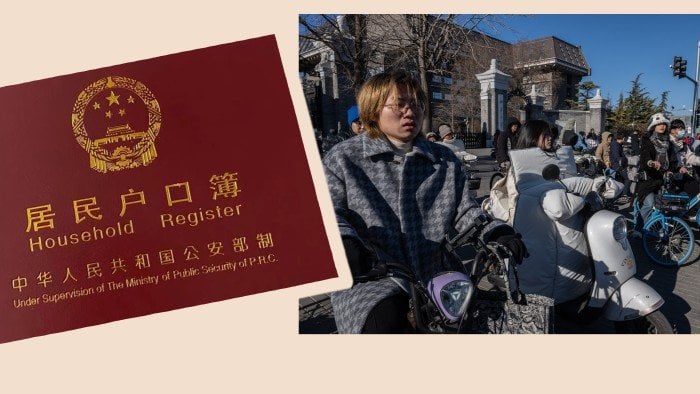
> China’s hukou system, which in effect treats people with rural household registrations as second-class citizens, has long been seen as deeply socially regressive. But recent anaemic growth is putting increasing scrutiny on the system’s cost to the world’s second-largest economy.
>Xi Jinping’s government, which is trying to pep up consumption and counter a property market slump, in July released a five-year plan calling for the relaxation of hukou rules in mid-sized cities to “fully unleash the huge domestic demand potential” from urbanisation, which has slowed since the pandemic.
>But Beijing has tinkered many times before with the system, introduced in 1958 by Mao Zedong to control population movements into the cities from rural areas. Many scholars believe the government should go further and scrap the system altogether.
>“Abolishing the hukou system could provide just the sort of growth momentum that Xi needs to revive confidence in the Chinese economy,” said Neil Thomas, a fellow at the Asia Society Policy Institute’s Center for China Analysis.
>Because a hukou governs access to local government services, having one from China’s wealthiest municipalities, particularly Beijing and Shanghai, entitles the holder to the best education and healthcare, easier access to stable government jobs and other privileges.
>Abandoning hukou would encourage more rural workers to move to more productive jobs in cities, said analysts. While massive migration to China’s cities in recent decades has lifted the country’s headline urbanisation rate to 66 per cent as of last year from 43 per cent in 2005, at least a quarter of city dwellers lack an urban hukou. Many migrant workers crowd into neighbourhoods on the margins of the big cities, such as Yuxinzhuang in northern Beijing.
>[…]
>But fully scrapping hukou would be “easier said than done”, Ivy‐sw Ng, Asia-Pacific chief investment officer at DWS, wrote in a note this month.
>Residents of first-tier municipalities would resist losing their privileges, while city governments would balk at the cost of investing in additional infrastructure and services. Many of the 298mn migrant workers who already live in urban areas lack access to the best healthcare, education and public services.
>Furthermore, the Communist party still uses the system to maintain social control. Xi, in particular, has said China needs to prevent a concentration of the population in the largest cities. The system is controlled by the Ministry of Public Security, which has little interest in reform, said scholars.
>The challenge for the government is that “they have already done whatever is possible [on hukou] without changing the fundamental political system”, said Ernan Cui, analyst at research group Gavekal.
>While some smaller cities have abandoned hukou altogether as part of gradual reforms, obtaining one in China’s largest municipalities, particularly Beijing and Shanghai, has become even more difficult, according to Yao Yang, a prominent Chinese professor and author.
>Outsiders seeking a Beijing hukou need to satisfy a points system that takes into consideration their university degree, professional abilities and ability to pay tax — tougher criteria than what many countries impose on foreign immigrants.
>A Beijing hukou can also be obtained through marriage rules or by birth. Shanghai’s system is almost equally strict.
>[…]
>As Kim [a student who was rejected from university over her refusal to take the gaukao in her home village] discovered, one of the most important privileges a Beijing hukou grants the holder is the right to complete high school and sit the gaokao, the university entrance exam, in the capital.
>The country’s most elite universities, which are concentrated in Beijing and Shanghai, generally offer higher entrance quotas for students sitting the exam in those cities.
>The populous central province of Henan, for instance, has about 20 times more students sitting the gaokao than Shanghai and Beijing, but admission rates for Henan’s students are only about a fifth of the rates achieved by applicants from the biggest cities.
>Privileges such as these make a Beijing hukou so valuable that some employers offer it as part of their pay packages.
>[…]
>Outside China’s wealthy metropolises, the benefits of hukou become more varied.
>Maomao, who grew up in Urumqi, the capital of western China’s Xinjiang region, said she was lucky her mother was a civil servant at a government agency. Her family was allocated a house with a hukou that allowed her “to attend the best elementary and middle schools in Urumqi”.
>Even when smaller cities relax hukou requirements for low-skilled migrant workers, they often spurn the offer because they would have to give up their rural hukou, which would mean abandoning family landholdings in their villages.
>Many migrant workers who rent housing are also unable to fully benefit from a city hukou, which favours property owners in the provision of services such as education.
>“Getting a hukou in lower-tier cities isn’t difficult,” said Maomao, who eventually swapped her Urumqi hukou for one in Nanjing, eastern China. “Hukou is essentially a stepping stone . . . it grants access to resources like housing and education for children, but beyond that, it doesn’t mean much.”
>But it remains important in China’s largest cities, argued Kim. Without a Beijing hukou, she could only buy a less desirable flat with higher management fees. Beijing’s traffic congestion rules, which favour hukou holders, forced her to pay more to own a car.
>A lifetime after Mao introduced it, the hukou system has had such a profound effect on Kim’s life that she has begun to question whether she really belongs in the city of her upbringing.
>“When people ask me where I’m from, I feel awkward,” she said. “I’ve grown up in Beijing, but I don’t have a Beijing hukou. Am I a Beijinger?”

2 Comments
Paywalled but I assume this is about the Hukou system?
Archived version: https://archive.fo/lRne7.
Summary:
> China’s hukou system, which in effect treats people with rural household registrations as second-class citizens, has long been seen as deeply socially regressive. But recent anaemic growth is putting increasing scrutiny on the system’s cost to the world’s second-largest economy.
>Xi Jinping’s government, which is trying to pep up consumption and counter a property market slump, in July released a five-year plan calling for the relaxation of hukou rules in mid-sized cities to “fully unleash the huge domestic demand potential” from urbanisation, which has slowed since the pandemic.
>But Beijing has tinkered many times before with the system, introduced in 1958 by Mao Zedong to control population movements into the cities from rural areas. Many scholars believe the government should go further and scrap the system altogether.
>“Abolishing the hukou system could provide just the sort of growth momentum that Xi needs to revive confidence in the Chinese economy,” said Neil Thomas, a fellow at the Asia Society Policy Institute’s Center for China Analysis.
>Because a hukou governs access to local government services, having one from China’s wealthiest municipalities, particularly Beijing and Shanghai, entitles the holder to the best education and healthcare, easier access to stable government jobs and other privileges.
>Abandoning hukou would encourage more rural workers to move to more productive jobs in cities, said analysts. While massive migration to China’s cities in recent decades has lifted the country’s headline urbanisation rate to 66 per cent as of last year from 43 per cent in 2005, at least a quarter of city dwellers lack an urban hukou. Many migrant workers crowd into neighbourhoods on the margins of the big cities, such as Yuxinzhuang in northern Beijing.
>[…]
>But fully scrapping hukou would be “easier said than done”, Ivy‐sw Ng, Asia-Pacific chief investment officer at DWS, wrote in a note this month.
>Residents of first-tier municipalities would resist losing their privileges, while city governments would balk at the cost of investing in additional infrastructure and services. Many of the 298mn migrant workers who already live in urban areas lack access to the best healthcare, education and public services.
>Furthermore, the Communist party still uses the system to maintain social control. Xi, in particular, has said China needs to prevent a concentration of the population in the largest cities. The system is controlled by the Ministry of Public Security, which has little interest in reform, said scholars.
>The challenge for the government is that “they have already done whatever is possible [on hukou] without changing the fundamental political system”, said Ernan Cui, analyst at research group Gavekal.
>While some smaller cities have abandoned hukou altogether as part of gradual reforms, obtaining one in China’s largest municipalities, particularly Beijing and Shanghai, has become even more difficult, according to Yao Yang, a prominent Chinese professor and author.
>Outsiders seeking a Beijing hukou need to satisfy a points system that takes into consideration their university degree, professional abilities and ability to pay tax — tougher criteria than what many countries impose on foreign immigrants.
>A Beijing hukou can also be obtained through marriage rules or by birth. Shanghai’s system is almost equally strict.
>[…]
>As Kim [a student who was rejected from university over her refusal to take the gaukao in her home village] discovered, one of the most important privileges a Beijing hukou grants the holder is the right to complete high school and sit the gaokao, the university entrance exam, in the capital.
>The country’s most elite universities, which are concentrated in Beijing and Shanghai, generally offer higher entrance quotas for students sitting the exam in those cities.
>The populous central province of Henan, for instance, has about 20 times more students sitting the gaokao than Shanghai and Beijing, but admission rates for Henan’s students are only about a fifth of the rates achieved by applicants from the biggest cities.
>Privileges such as these make a Beijing hukou so valuable that some employers offer it as part of their pay packages.
>[…]
>Outside China’s wealthy metropolises, the benefits of hukou become more varied.
>Maomao, who grew up in Urumqi, the capital of western China’s Xinjiang region, said she was lucky her mother was a civil servant at a government agency. Her family was allocated a house with a hukou that allowed her “to attend the best elementary and middle schools in Urumqi”.
>Even when smaller cities relax hukou requirements for low-skilled migrant workers, they often spurn the offer because they would have to give up their rural hukou, which would mean abandoning family landholdings in their villages.
>Many migrant workers who rent housing are also unable to fully benefit from a city hukou, which favours property owners in the provision of services such as education.
>“Getting a hukou in lower-tier cities isn’t difficult,” said Maomao, who eventually swapped her Urumqi hukou for one in Nanjing, eastern China. “Hukou is essentially a stepping stone . . . it grants access to resources like housing and education for children, but beyond that, it doesn’t mean much.”
>But it remains important in China’s largest cities, argued Kim. Without a Beijing hukou, she could only buy a less desirable flat with higher management fees. Beijing’s traffic congestion rules, which favour hukou holders, forced her to pay more to own a car.
>A lifetime after Mao introduced it, the hukou system has had such a profound effect on Kim’s life that she has begun to question whether she really belongs in the city of her upbringing.
>“When people ask me where I’m from, I feel awkward,” she said. “I’ve grown up in Beijing, but I don’t have a Beijing hukou. Am I a Beijinger?”
!ping China