
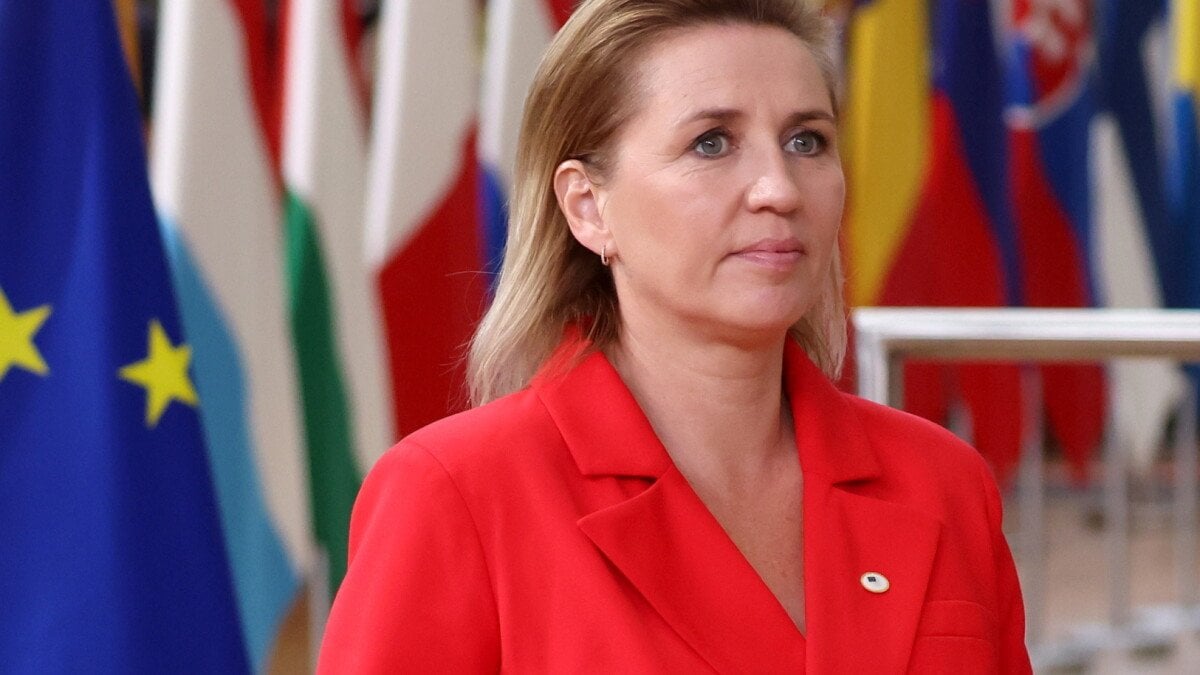
"Under Mette Frederiksen's leadership, Denmark has said goodbye to the EU's so-called Frugal Four. Denmark is ready for a larger EU budget. Denmark is also open to EU states taking out loans jointly if it can boost the European defense industry.
And on the whole, Denmark is open to developing European defense cooperation. A collaboration that Denmark now participates in fully after the referendum which abolished the Danish defense opt-out.
And even greater than the change in Danish policy towards the EU budget, joint debt raising and defense policy is Denmark's new view on the use of state aid in the EU.
For the past three decades, the foundation of Danish EU policy has been Danish support for an internal market with free competition – without state aid.
That policy is dead. Put to sleep by Mette Frederiksen and her government.
Now Denmark is open to state aid for European companies dealing with areas that are crucial to Europe's strategic security.
Europe must not depend in the future on gas from Russia, medicine from Asia and car batteries from China. Therefore, part of traditional business policy will in the future be treated as a security policy, and this will change the rules governing the playing field in the EU internal market.
It is not out of pleasure, or because Mette Frederiksen has suddenly felt a warm passion for the European project, that the Prime Minister is undertaking the biggest change in Danish European policy since the fall of the Berlin Wall.
According to Mette Frederiksen, it is out of necessity:
There are some things that Denmark has traditionally cared about in European politics, which we have to say are less important, says Prime Minister Mette Frederiksen Stars and Stripes, DR's podcast on international politics.
Many things moving right now, and of course Denmark should not hold tight to stance, which is no longer of use.
Europe is really busy making the right decisions about, among other things, defending, arming ourselves and deterring Russia, says the Prime Minister to Stars and Stripes:
There are so many things moving right now, and of course Denmark should not stand and hold in a position that cannot be used.
And now Europe is again facing dramatic change.
Firstly, there is the direct threat to Europe.
Russia has invaded Ukraine, and it is a real possibility that Russia could invade other European countries. This is a potential threat that may be on the way in the future.
But if you look at other areas, hostile actions are already part of everyday life in Europe.
European infrastructure is experiencing daily attacks. Hospitals, health care facilities, banks, municipalities, airports and other central parts of the infrastructure are exposed daily to cyber attacks – many of them orchestrated by state actors who want to harm Denmark and Europe.
Physical infrastructure such as internet cables and power cables located in the sea have also been subject to sabotage.
At the same time, Russia and China are trying to influence European elections and, on the whole, the European public through, for example, social media campaigns.
US president Donald Trump has repeatedly questioned Washington's continued commitment to the NATO defense alliance.
And not only has Trump questioned the US's willingness to help European countries if attacked. The US president has directly threatened to weaken the European economy by starting a trade war with EU states.
No matter how you slice it, Europe is challenged. I do not think we will return to the peaceful time that was before 2022. I think the unrest is going to continue, says Prime Minister Mette Frederiksen.
It is the recognition of a new world in which state actors such as Russia, Iran and North Korea – aided by China – are directly trying to do harm to European countries that have caused the Prime Minister and the Danish government to change European policy.
And this is no minor adjustment to Danish EU policy. It is a historic change."
Posted by Aweq
3 Comments
Posting this Danish article from a few days ago. Calls for increased EU funding, the raising of new joint debt and increased tolerance for state aid have been common throughout the years, but usually these points have been put forward by poorly run countries from Tomato/Romance language speaking Europe. If Frugal Four collapses, this increases the chance that the Draghi report’s recommendations might be implemented. And having a competent Nordic leader pushing for reform hopefully will help to curb the worst Southern instincts to use EU policy to compensate for domestic failings.
!ping Europe
It’s fascinating to see how quickly the Nordic countries have warmed up to the idea of more European integration since Covid and the start of the Ukrainian war.
I remember back when Brexit was being discussed on Swedish TV and how some political experts were betting that Sweden would be the next to leave. Less than 10 years later and Sweden has gone as far as to having a resparked discussion about joining the euro.