> Mark Zuckerberg’s unexpected ‘free speech’ overhaul of Meta’s content moderation has sparked concerns among advertisers that it will lead to a surge of harmful content and misinformation across the social media platform. Multiple advertising bosses told the Financial Times that Meta’s move to end its fact-checking programme and weaken hate speech policies could cost the platform, where marketing represents the majority of its $135bn in annual sales, if brands fear their adverts might run next to toxic content. “Some brands will already be assessing their plans carefully and it’s no doubt going to become a commercial conundrum for both sides,” said Fergus McCallum, boss at advertising agency TBWAMCR.
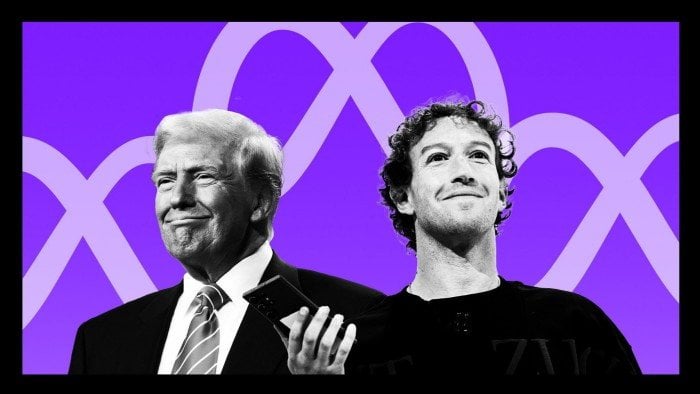
> The $1.5tn company’s drastic loosening of its online content marks an escalation in Zuckerberg’s recent push to curry favour with president-elect Donald Trump and his new right-hand man Elon Musk. Over just a few days, this saw him replace Meta’s global policy chief Nick Clegg with prominent Republican ally Joel Kaplan, as well as appointing martial arts titan and Trump friend Dana White to its board. On Friday, the company announced internally that it was also terminating its diversity, equity and inclusion (DEI) efforts, while Zuckerberg appeared on Joe Rogan’s podcast to say corporations had become “culturally neutered” and needed more “masculine energy” and to “celebrate aggression a bit more”.
> But the move to ditch professional fact-checkers in favour of a ‘community notes’ approach pioneered by Musk’s X — whereby users themselves flag misinformation — has unsettled the advertising industry given brand safety concerns at rivals X and TikTok in recent years. Meta has long dominated marketing spend alongside Google, building a reputation as a relatively safe haven, with high return-on-investment and close relationships with the major brands. In contrast, X was hit by an exodus of marketers over moderation concerns following Musk’s purchase of the platform two years ago, which has decimated its revenues. “Meta have done a great job tidying up the worst excesses of toxic content and if their new [approach] undoes this, advertisers will spot it quickly and punish them,” said Richard Exon, founder at advertising agency Joint.
> On X, community notes allows users to offer to “add context” below other people’s posts, though this will only appear when a consensus of other contributors “from different points of view” agree it is helpful. Critics argue that crowdsourced fact-checking efforts are far slower to label falsehoods and conspiracies than professional, trained individuals, and can be manipulated by users. Lou Paskalis, chief executive of marketing consultancy AJL Advisory and a former media executive at Bank of America, said Meta’s community notes shift “creates headwinds for marketers who are risk averse”, adding some will “reduce their reliance” on Meta as a result. Other advertising executives described feeling “nervous” and were seeking further information from the platform on how exactly the changes would be implemented. “Brands are entering a new world where established rules of operation can no longer be relied on,” said Patrick Reid, group chief executive at Imagination, the creative advertising agency.
> Concerns have also been raised about Meta’s plans to change its systems to “dramatically reduce” the amount of content that its automated filters remove from its platforms. That includes lifting restrictions on topics such as immigration and gender, to focus its systems on “illegal and high-severity violations”, such as terrorism, child exploitation and fraud, as well as content related to suicide, self-harm and eating disorders. Zuckerberg himself admitted its systems will now catch “less bad stuff”.
> Other industry executives were more sceptical the shift would create much fallout for Meta’s ads business. “I don’t think advertisers will care so long as the platform performs — but they will if the content becomes more polarised,” said one major advertising agency boss. Alex Cheeseman, head of enterprise UK, Outbrain, said “the cold, hard truth is advertisers will only care if it hurts their numbers. If performance remains steady, no one’s going to lose sleep over ‘where’ or ‘how’ their ads show up”. At the Consumer Electronics Show this week, Meta’s chief marketing officer Alex Schultz said that the company’s brand safety tools remain in place, and the company was “not rushing” the rollout to give advertisers “time to adjust and understand”. Nicola Mendelsohn, head of Meta’s global business group, wrote in a LinkedIn post that the company would continue to invest in safety tools for advertisers.

1 Comment
> Mark Zuckerberg’s unexpected ‘free speech’ overhaul of Meta’s content moderation has sparked concerns among advertisers that it will lead to a surge of harmful content and misinformation across the social media platform. Multiple advertising bosses told the Financial Times that Meta’s move to end its fact-checking programme and weaken hate speech policies could cost the platform, where marketing represents the majority of its $135bn in annual sales, if brands fear their adverts might run next to toxic content. “Some brands will already be assessing their plans carefully and it’s no doubt going to become a commercial conundrum for both sides,” said Fergus McCallum, boss at advertising agency TBWAMCR.
> The $1.5tn company’s drastic loosening of its online content marks an escalation in Zuckerberg’s recent push to curry favour with president-elect Donald Trump and his new right-hand man Elon Musk. Over just a few days, this saw him replace Meta’s global policy chief Nick Clegg with prominent Republican ally Joel Kaplan, as well as appointing martial arts titan and Trump friend Dana White to its board. On Friday, the company announced internally that it was also terminating its diversity, equity and inclusion (DEI) efforts, while Zuckerberg appeared on Joe Rogan’s podcast to say corporations had become “culturally neutered” and needed more “masculine energy” and to “celebrate aggression a bit more”.
> But the move to ditch professional fact-checkers in favour of a ‘community notes’ approach pioneered by Musk’s X — whereby users themselves flag misinformation — has unsettled the advertising industry given brand safety concerns at rivals X and TikTok in recent years. Meta has long dominated marketing spend alongside Google, building a reputation as a relatively safe haven, with high return-on-investment and close relationships with the major brands. In contrast, X was hit by an exodus of marketers over moderation concerns following Musk’s purchase of the platform two years ago, which has decimated its revenues. “Meta have done a great job tidying up the worst excesses of toxic content and if their new [approach] undoes this, advertisers will spot it quickly and punish them,” said Richard Exon, founder at advertising agency Joint.
> On X, community notes allows users to offer to “add context” below other people’s posts, though this will only appear when a consensus of other contributors “from different points of view” agree it is helpful. Critics argue that crowdsourced fact-checking efforts are far slower to label falsehoods and conspiracies than professional, trained individuals, and can be manipulated by users. Lou Paskalis, chief executive of marketing consultancy AJL Advisory and a former media executive at Bank of America, said Meta’s community notes shift “creates headwinds for marketers who are risk averse”, adding some will “reduce their reliance” on Meta as a result. Other advertising executives described feeling “nervous” and were seeking further information from the platform on how exactly the changes would be implemented. “Brands are entering a new world where established rules of operation can no longer be relied on,” said Patrick Reid, group chief executive at Imagination, the creative advertising agency.
> Concerns have also been raised about Meta’s plans to change its systems to “dramatically reduce” the amount of content that its automated filters remove from its platforms. That includes lifting restrictions on topics such as immigration and gender, to focus its systems on “illegal and high-severity violations”, such as terrorism, child exploitation and fraud, as well as content related to suicide, self-harm and eating disorders. Zuckerberg himself admitted its systems will now catch “less bad stuff”.
> Other industry executives were more sceptical the shift would create much fallout for Meta’s ads business. “I don’t think advertisers will care so long as the platform performs — but they will if the content becomes more polarised,” said one major advertising agency boss. Alex Cheeseman, head of enterprise UK, Outbrain, said “the cold, hard truth is advertisers will only care if it hurts their numbers. If performance remains steady, no one’s going to lose sleep over ‘where’ or ‘how’ their ads show up”. At the Consumer Electronics Show this week, Meta’s chief marketing officer Alex Schultz said that the company’s brand safety tools remain in place, and the company was “not rushing” the rollout to give advertisers “time to adjust and understand”. Nicola Mendelsohn, head of Meta’s global business group, wrote in a LinkedIn post that the company would continue to invest in safety tools for advertisers.