
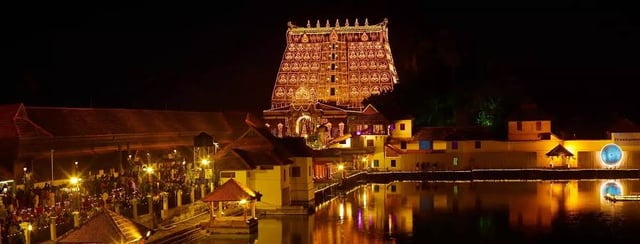
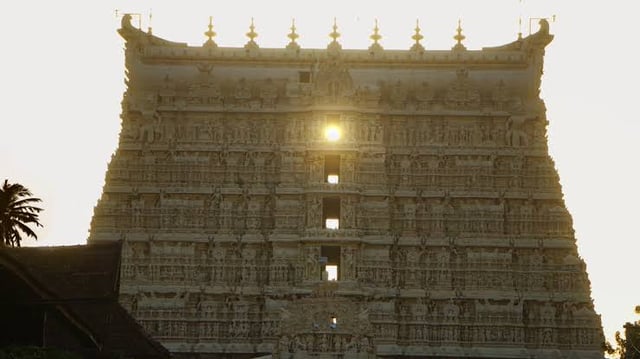
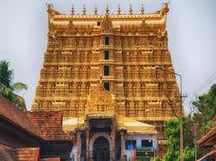
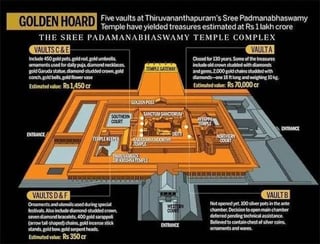
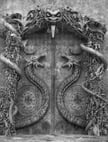
Vault B is a temple chamber located underneath the sanctum sanctorum of the Main temple deity of the Anantha Padmnabhaswamy temple in Kerala, India. Other vaults were opened and vast riches were found but this vault is religiously sensitive and filled with stories about curses and aliens that deny entry and permission to open it. It's now guarded with paramilitary troops. What is inside this vault and why won't they open it. According to Forbes, they believe that after assessment of the other vaults qualities and modern day inflation, they value the riches in total to be 1 billion dollars USD. but that can't be confirmed unless they open it. Note , pic 7 is not the actual door, but an artists recreation of it, the door does indeed have cobra sculptures guarding it. Why is the government hiding this?
Posted by TheThinkerSSV
2 Comments
SS: 1 billion dollars is a lot of money and it’s oddly suspicious that they refuse to open one door simply because of rust and religious issues when all the other vaults were opened as well. this could lead to serious scientific and historic studies into the past and this money could really change the world.
Also here’s an explanation from a local from another post on the same topic :
There is no curse. The picture of the doors is not of this temple. This temple is in my hometown, which was the capital city of the old Travancore kingdom. I have been in this temple hundreds of times. There was always a rumor that the temple contained a huge treasure, but no one in living memory had actually seen it. My mother recounted hearing about the treasure from her great-grandmother. In 2011, a petition was filed in the Supreme Court to have the wealth of the temple audited. The court appointed a 6-member committee for this.
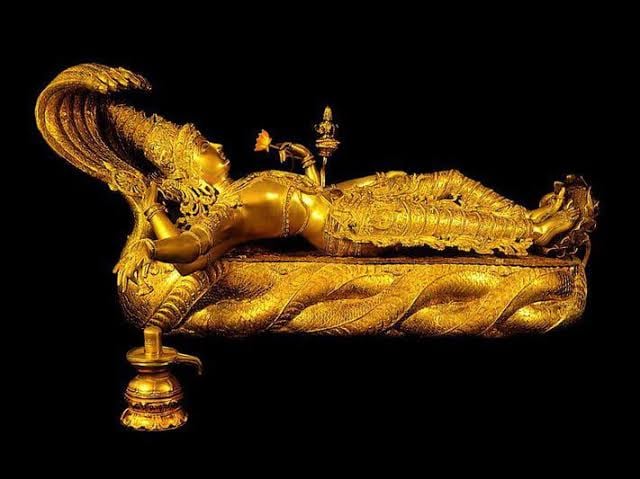
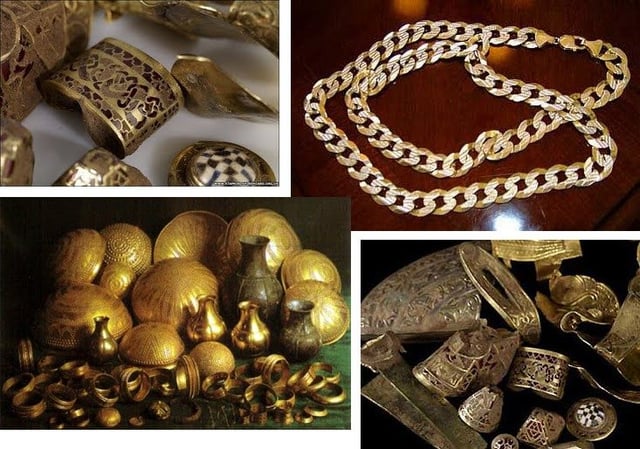
The temple is constructed entirely of huge granite stones, and beneath the sanctum of the main deity, there are underground vaults. Some of these vaults were in daily use for storage of ceremonial equipment and vessels, but others had not been opened in centuries. One of these vaults was opened for the audit, and a large treasure was discovered. This vault (called vault-A by the auditors) could be accessed only after sliding away a massive granite block that took 7 people to move, and then oxygen was pumped inside the cellar before anyone could enter. The treasure was kept in old wooden boxes, which had rotted away to dust, and the gold and jewels were sitting in piles of this wood dust. The auditors carefully sifted the jewels and coins out of the dust, wrapped them in cloth, and put them back in new boxes. These were devotional offerings made to the deity of the temple over many centuries – e.g. 18-foot-long golden chains encrusted with diamonds and other jewelry that must at one time have been used to decorate the deity (18-foot-long chain, because the main deity of Vishnu in resting pose in this temple is that big). Gold coins that were paid as offerings were also found, including Roman Empire ‘Aureus’ coins from the time of Augustus Caesar (2000 years ago, there was a lot of spice trade between Travancore and Rome – Periplus Maris Erythraei, written in the 1st century, was a mariner’s handbook for navigation and trading between the Red Sea and the western coast of India). The value of the actual gold and jewels was estimated to be roughly around 22 billion USD. Later the media speculated that the value could be as high as 1 trillion USD based on the 2000-year historical value of the find – apparently, this is the world’s largest collection of ancient jewelry!
After the audit, the treasure was left back in vault-A and it was re-sealed the way it was found, pending further guidance from the Supreme Court.
During the audit, one vault, numbered as vault-B by the auditors, could not be opened. This vault-B has an ante-chamber which was opened as recently as the 1990s, but it has an inner vault, which has not been opened for centuries, like vault-A where the treasure was found. The royal family, which was against the audit for religious reasons but could not refuse the Supreme Court order, had provided the old keys for this chamber as well. To enter this vault, there is first a wooden door, followed by an iron door which has three locks. They were able to open two of the locks, but one was rusted shut. The plan was to return another day with cutting equipment, but before that could happen, the royal family got an injunction from the Supreme Court to stop the audit. The royal family, which has been the custodian of this temple for all these centuries, was very unhappy with the idea of bringing in metal-cutting torches and violently opening this vault, especially since this vault sits directly beneath the main sanctum of a very sacred, very active temple that gets thousands of visitors a day.
This is why this vault-B alone has not been audited yet. But the media has spun fantastical tales about this vault-B – that there is a curse inscribed on the door, that it is because of this curse that Sundar Rajan, the person who originally petitioned the court for the audit, died (he was a very old retired person that died of a tropical fever). There are ridiculous stories on social media that if the vault is opened, the sea will come in and flood the city, and even that alien spaceships are hidden under that vault!
Why does this temple alone have this much wealth today? Travancore is one of the few kingdoms in India that was never invaded by the Muslim marauders who looted and destroyed most of the temples in northern India (e.g., just one invader – Mahmud of Ghazni – carried away a treasure worth millions of dinars in 1025 AD from the Somnath Temple in Gujarat). It was also not invaded by colonial powers – e.g., in 1741, the king of Travancore defeated the Dutch in the Battle of Colachel. Travancore remained an independent kingdom even during the British colonial period, having an alliance treaty with the East India Company. Also, the kings were very serious about their religious duty. The great uncle of the prince in the video above, who was the ruler in 1947 when his kingdom was absorbed into the Indian Republic, could have packed all this wealth and claimed it as personal property, but instead, he dedicated it to the temple and declared himself a servant of the deity, ensuring that the treasure remained under the temple’s care for generations to come.