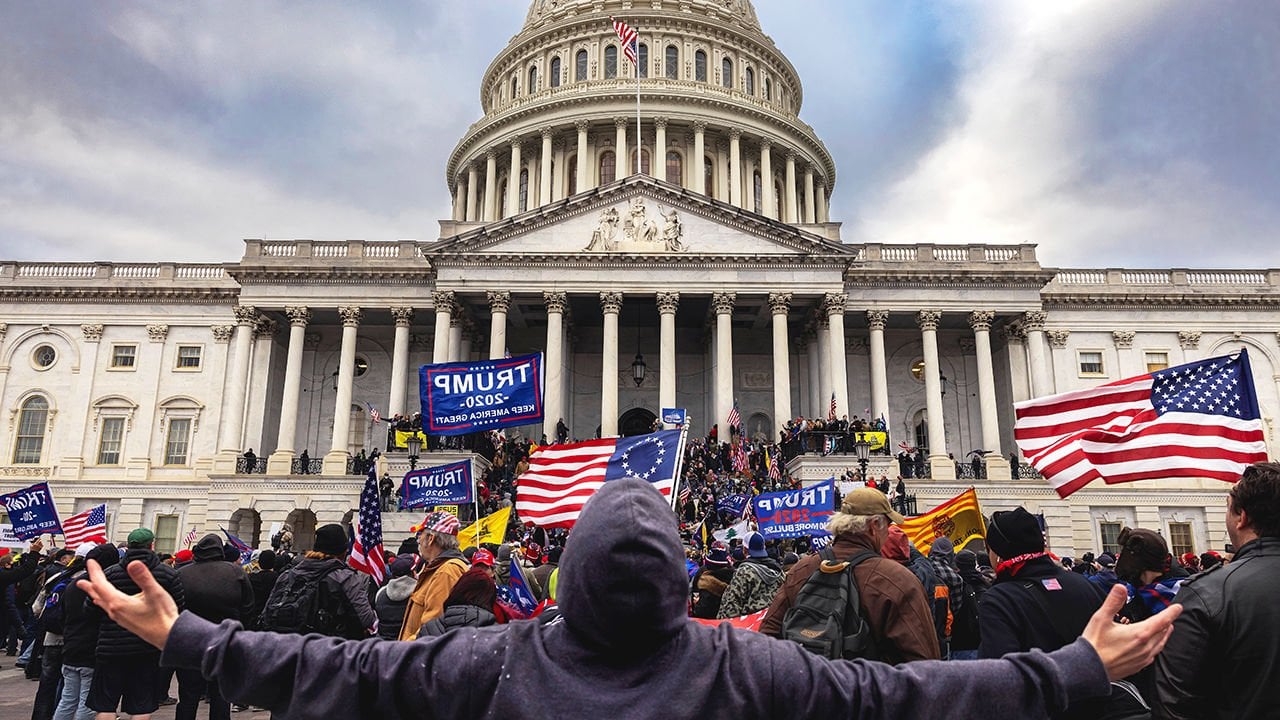
Former President Donald Trump’s sweeping pardons of nearly 1,600 individuals involved in the January 6th Capitol riot, including Proud Boys leader Enrique Tarrio, who had been serving a 22-year sentence for orchestrating the attack. Trump’s decision to grant clemency was unexpected by many, including the rioters themselves, but it marked a significant political gesture, signaling support for the far-right groups involved. Tarrio, who was released after serving three years, sees his imprisonment as unjust, and he suggests that the political game is far from over, implying that his group could also seek to imprison opponents.
The pardons were more extensive than expected, with most of the Proud Boys and Oath Keepers who breached the Capitol receiving clemency. The move also lifted legal restrictions typically tied to felony convictions, such as gun ownership and voting rights. While some, like J.D. Vance, initially opposed pardoning violent offenders, Trump overruled these opinions, stating the rioters had served enough time. This raised concerns that Trump’s actions could be seen as an endorsement of the Capitol violence and aligned with his broader controversial stance on January 6th.
Despite concerns about increased political violence, the article notes that the impact of the pardons could reinvigorate the Proud Boys and similar groups. However, the group’s influence has diminished in the wake of their imprisonment. The pardons also reflect a broader political divide, with Trump’s supporters viewing them as a correction of perceived injustices, while critics see them as reinforcing dangerous political rhetoric. The article concludes by highlighting concerns about the future of domestic extremism and the administration’s handling of it.

2 Comments
Former President Donald Trump’s sweeping pardons of nearly 1,600 individuals involved in the January 6th Capitol riot, including Proud Boys leader Enrique Tarrio, who had been serving a 22-year sentence for orchestrating the attack. Trump’s decision to grant clemency was unexpected by many, including the rioters themselves, but it marked a significant political gesture, signaling support for the far-right groups involved. Tarrio, who was released after serving three years, sees his imprisonment as unjust, and he suggests that the political game is far from over, implying that his group could also seek to imprison opponents.
The pardons were more extensive than expected, with most of the Proud Boys and Oath Keepers who breached the Capitol receiving clemency. The move also lifted legal restrictions typically tied to felony convictions, such as gun ownership and voting rights. While some, like J.D. Vance, initially opposed pardoning violent offenders, Trump overruled these opinions, stating the rioters had served enough time. This raised concerns that Trump’s actions could be seen as an endorsement of the Capitol violence and aligned with his broader controversial stance on January 6th.
Despite concerns about increased political violence, the article notes that the impact of the pardons could reinvigorate the Proud Boys and similar groups. However, the group’s influence has diminished in the wake of their imprisonment. The pardons also reflect a broader political divide, with Trump’s supporters viewing them as a correction of perceived injustices, while critics see them as reinforcing dangerous political rhetoric. The article concludes by highlighting concerns about the future of domestic extremism and the administration’s handling of it.
https://archive.is/356kC
Stand back and stand by