> Three decades after Rwanda’s genocide, the past is ever-present
> Paul Kagame sees himself as indispensable to a still fragile country
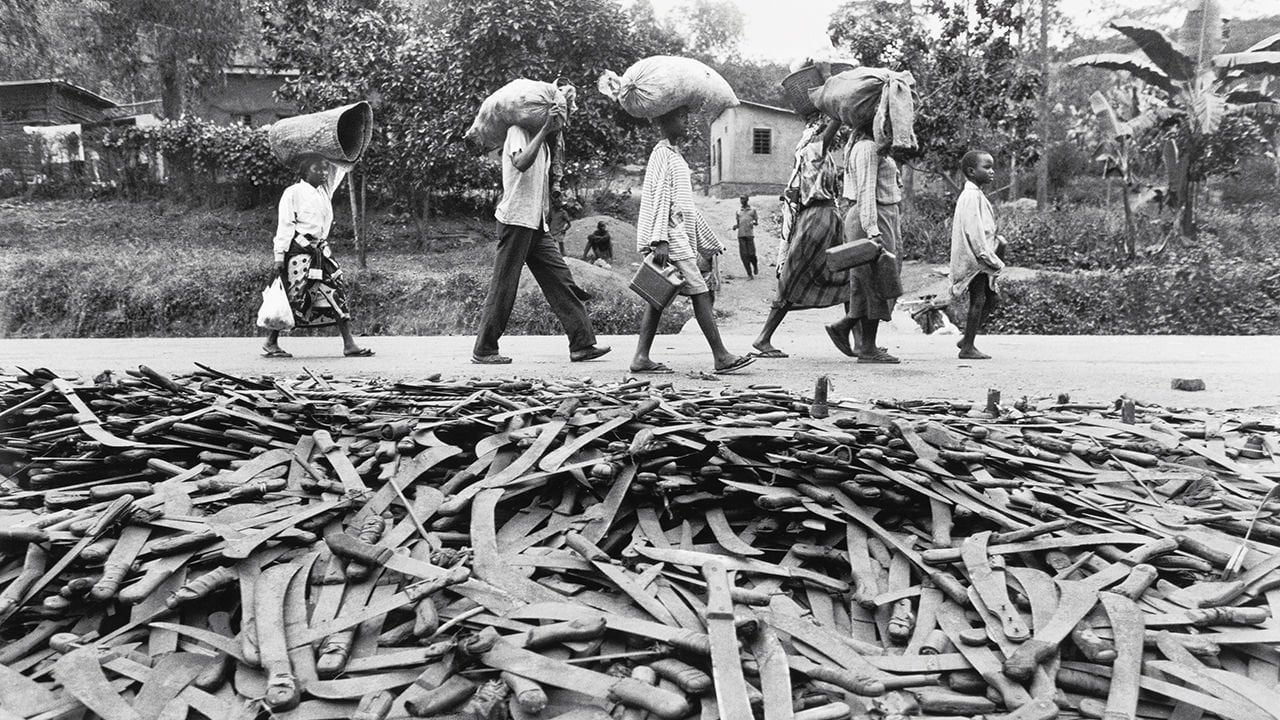
> EVERY YEAR on April 7th Paul Kagame, Rwanda’s president, commemorates the start of the most abominable event of the late 20th century, the Rwandan genocide. Over 100 days in 1994 masses of the majority Hutu population slaughtered hundreds of thousands of their countrymen, mostly from the minority Tutsi group. In these annual speeches Mr Kagame offers glimpses of why he is Africa’s most polarising leader. In one breath there is the official narrative: Rwanda is now a miracle of peace, unity and prosperity—a beacon of progress lit from the embers of the genocide. In the next there are hints of the more sinister figure his critics decry, for instance in his disdain for those who challenge him. They also point out his brutal repression and his warmongering in neighbouring Congo.
> Ahead of the 30th anniversary of the genocide some observers in Kigali, the capital, hope that Mr Kagame will use the event to move beyond the question of whether Rwanda is Africa’s Singapore or Africa’s North Korea. About two-thirds of Rwanda’s population are under 30. Some diplomats and businessmen wonder whether the 66-year-old president, who has, in effect, run the country since 1994, might speak of the next 30 years, loosen the grip of his authoritarian state and even suggest when he might plan to step aside.
That is unlikely. In the “land of a thousand hills” only one man can have the moral high ground. On July 15th Mr Kagame will almost certainly be re-elected as president with a margin that would make even Vladimir Putin blush, in a ballot neither free nor fair. Having won 98% of votes in a constitutional referendum in 2015 that still allows him to run for two more terms of office lasting until 2034, he is going nowhere.
> To assess Rwanda today, you can look at Mr Kagame’s policies in three places: at home, in the wider Great Lakes region, and in the rest of the world. Across them a picture emerges of some reform and reconciliation, with a lot of repression and realpolitik. Central to Mr Kagame’s domestic agenda is state-enforced brainwashing. At mandatory ingando (solidarity) camps and in prisons, an official narrative is drummed into the population. It is a story that emphasises a national Rwandan identity over ethnic ones. It does not mention the crimes committed by Mr Kagame’s party, the Rwandan Patriotic Front (RPF).
For the government, the case for top-down reconciliation is obvious, given that perpetrators live cheek by jowl with the families of victims. Has it worked? A state-sponsored “reconciliation barometer” shows that nearly 100% of Rwandans respond positively to questions about whether they are tolerant, trusting and united. Phil Clark of the School of Oriental and African Studies at the University of London has written that “most Rwandans…have chosen to get on with life rather than settle old scores.”
> Other researchers argue that in Rwanda reconciliation is often superficial. Susan Thomson of Colgate University in New York has described “everyday resistance” to government schemes. This includes people keeping silent or even laughing during community meetings, and passing critical messages clandestinely at vegetable markets. Though it is impossible to see into the hearts of ordinary Rwandans, you can see the repression that has come with reconciliation. Expansive laws banning “divisionism” and genocide denial are used against dissidents. A system whereby neighbours spy on one another keeps close tabs on villagers. Journalists and opposition politicians have been imprisoned and some have died in mysterious circumstances. Opponents of the regime outside the country have been harassed and some have been killed, according to Human Rights Watch, an international monitor.
> Rwanda prefers it when visitors focus on Kigali’s clean streets, its gleaming convention centre, the lack of petty corruption, its tourism lodges and mountain gorillas. Western diplomats praise Rwanda’s effective use of aid, which adds up to the equivalent of around 75% of government spending. Such is the interest from other African officials that there is now a dedicated agency explaining how they can use Rwanda’s methods. It is a sign of what Ken Opalo, a Kenyan academic, calls “Rwanda envy”. Some of that is justified. GDP grew by more than 8% a year on average from 1995 to 2022. Life expectancy increased from 49 years to 66 between 2001 and 2021. Child mortality fell by 77%.
> Yet there may be less to Rwanda’s success than meets the eye. Several researchers have credibly suggested that official measures of poverty underestimate its true extent. Others have questioned official data on agricultural yields. And just 2% of Rwandans have fridges, a symbol of African middle-class life. That is well below the rate in other nearby countries such as Ethiopia (6%) and Tanzania (10%) that have similar income levels, according to the Global Data Lab at Radboud University in the Netherlands.
> In private many Rwandans complain about big gaps between the rich and poor. The country has a higher Gini coefficient, a benchmark for income inequality, than regional peers. A sense that the gains from growth are heavily skewed to a narrow elite could be socially dangerous. One study suggests that Tutsis, who make up 10-15% of the population, hold 80% of top jobs in the government and state-owned firms such as Crystal Ventures, run by the RPF, and Horizon, run by the army. Some foreigners praise these firms for investing in the economy, though they can also deter investors by stifling competition.
> Yet Mr Kagame’s ambitions have never been limited by his country’s borders. In the 1980s he and other Tutsi exiles in Uganda helped Yoweri Museveni take power in that country. In the early 1990s the RPF went to war against the then Hutu-led regime in Rwanda, and in 1994 it marched on Kigali to end the genocide, which was sparked when a plane carrying Juvenal Habyarimana, Rwanda’s then president, was shot down. In 1997 Mr Kagame and Mr Museveni together toppled Mobutu Sese Seko, Congo’s dictator for three decades, after he gave sanctuary to Rwandan army and militia leaders who had taken part in the genocide. When the man they replaced him with, Laurent Kabila, proved less than pliant, Rwanda invaded again, instigating a war that led to the loss of 1m-5m lives, mostly from hunger and disease.

1 Comment
> Three decades after Rwanda’s genocide, the past is ever-present
> Paul Kagame sees himself as indispensable to a still fragile country
> EVERY YEAR on April 7th Paul Kagame, Rwanda’s president, commemorates the start of the most abominable event of the late 20th century, the Rwandan genocide. Over 100 days in 1994 masses of the majority Hutu population slaughtered hundreds of thousands of their countrymen, mostly from the minority Tutsi group. In these annual speeches Mr Kagame offers glimpses of why he is Africa’s most polarising leader. In one breath there is the official narrative: Rwanda is now a miracle of peace, unity and prosperity—a beacon of progress lit from the embers of the genocide. In the next there are hints of the more sinister figure his critics decry, for instance in his disdain for those who challenge him. They also point out his brutal repression and his warmongering in neighbouring Congo.
> Ahead of the 30th anniversary of the genocide some observers in Kigali, the capital, hope that Mr Kagame will use the event to move beyond the question of whether Rwanda is Africa’s Singapore or Africa’s North Korea. About two-thirds of Rwanda’s population are under 30. Some diplomats and businessmen wonder whether the 66-year-old president, who has, in effect, run the country since 1994, might speak of the next 30 years, loosen the grip of his authoritarian state and even suggest when he might plan to step aside.
That is unlikely. In the “land of a thousand hills” only one man can have the moral high ground. On July 15th Mr Kagame will almost certainly be re-elected as president with a margin that would make even Vladimir Putin blush, in a ballot neither free nor fair. Having won 98% of votes in a constitutional referendum in 2015 that still allows him to run for two more terms of office lasting until 2034, he is going nowhere.
> To assess Rwanda today, you can look at Mr Kagame’s policies in three places: at home, in the wider Great Lakes region, and in the rest of the world. Across them a picture emerges of some reform and reconciliation, with a lot of repression and realpolitik. Central to Mr Kagame’s domestic agenda is state-enforced brainwashing. At mandatory ingando (solidarity) camps and in prisons, an official narrative is drummed into the population. It is a story that emphasises a national Rwandan identity over ethnic ones. It does not mention the crimes committed by Mr Kagame’s party, the Rwandan Patriotic Front (RPF).
For the government, the case for top-down reconciliation is obvious, given that perpetrators live cheek by jowl with the families of victims. Has it worked? A state-sponsored “reconciliation barometer” shows that nearly 100% of Rwandans respond positively to questions about whether they are tolerant, trusting and united. Phil Clark of the School of Oriental and African Studies at the University of London has written that “most Rwandans…have chosen to get on with life rather than settle old scores.”
> Other researchers argue that in Rwanda reconciliation is often superficial. Susan Thomson of Colgate University in New York has described “everyday resistance” to government schemes. This includes people keeping silent or even laughing during community meetings, and passing critical messages clandestinely at vegetable markets. Though it is impossible to see into the hearts of ordinary Rwandans, you can see the repression that has come with reconciliation. Expansive laws banning “divisionism” and genocide denial are used against dissidents. A system whereby neighbours spy on one another keeps close tabs on villagers. Journalists and opposition politicians have been imprisoned and some have died in mysterious circumstances. Opponents of the regime outside the country have been harassed and some have been killed, according to Human Rights Watch, an international monitor.
> Rwanda prefers it when visitors focus on Kigali’s clean streets, its gleaming convention centre, the lack of petty corruption, its tourism lodges and mountain gorillas. Western diplomats praise Rwanda’s effective use of aid, which adds up to the equivalent of around 75% of government spending. Such is the interest from other African officials that there is now a dedicated agency explaining how they can use Rwanda’s methods. It is a sign of what Ken Opalo, a Kenyan academic, calls “Rwanda envy”. Some of that is justified. GDP grew by more than 8% a year on average from 1995 to 2022. Life expectancy increased from 49 years to 66 between 2001 and 2021. Child mortality fell by 77%.
> Yet there may be less to Rwanda’s success than meets the eye. Several researchers have credibly suggested that official measures of poverty underestimate its true extent. Others have questioned official data on agricultural yields. And just 2% of Rwandans have fridges, a symbol of African middle-class life. That is well below the rate in other nearby countries such as Ethiopia (6%) and Tanzania (10%) that have similar income levels, according to the Global Data Lab at Radboud University in the Netherlands.
> In private many Rwandans complain about big gaps between the rich and poor. The country has a higher Gini coefficient, a benchmark for income inequality, than regional peers. A sense that the gains from growth are heavily skewed to a narrow elite could be socially dangerous. One study suggests that Tutsis, who make up 10-15% of the population, hold 80% of top jobs in the government and state-owned firms such as Crystal Ventures, run by the RPF, and Horizon, run by the army. Some foreigners praise these firms for investing in the economy, though they can also deter investors by stifling competition.
> Yet Mr Kagame’s ambitions have never been limited by his country’s borders. In the 1980s he and other Tutsi exiles in Uganda helped Yoweri Museveni take power in that country. In the early 1990s the RPF went to war against the then Hutu-led regime in Rwanda, and in 1994 it marched on Kigali to end the genocide, which was sparked when a plane carrying Juvenal Habyarimana, Rwanda’s then president, was shot down. In 1997 Mr Kagame and Mr Museveni together toppled Mobutu Sese Seko, Congo’s dictator for three decades, after he gave sanctuary to Rwandan army and militia leaders who had taken part in the genocide. When the man they replaced him with, Laurent Kabila, proved less than pliant, Rwanda invaded again, instigating a war that led to the loss of 1m-5m lives, mostly from hunger and disease.