Paywalled.
As someone who is scratching their head at this title, what exactly is the motivation behind this? Seems somewhat out of left field based on everything Trump has been demanding up to this point.
UPnwuijkbwnui on
Unironically, would be mutually beneficial for Canada to liberalize its banking sector a bit. The Big 5 in Canada are basically Japan’s pre-war Zaibatsu companies and are responsible for Canada’s meaningful stall in productivity. Opening it to competition could be a win-win, though it will never happen.
Reidmill on
Can we just ban paywalled articles? What is the point of this thread if no one can read the article?
ReservedWhyrenII on
I mean, hyping up rhetoric about how ‘trade war’ stuff is a vile betrayal and then refusing to lower your own trade barriers to duck the threat of trade barriers would be a bit contradictory
DrowArcher on
As far as concerned, on its own would be a neolib win.
But could we not shake the foundations of everything the Western World stands for to relax some banking regulations? Jesus
LJofthelaw on
If the US has better regulations for its banks, id even support this. But for now, fuck Trump. That said, Trudeau can offer to open up our telecom industry. I’d be cool with that one right away.
pencilpaper2002 on
Mexican President Claudia Sheinbaum announced that 25-per-cent American tariffs on her country would be delayed for one month after speaking to U.S. President Donald Trump on Monday.
Posting on X, Ms. Sheinbaum said she had a “good conversation with President Trump with great respect for our relationship and sovereignty.”
She said the two leaders reached a series of agreements: Mexico will immediately reinforce the northern border with 10,000 members of the its national guard to prevent drug trafficking from Mexico to the United States, “particularly fentanyl.”
The United States has also committed to working to prevent the trafficking of high-powered weapons to Mexico.
The Americans “are pausing tariffs for one month from now,” she said.
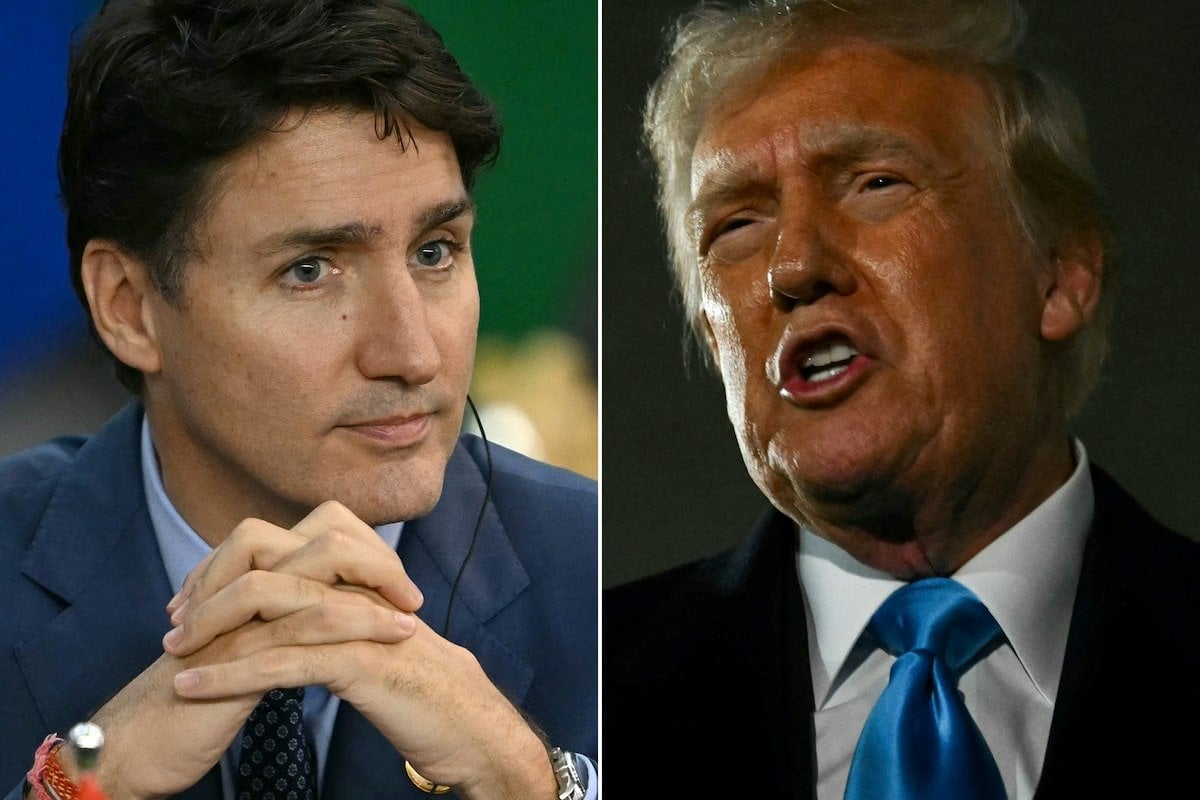
Mr. Trump talked briefly to Prime Minister Justin Trudeau this morning and the two are slated to talk again at 3 p.m. ET.
As of now, U.S. tariffs of 25 per cent on Canadian goods and 10 per cent on energy are still scheduled to take effect on Tuesday.
Mr. Trump, meanwhile, is making fresh demands for Ottawa to allow American banks greater latitude to operate in Canada, following the first of two phone calls scheduled with Mr. Trudeau on Monday.
“Canada’s doesn’t even allow U.S. Banks to open or do business there. What’s that all about?” Mr. Trump wrote on Truth Social Monday morning.
Mr. Trump made similar comments on Sunday night. Both the U.S. and Canada have said they intend to impose punishing tariffs on each other’s goods by Tuesday.
Mr. Trump’s remarks suggest he is making new market access demands from Ottawa, after weeks of accusing Canada of being a source of illegal narcotics and migration to the U.S.
“Canada has been very abusive of the United States for many years,” he told reporters after arriving back in Washington, D.C. from Florida.
“They don’t allow our banks. Did you know that? Canada does not allow banks to go in.”
At the same time, senior members of Mr. Trump’s administration on Monday said that the U.S. is not interested in tariffs as a trade measure, despite Mr. Trump having signed an order to impose tariffs beginning Tuesday.
Kevin Hassett, the director of the National Economic Council, told CNBC Monday that the 25-per-cent levy is intended only to prompt action on illegal narcotics. He accused Mr. Trudeau of seeking political gain through a Canadian response of sweeping retaliatory tariffs.
“Instead of addressing the drug problem, they want to blame the us and perhaps get some political benefit out of saying that Trump’s trying to create a trade war. Why would he do that with Canada and Mexico? This is 100 per cent about a drug war. It’s 100 per cent about fentanyl,” Mr. Hassett said.
According to U.S. government figures, border guards intercepted 19.5 kilograms of fentanyl along the Canadian border last year, which is 0.2 per cent of the nearly 11 tonnes intercepted in the United States
Mr. Hassett said personal experience had convinced him that Canada is a bad actor in drugs. He described travelling to Alberta last summer for a fishing trip, with a stop in Edmonton. There, he walked out of his hotel and saw “an ambulance there helping somebody who had OD’d, sadly, on fentanyl. And then as I’m walking to my restaurant two people get in a fight with the cops over drugs.”
His conclusion: “Canada is like San Francisco, and it’s spreading to the U.S. And it needs to stop.”
Mr. Hassett made no comments about banks.
Foreign banks, including American institutions, have operated in Canada for many years. The Office of the Superintendent of Financial Institutions currently regulates at least 15 foreign bank subsidiaries in Canada, including Citibank Canada, J.P. Morgan Bank Canada, and UBS Bank Canada.
“The Canadian bank regulatory regime certainly does allow U.S. banks to have operations in Canada,” said Koker Christensen, co-leader of the financial services practice at Fasken.
“Establishing a Canadian subsidiary of a foreign bank is the same process as establishing a domestic bank. It’s the same approvals and the same process,” he said.
Mr. Trump also accused Canada of being “very tough on oil, on energy. They don’t allow our farm products in, essentially. They don’t allow a lot of things in.
“And we allow everything to come in. It’s been a one-way street.”
Mr. Trump’s imposition of sweeping tariffs on his country’s three largest trading partners sent North American stock markets down by roughly 1.5 per cent on Monday morning. Major business groups have sounded alarm, while some members of his own Republican Party have begun to speak out in opposition.
Inflation under former president Joe Biden increased “the input cost to farming by 20% incl particularly high prices on fertilizer,” Iowa Sen. Chuck Grassley wrote on X. “So I plead w President Trump to exempt potash from the tariff because family farmers get most of our potash from Canada.”
Wyoming Sen. John Barrasso on Sunday noted that Canada is his state’s top trading partner. “So people are clearly looking at that. We’re keeping a close eye on it,” he told Fox on Sunday. But, he added, “the president has every right to hold others accountable who do not treat us fairly.”
Mr. Trump has not previously made banking a central part of his demands.
Foreign banks are allowed to do business in Canada through subsidiaries, including opening branches and providing loans and investment banking services to companies. These subsidiaries are called Schedule II banks, after the section of the Bank Act that describes them.
Citibank Canada was one U.S. lender that tried to build a retail banking businesses to serve individuals and small businesses in Canada, but retreated after finding it hard to compete with the major Canadian incumbents. Citibank still has commercial banking, capital markets, trading and private banking operations in Canada.
British-based bank HSBC Group had a major Canadian subsidiary until it was acquired by Royal Bank of Canada, and other major foreign banks such as Barclays PLC, BNP Paribas and UBS Group AG also operate in Canada.
All investors, including U.S. banks, are prevented from owning more than 10 per cent of a Canadian bank without approval from the Minister of Finance to own more. That rule is in place as a barrier to foreign takeovers and to ensure that ownership of Canada’s banks is widely held.
Ok-Kaleidoscope3641 on
US banks can already open subsidiaries in Canada under the same restrictions as Canadian banks. Does he want a Banking Union, where banks can operate in the US and Canada and transfer liquidity between both countries? In the light of the threat of annexation through economic domination this seems like a first step… a poison pill.
WichaelWavius on
That’s… fine?
gnurdette on
So, the little people – and the reputation of America – are to be sacrificed for the sake of… banks?

11 Comments
Fentanyl?
Paywalled.
As someone who is scratching their head at this title, what exactly is the motivation behind this? Seems somewhat out of left field based on everything Trump has been demanding up to this point.
Unironically, would be mutually beneficial for Canada to liberalize its banking sector a bit. The Big 5 in Canada are basically Japan’s pre-war Zaibatsu companies and are responsible for Canada’s meaningful stall in productivity. Opening it to competition could be a win-win, though it will never happen.
Can we just ban paywalled articles? What is the point of this thread if no one can read the article?
I mean, hyping up rhetoric about how ‘trade war’ stuff is a vile betrayal and then refusing to lower your own trade barriers to duck the threat of trade barriers would be a bit contradictory
As far as concerned, on its own would be a neolib win.
But could we not shake the foundations of everything the Western World stands for to relax some banking regulations? Jesus
If the US has better regulations for its banks, id even support this. But for now, fuck Trump. That said, Trudeau can offer to open up our telecom industry. I’d be cool with that one right away.
Mexican President Claudia Sheinbaum announced that 25-per-cent American tariffs on her country would be delayed for one month after speaking to U.S. President Donald Trump on Monday.
Posting on X, Ms. Sheinbaum said she had a “good conversation with President Trump with great respect for our relationship and sovereignty.”
She said the two leaders reached a series of agreements: Mexico will immediately reinforce the northern border with 10,000 members of the its national guard to prevent drug trafficking from Mexico to the United States, “particularly fentanyl.”
The United States has also committed to working to prevent the trafficking of high-powered weapons to Mexico.
The Americans “are pausing tariffs for one month from now,” she said.
Mr. Trump talked briefly to Prime Minister Justin Trudeau this morning and the two are slated to talk again at 3 p.m. ET.
As of now, U.S. tariffs of 25 per cent on Canadian goods and 10 per cent on energy are still scheduled to take effect on Tuesday.
Mr. Trump, meanwhile, is making fresh demands for Ottawa to allow American banks greater latitude to operate in Canada, following the first of two phone calls scheduled with Mr. Trudeau on Monday.
“Canada’s doesn’t even allow U.S. Banks to open or do business there. What’s that all about?” Mr. Trump wrote on Truth Social Monday morning.
Mr. Trump made similar comments on Sunday night. Both the U.S. and Canada have said they intend to impose punishing tariffs on each other’s goods by Tuesday.
Mr. Trump’s remarks suggest he is making new market access demands from Ottawa, after weeks of accusing Canada of being a source of illegal narcotics and migration to the U.S.
“Canada has been very abusive of the United States for many years,” he told reporters after arriving back in Washington, D.C. from Florida.
“They don’t allow our banks. Did you know that? Canada does not allow banks to go in.”
At the same time, senior members of Mr. Trump’s administration on Monday said that the U.S. is not interested in tariffs as a trade measure, despite Mr. Trump having signed an order to impose tariffs beginning Tuesday.
Kevin Hassett, the director of the National Economic Council, told CNBC Monday that the 25-per-cent levy is intended only to prompt action on illegal narcotics. He accused Mr. Trudeau of seeking political gain through a Canadian response of sweeping retaliatory tariffs.
“Instead of addressing the drug problem, they want to blame the us and perhaps get some political benefit out of saying that Trump’s trying to create a trade war. Why would he do that with Canada and Mexico? This is 100 per cent about a drug war. It’s 100 per cent about fentanyl,” Mr. Hassett said.
According to U.S. government figures, border guards intercepted 19.5 kilograms of fentanyl along the Canadian border last year, which is 0.2 per cent of the nearly 11 tonnes intercepted in the United States
Mr. Hassett said personal experience had convinced him that Canada is a bad actor in drugs. He described travelling to Alberta last summer for a fishing trip, with a stop in Edmonton. There, he walked out of his hotel and saw “an ambulance there helping somebody who had OD’d, sadly, on fentanyl. And then as I’m walking to my restaurant two people get in a fight with the cops over drugs.”
His conclusion: “Canada is like San Francisco, and it’s spreading to the U.S. And it needs to stop.”
Mr. Hassett made no comments about banks.
Foreign banks, including American institutions, have operated in Canada for many years. The Office of the Superintendent of Financial Institutions currently regulates at least 15 foreign bank subsidiaries in Canada, including Citibank Canada, J.P. Morgan Bank Canada, and UBS Bank Canada.
“The Canadian bank regulatory regime certainly does allow U.S. banks to have operations in Canada,” said Koker Christensen, co-leader of the financial services practice at Fasken.
“Establishing a Canadian subsidiary of a foreign bank is the same process as establishing a domestic bank. It’s the same approvals and the same process,” he said.
Mr. Trump also accused Canada of being “very tough on oil, on energy. They don’t allow our farm products in, essentially. They don’t allow a lot of things in.
“And we allow everything to come in. It’s been a one-way street.”
Mr. Trump’s imposition of sweeping tariffs on his country’s three largest trading partners sent North American stock markets down by roughly 1.5 per cent on Monday morning. Major business groups have sounded alarm, while some members of his own Republican Party have begun to speak out in opposition.
Inflation under former president Joe Biden increased “the input cost to farming by 20% incl particularly high prices on fertilizer,” Iowa Sen. Chuck Grassley wrote on X. “So I plead w President Trump to exempt potash from the tariff because family farmers get most of our potash from Canada.”
Wyoming Sen. John Barrasso on Sunday noted that Canada is his state’s top trading partner. “So people are clearly looking at that. We’re keeping a close eye on it,” he told Fox on Sunday. But, he added, “the president has every right to hold others accountable who do not treat us fairly.”
Mr. Trump has not previously made banking a central part of his demands.
Foreign banks are allowed to do business in Canada through subsidiaries, including opening branches and providing loans and investment banking services to companies. These subsidiaries are called Schedule II banks, after the section of the Bank Act that describes them.
Citibank Canada was one U.S. lender that tried to build a retail banking businesses to serve individuals and small businesses in Canada, but retreated after finding it hard to compete with the major Canadian incumbents. Citibank still has commercial banking, capital markets, trading and private banking operations in Canada.
British-based bank HSBC Group had a major Canadian subsidiary until it was acquired by Royal Bank of Canada, and other major foreign banks such as Barclays PLC, BNP Paribas and UBS Group AG also operate in Canada.
All investors, including U.S. banks, are prevented from owning more than 10 per cent of a Canadian bank without approval from the Minister of Finance to own more. That rule is in place as a barrier to foreign takeovers and to ensure that ownership of Canada’s banks is widely held.
US banks can already open subsidiaries in Canada under the same restrictions as Canadian banks. Does he want a Banking Union, where banks can operate in the US and Canada and transfer liquidity between both countries? In the light of the threat of annexation through economic domination this seems like a first step… a poison pill.
That’s… fine?
So, the little people – and the reputation of America – are to be sacrificed for the sake of… banks?