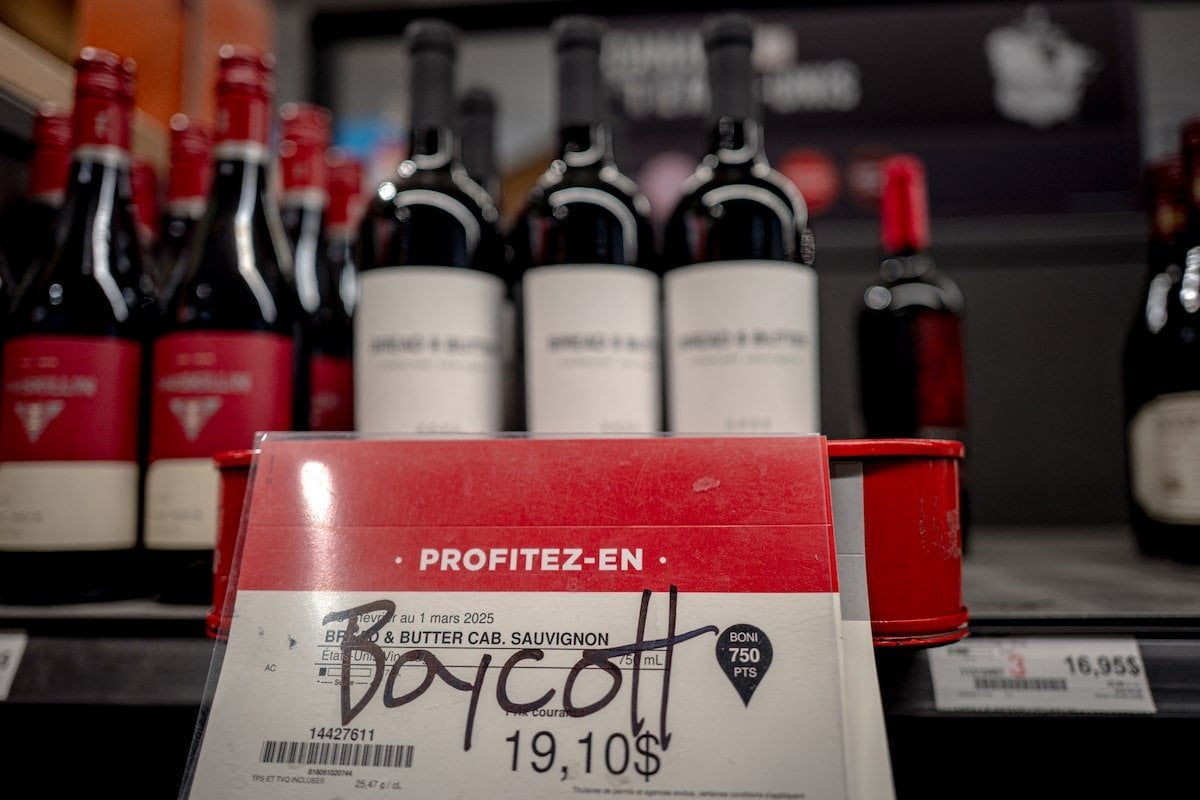
In recent days, there has been a marked surge of national pride and patriotism – coupled with a strong desire to support and protect Canadian interests – as Canadians navigate a shocking change in relationship with the country’s long-standing ally, trading partner and vacation destination.
The mood had chilled so dramatically that Quebec City Mayor Bruno Marchand held a press conference last week asking people not to boo American children during a peewee hockey tournament.
[…]
The surge in Canadian pride has been a dramatic change in a short period of time, and a significant switch for a country that has always bent toward a quieter, more restrained patriotism than our neighbours to the south.
In Ottawa, Oksana Kishchuk, director of strategy and insights at Abacus Data, has been watching opinions about Canadian identity and pride changing almost in real time.
Ms. Kishchuk included questions around Canadian identity in Abacus’s regular bi-weekly poll two weeks ago, at which time 80 per cent of people agreed with the statement, “I feel connected to a greater Canadian identity,” and nearly 40 per cent strongly agreed. Less than two weeks later, even with the polling unfinished, she was already seeing those numbers jump by up to 10 per cent.
“That’s a huge swing for 10 days, and it’s that intensity of agreement,” she said. “I think we’re really seeing a shift toward, ‘Maybe we do have an identity, and maybe it’s worth fighting for.‘”
While the final numbers won’t be tabulated until next week, Ms. Kishchuk said she is seeing a similarly dramatic shift in responses to the question about whether there is a Canadian identity at all.
“I think this situation has caused people to say, Okay, what does make me Canadian?…,” she said. “I think that’s always existed, but I think that internal Canadian pride is something that’s really faltered over the last little while, and I think that’s what’s surging up and people are really latching onto.”
[…]
Richard Nimijean, associate professor in the School of Canadian Studies at Carleton, has spent his career studying Canadian patriotism and the politics of national identity. He said until recently, pride in Canada was actually dropping in polls, after years of political parties of all stripes using Canadian identity and patriotism as a divisive partisan tactic.
The flag itself became a symbol of national division during the protest convoy that descended on Ottawa in 2022, and the Coutts border blockade. “Until Trump won the election, what was the big narrative? ‘Things were falling apart.’ ‘Canada’s broken,’ you know, the culture wars and so forth,” Mr. Nimijean said. But he says that is changing in the face of an external threat, when people “start thinking about what a country is about and the values you believe.”
Ironically, one of those Canadian values has typically been to be less loudly patriotic than our neighbours. Generations of travellers sewed Canadian flags on their backpacks not to trumpet nationalism, but as a signal to those elsewhere that we would be respectful guests.
“One of the things about living beside the United States is that we always have these comparisons, you know the rah-rah, or the flag waving, or having flags up …,” Mr. Nimijean said. “Canadians might seem less openly patriotic. We have stereotypes that Canadians are more humble or more quiet. But, at another level, [Canadian public policy expert] Matthew Mendelsohn, 20-25 years ago, said Canadians like to shout about how quiet and modest they are.”
In the past week, CBC host and actor Jeff Douglas says he’s heard from numerous people as the iconic Molson Canadian rant commercial – in which he stood on a stage before a gigantic Canadian flag proudly declaring “My name is Joe, and I AM CANADIAN” – began to circulate with renewed attention.
“It was such a different time,” said Mr. Douglas, who lives just outside Wolfville, N.S. “The forces working on people were so different, and I think that for individuals, particularly young individuals at that time, one of the things they were most proud of was their Canadian-ness, their Canadian identity.”
[…]
“People always wrestle with the idea of a Canadian identity, and what is the Canadian identity?” Mr. Douglas says. “I’ve been thinking about this a lot in the past couple of weeks because that commercial has been circulating on social media, and a lot of people have been saying, ‘We need to see this again.’”
[…]
“I think what this latest crisis has done in this real hard pivot from the United States – well, from Donald Trump – is that it’s made us forget about the infighting for a minute and be like, ‘Hey, wait a second,’” Mr. Douglas says. “I think we’re going to look back on this and go, ‘This is a great gift,’ if we can continue this momentum.”
As Iqbal Ladha considered the effect tariffs could have on his boat business in Richmond, B.C., he was also thinking about what it means to be Canadian, not only for people who were born here, but for those who, like him, chose to be Canadian.
“Everybody that I speak to, nobody would dream of becoming American or be part of America,” said Mr. Ladha, who came to Canada over the United States when he left Tanzania 45 years ago.
“What makes Canada? What makes Canada is the different people that had an option and a choice to move to Canada and live here because they felt that they would be accepted, not discriminated against. They had the freedom of their religion, the freedom of their culture and the freedom of their practices,” he said.
“I think everybody tries to search for it, but I don’t think there’s a simple answer. It’s a sum of parts. It’s the attitude of the people, the lifestyle, the freedom, the culture.”

1 Comment
Archived version: https://archive.fo/8MUnZ.
In recent days, there has been a marked surge of national pride and patriotism – coupled with a strong desire to support and protect Canadian interests – as Canadians navigate a shocking change in relationship with the country’s long-standing ally, trading partner and vacation destination.
The mood had chilled so dramatically that Quebec City Mayor Bruno Marchand held a press conference last week asking people not to boo American children during a peewee hockey tournament.
[…]
The surge in Canadian pride has been a dramatic change in a short period of time, and a significant switch for a country that has always bent toward a quieter, more restrained patriotism than our neighbours to the south.
In Ottawa, Oksana Kishchuk, director of strategy and insights at Abacus Data, has been watching opinions about Canadian identity and pride changing almost in real time.
Ms. Kishchuk included questions around Canadian identity in Abacus’s regular bi-weekly poll two weeks ago, at which time 80 per cent of people agreed with the statement, “I feel connected to a greater Canadian identity,” and nearly 40 per cent strongly agreed. Less than two weeks later, even with the polling unfinished, she was already seeing those numbers jump by up to 10 per cent.
“That’s a huge swing for 10 days, and it’s that intensity of agreement,” she said. “I think we’re really seeing a shift toward, ‘Maybe we do have an identity, and maybe it’s worth fighting for.‘”
While the final numbers won’t be tabulated until next week, Ms. Kishchuk said she is seeing a similarly dramatic shift in responses to the question about whether there is a Canadian identity at all.
“I think this situation has caused people to say, Okay, what does make me Canadian?…,” she said. “I think that’s always existed, but I think that internal Canadian pride is something that’s really faltered over the last little while, and I think that’s what’s surging up and people are really latching onto.”
[…]
Richard Nimijean, associate professor in the School of Canadian Studies at Carleton, has spent his career studying Canadian patriotism and the politics of national identity. He said until recently, pride in Canada was actually dropping in polls, after years of political parties of all stripes using Canadian identity and patriotism as a divisive partisan tactic.
The flag itself became a symbol of national division during the protest convoy that descended on Ottawa in 2022, and the Coutts border blockade. “Until Trump won the election, what was the big narrative? ‘Things were falling apart.’ ‘Canada’s broken,’ you know, the culture wars and so forth,” Mr. Nimijean said. But he says that is changing in the face of an external threat, when people “start thinking about what a country is about and the values you believe.”
Ironically, one of those Canadian values has typically been to be less loudly patriotic than our neighbours. Generations of travellers sewed Canadian flags on their backpacks not to trumpet nationalism, but as a signal to those elsewhere that we would be respectful guests.
“One of the things about living beside the United States is that we always have these comparisons, you know the rah-rah, or the flag waving, or having flags up …,” Mr. Nimijean said. “Canadians might seem less openly patriotic. We have stereotypes that Canadians are more humble or more quiet. But, at another level, [Canadian public policy expert] Matthew Mendelsohn, 20-25 years ago, said Canadians like to shout about how quiet and modest they are.”
In the past week, CBC host and actor Jeff Douglas says he’s heard from numerous people as the iconic Molson Canadian rant commercial – in which he stood on a stage before a gigantic Canadian flag proudly declaring “My name is Joe, and I AM CANADIAN” – began to circulate with renewed attention.
“It was such a different time,” said Mr. Douglas, who lives just outside Wolfville, N.S. “The forces working on people were so different, and I think that for individuals, particularly young individuals at that time, one of the things they were most proud of was their Canadian-ness, their Canadian identity.”
[…]
“People always wrestle with the idea of a Canadian identity, and what is the Canadian identity?” Mr. Douglas says. “I’ve been thinking about this a lot in the past couple of weeks because that commercial has been circulating on social media, and a lot of people have been saying, ‘We need to see this again.’”
[…]
“I think what this latest crisis has done in this real hard pivot from the United States – well, from Donald Trump – is that it’s made us forget about the infighting for a minute and be like, ‘Hey, wait a second,’” Mr. Douglas says. “I think we’re going to look back on this and go, ‘This is a great gift,’ if we can continue this momentum.”
As Iqbal Ladha considered the effect tariffs could have on his boat business in Richmond, B.C., he was also thinking about what it means to be Canadian, not only for people who were born here, but for those who, like him, chose to be Canadian.
“Everybody that I speak to, nobody would dream of becoming American or be part of America,” said Mr. Ladha, who came to Canada over the United States when he left Tanzania 45 years ago.
“What makes Canada? What makes Canada is the different people that had an option and a choice to move to Canada and live here because they felt that they would be accepted, not discriminated against. They had the freedom of their religion, the freedom of their culture and the freedom of their practices,” he said.
“I think everybody tries to search for it, but I don’t think there’s a simple answer. It’s a sum of parts. It’s the attitude of the people, the lifestyle, the freedom, the culture.”
!ping Can