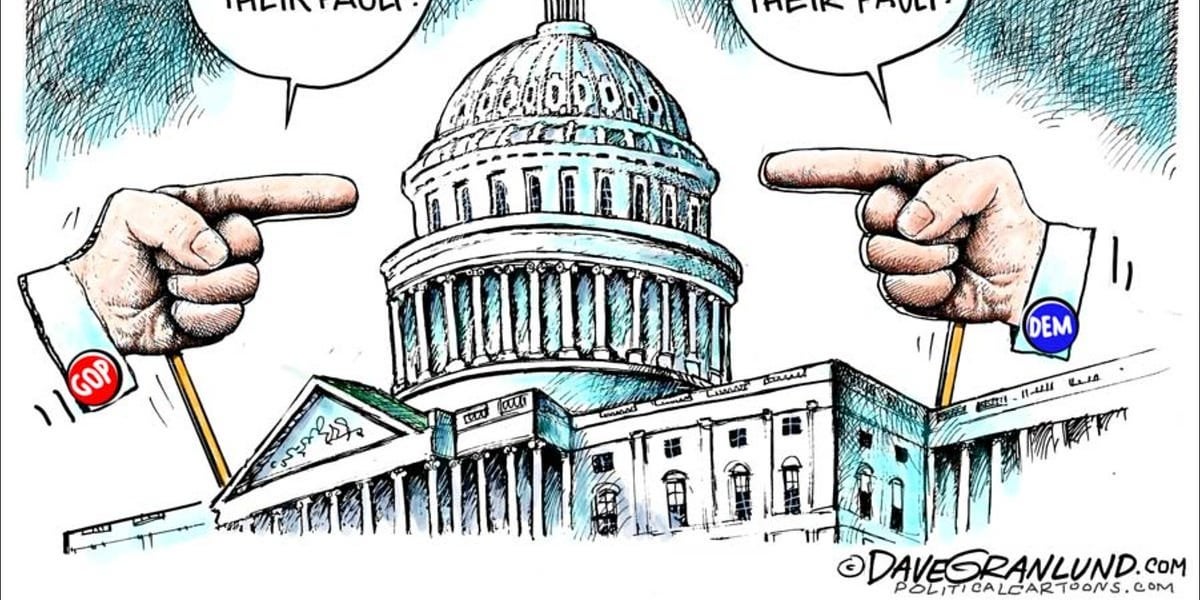
In the ongoing battle of political partisanship, terms like “bothsidesism,” “false equivalence,” and “High Broderism” frequently pop up. These concepts represent various approaches and criticisms of how we handle partisan conflict. For instance, “bothsidesism” often gets criticized as a way to deflect responsibility by equating the faults of both sides, while “false equivalence” is used to dismiss any attempt to compare actions across the political spectrum. Similarly, “High Broderism” refers to a neutral stance that avoids taking sides, and “whataboutism” is employed when one side tries to justify its actions by pointing to the other’s misdeeds.
The crux of the issue is whether focusing on these terms and criticisms is merely a distraction from the deeper problem: the perpetuation of political conflict. By emphasizing who is worse or better, aren’t we missing the point of addressing the root causes of divisiveness?

1 Comment
In the ongoing battle of political partisanship, terms like “bothsidesism,” “false equivalence,” and “High Broderism” frequently pop up. These concepts represent various approaches and criticisms of how we handle partisan conflict. For instance, “bothsidesism” often gets criticized as a way to deflect responsibility by equating the faults of both sides, while “false equivalence” is used to dismiss any attempt to compare actions across the political spectrum. Similarly, “High Broderism” refers to a neutral stance that avoids taking sides, and “whataboutism” is employed when one side tries to justify its actions by pointing to the other’s misdeeds.
The crux of the issue is whether focusing on these terms and criticisms is merely a distraction from the deeper problem: the perpetuation of political conflict. By emphasizing who is worse or better, aren’t we missing the point of addressing the root causes of divisiveness?