
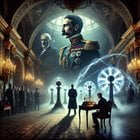
The Hidden Energy War, Czar Nicholas II vs. the Rothschilds.
The Hidden Energy War
Czar Nicholas II vs. the RothschildsHistory often paints the fall of Czar Nicholas II as an inevitable consequence of revolution, but beneath the surface lay a much deeper conflict, a battle over energy, finance, and the future of global power.
At its… pic.twitter.com/n7UEeoijZY— A Human Being (@AHumanB90760454) February 14, 2025
Posted by a_human-being
1 Comment
SS:
History often paints the fall of Czar Nicholas II as an inevitable consequence of revolution, but beneath the surface lay a much deeper conflict, a battle over energy, finance, and the future of global power.
At its core, this was not just a war of ideology or revenge; it was about controlling the very lifeblood of the modern world…electricity and oil.
The Rothschild Banking Empire vs. Russian Sovereignty
By the late 19th and early 20th centuries, the Rothschild banking dynasty had secured control over much of Europe’s financial and energy infrastructure. However, Czar Nicholas II resisted their influence, refusing to allow a Rothschild-controlled central bank in Russia. This made Russia one of the last major powers operating outside their financial grip.
While the West’s electrical grid was dominated by financiers like J.P. Morgan (closely tied to the Rothschilds), Russia was developing state-controlled infrastructure.
The Russian monarchy sought to maintain sovereignty over its natural resources, particularly oil reserves in Baku (modern Azerbaijan), which the Rothschilds had a vested interest in controlling.
Unlike Western nations, Russia was not fully reliant on foreign loans, making it a major obstacle to global financial control.
The Tesla Connection
Suppressed Energy Technologies?
Around this same time, Nikola Tesla was developing wireless energy transmission—technology that could have rendered centralized power grids obsolete. Tesla’s work was backed by industrialists like George Westinghouse but ultimately sabotaged by J.P. Morgan, who saw the threat this posed to metered electricity and centralized financial control.
There is reason to believe that Russia—if left to its own path—might have pursued these decentralized energy ideas, directly threatening the Rothschild-backed financial model.
If Czar Nicholas II had remained in power and advanced Tesla’s energy vision, the world today might have free or low-cost energy outside of corporate control.
The Bolshevik Revolution: A Convenient Overthrow
The fall of the Russian monarchy was not just a revolution—it was a strategic removal of a major financial roadblock.
Key Western financiers, including Jacob Schiff (connected to Rothschild interests), provided funding to revolutionary groups opposing Nicholas II.
After the Czar’s fall, the Soviet government nationalized industries, but Western banks still influenced energy development.
Lenin made deals that helped establish a structured, centralized power grid—one that, while state-run, still ensured foreign financiers had access to the new Soviet economy.
**The Big Picture**
A War Over the Future of Energy
The war between Czar Nicholas II and the Rothschilds was more than a political conflict—it was a battle over whether the world’s energy would be controlled by private financial elites or developed independently.
The Rothschilds and their allies promoted centralized, for-profit electrical grids and oil monopolies.
Czar Nicholas II’s resistance to foreign banking control meant Russia could have explored decentralized energy solutions.
The removal of Nicholas II and the suppression of Tesla’s work ensured that energy would remain in the hands of the financial elite.
Why This Matters Today
We still live in a world where energy is controlled, metered, and profited from by the same elite forces that crushed Nicholas II’s resistance. What if history had taken a different path? What if free energy and independent development had been allowed to thrive? The battle that began over a century ago still shapes our world today.
It’s time to expose the truth and rethink the energy system forced upon us. The fight for energy freedom is not over.
Thinking way past belief.