>The consultations I attended focused on the question of China’s relationship with the rogue regime in North Korea. In the Chinese participants’ view, Beijing did not encourage Kim’s recent pivot to Russia, which culminated in a treaty of alliance with Russia in June 2024; indeed, it seems likely that Beijing was not even consulted in advance of this move. Nor did Xi approve North Korea’s direct involvement in Russia’s war against Ukraine, which has included the deployment of some 10,000 North Korean soldiers to Russia’s Kursk region, to repel a Ukrainian incursion. This move showed that Kim is willing and able to act independently of Beijing, even as he continues to rely on trade with China for his regime’s survival. In offering troops and large quantities of munitions to Putin, Kim has made a point of showing Xi that he is not China’s vassal.
>The Russians at these consultations lamented the lack of coordination among China, North Korea, and Russia. Putin, who meets frequently, albeit separately, with Xi and Kim, would like to have a trilateral summit to forge closer relations among all three countries. But Xi and Kim have not seen each other since 2019. The countries formerly held trilateral consultations, most recently in October 2018, but North Korea now resists such meetings, preferring the company of Russia to China.
>Beijing, too, is unwilling to create a bloc in East Asia, partly out of fear that it would cause Japan, South Korea, and the United States to build a more overtly anti-Chinese bloc. The Chinese also worry, much more than the Russians do, about North Korea’s nuclear program. The Russians have pragmatically resigned themselves to a nuclear North Korea. But Beijing, seeing the potential knock-on effects in Japan and South Korea—which could be pushed to start nuclear programs of their own—may be keen to resume denuclearization talks with Pyongyang, even if the goal of a nuclear-free Korean Peninsula appears out of reach. Some Chinese participants expressed concern about North Korean militancy, including the possibility that the Kim regime will launch military provocations against South Korea. Unsurprisingly, China fears being dragged into a conflict by a restless, unpredictable, and generally unreliable client state—whether it is North Korea or Russia.
>[…]
>Beijing’s predicament today is that it does not know how to reassure the United States that it is not seeking another cold war even as it actively prepares to wage one. China’s relentless nuclear buildup, its hostile espionage operations, its militant rhetoric, and, above all, its support for Russia suggest that Xi has already made his call and that a confrontation with the United States is inevitable.
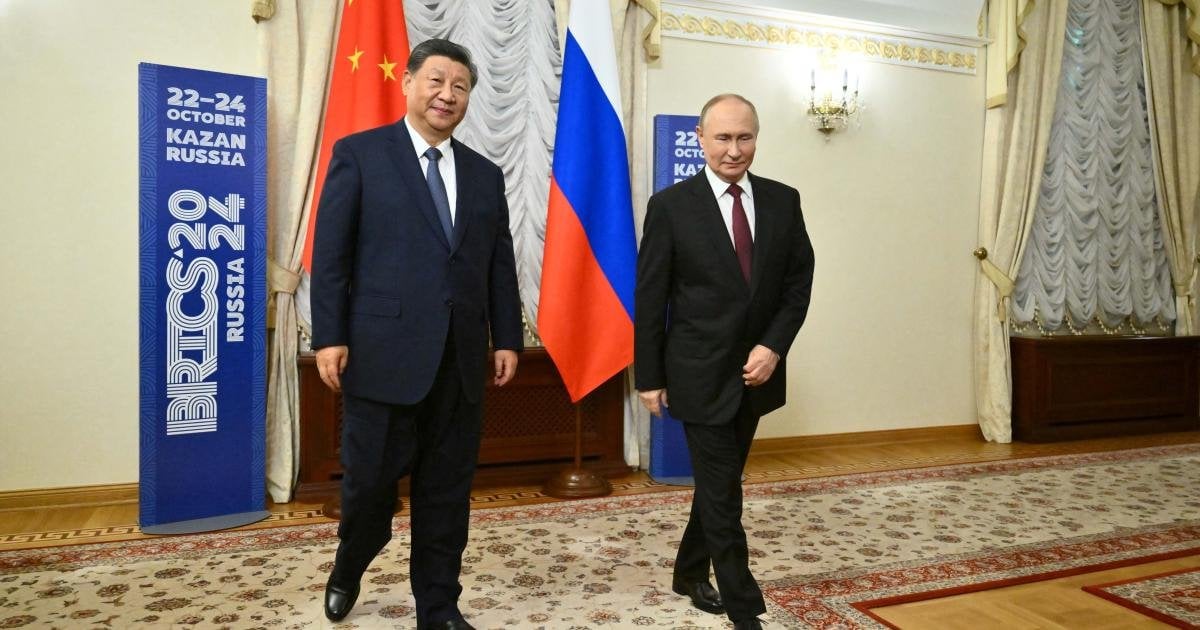
>China’s relationships with Russia and North Korea remain useful in its struggle against Western hegemony. Chinese strategists think in simple geopolitical terms: the United States, leader of the West, is trying to bring China down; Putin is confronting the West with his war in Ukraine; therefore, Putin is helping China, and cannot be thrown under the bus. Similarly, China will not completely abandon North Korea, not because it approves of Kim, but because he remains a valuable weapon against the United States.
>On the other hand, getting too invested in the relationship with a militant Russia would box Beijing in. Xi’s fraternal embrace of Putin has damaged China’s standing in Europe: German Foreign Minister Annalena Baerbock criticized China in December 2024 for “opposing our core European interests with its economic and weapons aid to Russia,” and French President Emmanuel Macron pressed Xi to curb support for Moscow during their talks in May 2024. Given that China’s trade relationship with the European Union is worth $762 billion and has become all the more critical amid China’s economic stagnation, strategists in Beijing must ask themselves whether the economic polarization that would accompany an emerging cold war is really in China’s interest. Foreign Minister Wang Yi, for his part, went out of his way at the Munich Security Conference in February 2025 to reassure European leaders that Beijing does not plan to overthrow the existing global order.
>Yet as the experience of the present and previous centuries have shown, economic ties do not preclude great-power conflict. Putin’s reckless gamble in Ukraine demonstrated his willingness to sacrifice lucrative economic ties to Europe for glory. And no Chinese diplomat or academic, no matter how well connected, can confidently speak for Xi who, like Putin, may yet choose confrontation with the West.
>[…]
>Just as the escalations of the Cold War were contingent and gradual, with moments of tension punctuated by efforts to set things right, the U.S.-Chinese relationship today is not beyond redemption, even if it is far along the road to confrontation. If it does not want to proceed from learning about the Cold War to fighting a new one, the Chinese government should not act as if it does not want a dialogue with the United States.
>Nicholas Burns, the U.S. ambassador to China during the Biden administration, faced diplomatic obstruction and had very little access to Chinese policymakers. China has snubbed the Pentagon’s efforts to maintain military-to-military dialogue, and although former Secretary of Defense Lloyd Austin finally met his Chinese counterpart Dong Jun in May 2024, contacts remain sporadic. Such stonewalling could be a way to signal displeasure with what China perceives as Washington’s hawkishness, but intentionally or not, it sends another message: that Beijing is already firmly set on a new cold war.
>Beijing should instead signal to Washington, in public or through private channels, that China does not plan to invade Taiwan in the foreseeable future. It should tone down public rhetoric about impending “reunification” to provide a foundation for building desperately needed trust.
>Beijing should also make it clear that it does not seek an alliance with Moscow. The “no limits” partnership, which produced great alarm in the West with no gain to China, is a reminder that what Beijing says about its relationship with Russia can have direct impact on Western threat perceptions. The disappearance of “antihegemonic” language from Chinese-Russian statements will not eliminate U.S. concerns about an emerging axis, but it will at least chip away at the substantial evidence for such concerns.
>Most important, China’s leaders should become more directly involved in helping end Russia’s war in Ukraine. As the key buyer of Russia’s hydrocarbons and a major provider of industrial and consumer goods to Russia, China has substantial economic leverage in the relationship, which it could deploy to encourage Putin to accept a cease-fire. A frozen conflict would not run counter to China’s interest in avoiding escalation in Ukraine, it would stabilize relations with Europe and might even present an area of overlap between Beijing and the Trump administration, which has signaled its interest in a cease-fire regardless of a comprehensive settlement of the war. Given Wang’s comments in Munich that “all parties and all stakeholders should, at an appropriate time, participate in the peace talks process” and Trump’s intention to hold peace talks with Russia, now is the time for China to signal its interest in a direct and substantive dialogue with the United States on the war in Ukraine.
!ping China&Foreign-policy
sigh2828 on
“China does nothing and wins” bros are taking MASSIVE Ws
algebroni on
Pragmatic China looking at a chaotic Russia poorly managed by a bitter old KGB agent whose foreign policy is guided by his personal insecurities and thinking “…nah, we good, that’s close enough, thanks.”

3 Comments
Archived version: [https://archive.fo/bRUnW](https://archive.fo/bRUnW).
Summary:
>The consultations I attended focused on the question of China’s relationship with the rogue regime in North Korea. In the Chinese participants’ view, Beijing did not encourage Kim’s recent pivot to Russia, which culminated in a treaty of alliance with Russia in June 2024; indeed, it seems likely that Beijing was not even consulted in advance of this move. Nor did Xi approve North Korea’s direct involvement in Russia’s war against Ukraine, which has included the deployment of some 10,000 North Korean soldiers to Russia’s Kursk region, to repel a Ukrainian incursion. This move showed that Kim is willing and able to act independently of Beijing, even as he continues to rely on trade with China for his regime’s survival. In offering troops and large quantities of munitions to Putin, Kim has made a point of showing Xi that he is not China’s vassal.
>The Russians at these consultations lamented the lack of coordination among China, North Korea, and Russia. Putin, who meets frequently, albeit separately, with Xi and Kim, would like to have a trilateral summit to forge closer relations among all three countries. But Xi and Kim have not seen each other since 2019. The countries formerly held trilateral consultations, most recently in October 2018, but North Korea now resists such meetings, preferring the company of Russia to China.
>Beijing, too, is unwilling to create a bloc in East Asia, partly out of fear that it would cause Japan, South Korea, and the United States to build a more overtly anti-Chinese bloc. The Chinese also worry, much more than the Russians do, about North Korea’s nuclear program. The Russians have pragmatically resigned themselves to a nuclear North Korea. But Beijing, seeing the potential knock-on effects in Japan and South Korea—which could be pushed to start nuclear programs of their own—may be keen to resume denuclearization talks with Pyongyang, even if the goal of a nuclear-free Korean Peninsula appears out of reach. Some Chinese participants expressed concern about North Korean militancy, including the possibility that the Kim regime will launch military provocations against South Korea. Unsurprisingly, China fears being dragged into a conflict by a restless, unpredictable, and generally unreliable client state—whether it is North Korea or Russia.
>[…]
>Beijing’s predicament today is that it does not know how to reassure the United States that it is not seeking another cold war even as it actively prepares to wage one. China’s relentless nuclear buildup, its hostile espionage operations, its militant rhetoric, and, above all, its support for Russia suggest that Xi has already made his call and that a confrontation with the United States is inevitable.
>China’s relationships with Russia and North Korea remain useful in its struggle against Western hegemony. Chinese strategists think in simple geopolitical terms: the United States, leader of the West, is trying to bring China down; Putin is confronting the West with his war in Ukraine; therefore, Putin is helping China, and cannot be thrown under the bus. Similarly, China will not completely abandon North Korea, not because it approves of Kim, but because he remains a valuable weapon against the United States.
>On the other hand, getting too invested in the relationship with a militant Russia would box Beijing in. Xi’s fraternal embrace of Putin has damaged China’s standing in Europe: German Foreign Minister Annalena Baerbock criticized China in December 2024 for “opposing our core European interests with its economic and weapons aid to Russia,” and French President Emmanuel Macron pressed Xi to curb support for Moscow during their talks in May 2024. Given that China’s trade relationship with the European Union is worth $762 billion and has become all the more critical amid China’s economic stagnation, strategists in Beijing must ask themselves whether the economic polarization that would accompany an emerging cold war is really in China’s interest. Foreign Minister Wang Yi, for his part, went out of his way at the Munich Security Conference in February 2025 to reassure European leaders that Beijing does not plan to overthrow the existing global order.
>Yet as the experience of the present and previous centuries have shown, economic ties do not preclude great-power conflict. Putin’s reckless gamble in Ukraine demonstrated his willingness to sacrifice lucrative economic ties to Europe for glory. And no Chinese diplomat or academic, no matter how well connected, can confidently speak for Xi who, like Putin, may yet choose confrontation with the West.
>[…]
>Just as the escalations of the Cold War were contingent and gradual, with moments of tension punctuated by efforts to set things right, the U.S.-Chinese relationship today is not beyond redemption, even if it is far along the road to confrontation. If it does not want to proceed from learning about the Cold War to fighting a new one, the Chinese government should not act as if it does not want a dialogue with the United States.
>Nicholas Burns, the U.S. ambassador to China during the Biden administration, faced diplomatic obstruction and had very little access to Chinese policymakers. China has snubbed the Pentagon’s efforts to maintain military-to-military dialogue, and although former Secretary of Defense Lloyd Austin finally met his Chinese counterpart Dong Jun in May 2024, contacts remain sporadic. Such stonewalling could be a way to signal displeasure with what China perceives as Washington’s hawkishness, but intentionally or not, it sends another message: that Beijing is already firmly set on a new cold war.
>Beijing should instead signal to Washington, in public or through private channels, that China does not plan to invade Taiwan in the foreseeable future. It should tone down public rhetoric about impending “reunification” to provide a foundation for building desperately needed trust.
>Beijing should also make it clear that it does not seek an alliance with Moscow. The “no limits” partnership, which produced great alarm in the West with no gain to China, is a reminder that what Beijing says about its relationship with Russia can have direct impact on Western threat perceptions. The disappearance of “antihegemonic” language from Chinese-Russian statements will not eliminate U.S. concerns about an emerging axis, but it will at least chip away at the substantial evidence for such concerns.
>Most important, China’s leaders should become more directly involved in helping end Russia’s war in Ukraine. As the key buyer of Russia’s hydrocarbons and a major provider of industrial and consumer goods to Russia, China has substantial economic leverage in the relationship, which it could deploy to encourage Putin to accept a cease-fire. A frozen conflict would not run counter to China’s interest in avoiding escalation in Ukraine, it would stabilize relations with Europe and might even present an area of overlap between Beijing and the Trump administration, which has signaled its interest in a cease-fire regardless of a comprehensive settlement of the war. Given Wang’s comments in Munich that “all parties and all stakeholders should, at an appropriate time, participate in the peace talks process” and Trump’s intention to hold peace talks with Russia, now is the time for China to signal its interest in a direct and substantive dialogue with the United States on the war in Ukraine.
!ping China&Foreign-policy
“China does nothing and wins” bros are taking MASSIVE Ws
Pragmatic China looking at a chaotic Russia poorly managed by a bitter old KGB agent whose foreign policy is guided by his personal insecurities and thinking “…nah, we good, that’s close enough, thanks.”