
Protectionism for small landlords is a dumb idea | We need to think smarter about institutional investors and housing
Posted by ONETRILLIONAMERICANS
Protectionism for small landlords is a dumb idea | We need to think smarter about institutional investors and housing
Posted by ONETRILLIONAMERICANS
3 Comments
> Imagine an adult American at the 25th percentile of the earnings distribution.
> This is the kind of person who, historically, has not been living in his mother’s basement, but is too high-income to qualify for subsidized housing. Where is somebody like that going to live?
> He could live in an apartment building. Or he could live in a trailer. But on the vast majority of American land, it’s illegal to build apartments or trailers. And that leaves him with one option: a single-family home. And there are only two ways a person with a relatively low income could live in a single family home. One is that he could get a mortgage, even though he’s not particularly creditworthy. The other is that he could rent a home from somebody else.
> As Kevin Erdmann likes to point out, there was a move in the wake of the 2007 financial crisis to make fewer mortgages to people with bad credit.
> Erdmann argues (plausibly, I think) that this was an overreaction by regulators and Fannie Mae and Freddie Mac. But even so, I don’t think the crackdown is 100 percent overreaction. We had some genuine learning about the risks of extending large amounts of implicitly or explicitly guaranteed credit to borrowers who are not very creditworthy as a national housing strategy.
> Either way, though, the crackdown occurred. It has become harder to get a mortgage.
> So unless our hypothetical adult wants to be homeless or sleep in his mom’s basement, he needs to rent. And in a country where most people like to live in single-family homes and where it is generally illegal to build apartments, that means renting a single-family home.
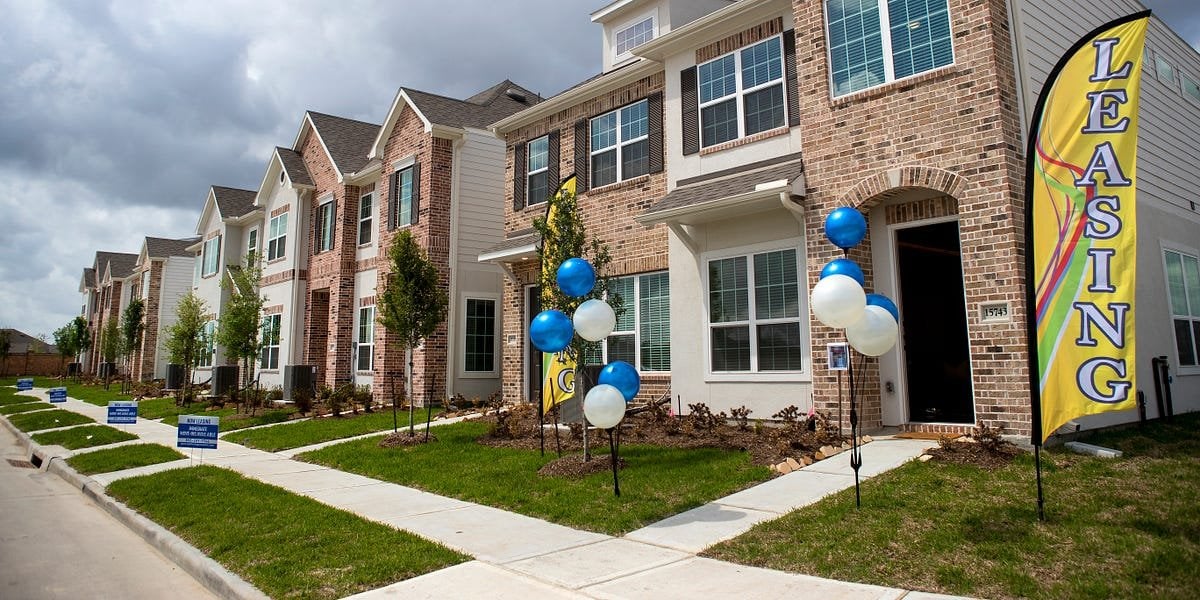
> A single-family home for rent needs to be owned by somebody — an investor. And if renting out single-family homes becomes a smart investment (and how could it not, given the regulatory constraints), then investment companies will start making investments in this field. And this is, in fact, what we’ve seen over the past decade.
> Traditionally, single-family home landlording was considered a pretty dubious proposition, so while some people definitely did it, it wasn’t something that large, professionally managed pools of capital found very enticing. But the regulatory landscape has changed, pushing more people into the single-family rental market on the demand side, so those large, professionally managed pools of capital are following.
> That being said, while the trend is real, it’s genuinely quite small relative to the scale of the single-family home market. The vast majority of the single-family market consists of owner-occupied housing, the vast majority of the rental market is in apartments, and most single-family rentals are owned by small-time operators. Nonetheless, the real-but-small move of big capital into single-family rentals is causing a rolling freakout across the political system that makes very little sense. Politicians are confusing cause and effect and making mountains out of molehills. At best, they’re wasting time, but they also risk making the housing system even worse.
!ping YIMBY
I only work with microbatch organically grown locally sourced landlords.
Land ownership itself only exists through government protection. There’s a “rolling freakout” because people understand that landownership comes with a massive government protection of your claim to the Earth for absolutely no charge. People have generally seen this as fine when it allows people have a house and a lawn that they can call their own. But when this extremely valuable government handout is given to corporations instead of individuals, a lot more people have a problem with it.
Of course, it would be better to eliminate the massive amount of free rent being granted to anyone who has enough money to pay for it or is willing to mortgage the next 30 years of their earnings away. But there’s not much appetite to do that right now.