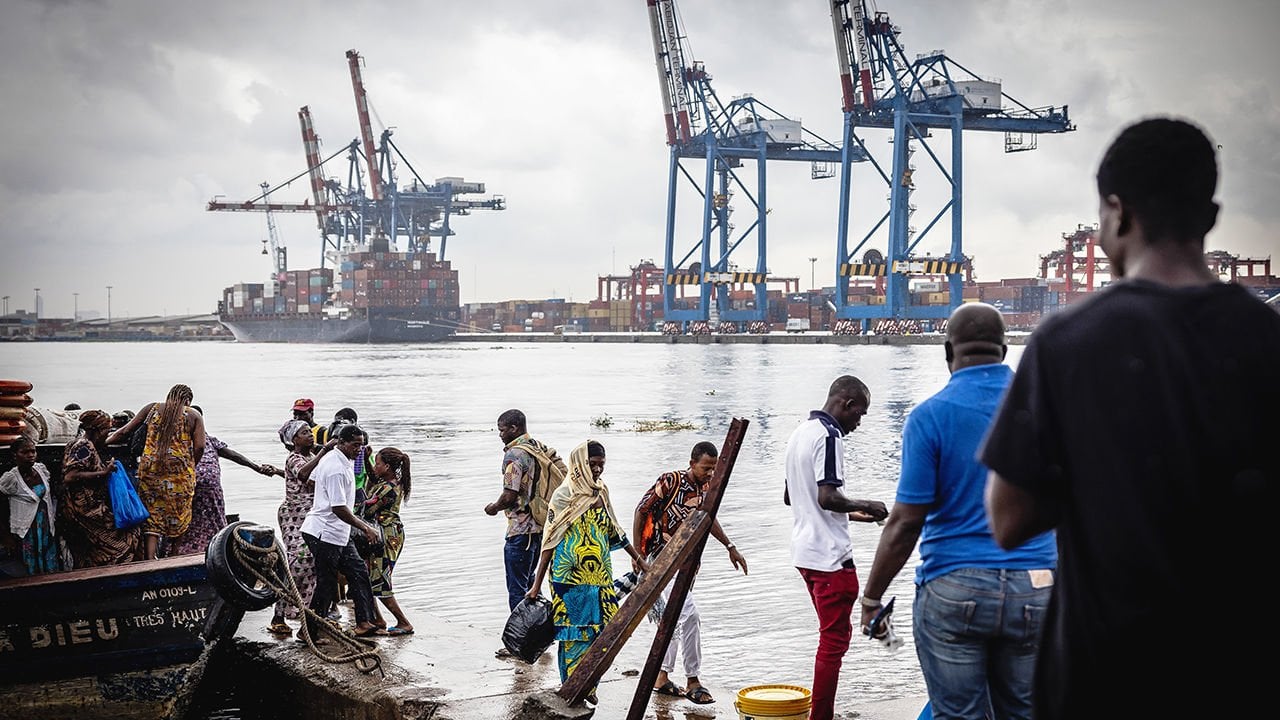
> Where it is not racked by war, military coups or jihadism, much of Africa is battling economic stagnation and double-digit inflation rates. Ivory Coast, a country of 31m people in the continent’s west, is a rare exception. Devastated by two civil wars, one from 2002 to 2007 and one in 2010-11, it has since undergone a remarkable renaissance. Attaining upper-middle-income status in the next five years, as the government hopes, now seems possible. As its citizens prepare to vote in presidential elections later this year, could a second Ivorian miracle be under way?
> Economic indicators suggest it may be. The economy grew at a rate of 7% per year on average between 2012 and 2023, with estimates for 2024 and 2025 at around 6.5%, according to the imf. Growth continued even during the covid-19 pandemic. At the same time, the inflation rate has remained relatively low. It was 3.8% in 2024, against a west African average of 21.6%. The fiscal deficit, though high, is shrinking. Youth unemployment, entrenched across the rest of the continent, is just 5%. In the latest Africa Youth Survey, conducted by a South African charity in 2024, Ivory Coast was the only country where a majority said it was easy to find a job. At $2,900 a year, gdp per person is the highest in west Africa except for tiny Cape Verde.
> What is sparking the boom? It is too sustained to be explained solely by a post-war rebound. The answer is sensible economic policy. One factor is diversification. The first Ivorian miracle was driven by a surge in the production of cocoa, of which it remains the world’s largest producer. But the share of agriculture has been declining. In 2022 services accounted for more than half of gdp and industrial activity for about a quarter, up from 16% in 2000, allowing the country to ride out fluctuations in cocoa production and prices.
> Another spark is capital. Unlike many neighbours, Ivory Coast is attracting private investment, with inflows growing at an average annual rate of 8.6% over the past decade. It got more private-equity funding than any other francophone west African country between 2012 and 2024. Foreign firms are backing banks and fintechs, but also manufacturing and packaging companies. According to the African Development Bank (afdb), Ivory Coast has the smallest “financing gap” on the continent, an assessment of how much money countries are missing to achieve what the bank calls “structural transformation”.
> Some of that has been thanks to the government of Alassane Ouattara, a former deputy director of the imf who has been president since 2010. He has energetically promoted his country abroad. An investment code implemented in 2018 offers tax benefits and customs waivers to investors who spend big and hire locally, improving a previous one enacted in 2012. Mr Ayitee, the hedge-fund manager, says the policy has not only boosted growth but also made the country more fun, fuelling investment in tourism and hospitality.
> The government has also been spending its money on useful things like infrastructure. New roads and bridges are popping up everywhere (your correspondent drove across a bridge so new that Google Maps had yet to give it a name). The drive from Abidjan, the commercial capital, to the port city of Saint Pedro used to take eight hours. It now takes four. The government has also invested in improving electricity access. In 2013 only 34% of Ivorians were connected to the grid. Some counts put the latest figure at 94%.
Kintpuash-of-Kush on
https://mattlakeman.org/2024/01/01/notes-on-the-ivory-coast/ – I normally hate travel blogs but really liked this one. Guy traveled all across West Africa and wrote long-form reviews of his experiences coupled with his understanding of the country’s recent history, demographics, economy, and culture. This is his post on the Ivory Coast, written a year ago – mentions the recent boom as well as the first one, as well as reasons to be both optimistic and pessimistic

4 Comments
What makes it a better secret than Angola?
Stable politics (authoritarian)
> Where it is not racked by war, military coups or jihadism, much of Africa is battling economic stagnation and double-digit inflation rates. Ivory Coast, a country of 31m people in the continent’s west, is a rare exception. Devastated by two civil wars, one from 2002 to 2007 and one in 2010-11, it has since undergone a remarkable renaissance. Attaining upper-middle-income status in the next five years, as the government hopes, now seems possible. As its citizens prepare to vote in presidential elections later this year, could a second Ivorian miracle be under way?
> Economic indicators suggest it may be. The economy grew at a rate of 7% per year on average between 2012 and 2023, with estimates for 2024 and 2025 at around 6.5%, according to the imf. Growth continued even during the covid-19 pandemic. At the same time, the inflation rate has remained relatively low. It was 3.8% in 2024, against a west African average of 21.6%. The fiscal deficit, though high, is shrinking. Youth unemployment, entrenched across the rest of the continent, is just 5%. In the latest Africa Youth Survey, conducted by a South African charity in 2024, Ivory Coast was the only country where a majority said it was easy to find a job. At $2,900 a year, gdp per person is the highest in west Africa except for tiny Cape Verde.
> What is sparking the boom? It is too sustained to be explained solely by a post-war rebound. The answer is sensible economic policy. One factor is diversification. The first Ivorian miracle was driven by a surge in the production of cocoa, of which it remains the world’s largest producer. But the share of agriculture has been declining. In 2022 services accounted for more than half of gdp and industrial activity for about a quarter, up from 16% in 2000, allowing the country to ride out fluctuations in cocoa production and prices.
> Another spark is capital. Unlike many neighbours, Ivory Coast is attracting private investment, with inflows growing at an average annual rate of 8.6% over the past decade. It got more private-equity funding than any other francophone west African country between 2012 and 2024. Foreign firms are backing banks and fintechs, but also manufacturing and packaging companies. According to the African Development Bank (afdb), Ivory Coast has the smallest “financing gap” on the continent, an assessment of how much money countries are missing to achieve what the bank calls “structural transformation”.
> Some of that has been thanks to the government of Alassane Ouattara, a former deputy director of the imf who has been president since 2010. He has energetically promoted his country abroad. An investment code implemented in 2018 offers tax benefits and customs waivers to investors who spend big and hire locally, improving a previous one enacted in 2012. Mr Ayitee, the hedge-fund manager, says the policy has not only boosted growth but also made the country more fun, fuelling investment in tourism and hospitality.
> The government has also been spending its money on useful things like infrastructure. New roads and bridges are popping up everywhere (your correspondent drove across a bridge so new that Google Maps had yet to give it a name). The drive from Abidjan, the commercial capital, to the port city of Saint Pedro used to take eight hours. It now takes four. The government has also invested in improving electricity access. In 2013 only 34% of Ivorians were connected to the grid. Some counts put the latest figure at 94%.
https://mattlakeman.org/2024/01/01/notes-on-the-ivory-coast/ – I normally hate travel blogs but really liked this one. Guy traveled all across West Africa and wrote long-form reviews of his experiences coupled with his understanding of the country’s recent history, demographics, economy, and culture. This is his post on the Ivory Coast, written a year ago – mentions the recent boom as well as the first one, as well as reasons to be both optimistic and pessimistic