> Humans are living in a plankton world. These minuscule organisms are spread across the oceans, covering nearly three-quarters of the planet, and are among the most abundant forms of life on Earth.
> But a warming world is throwing plankton into disarray and threatening the entire marine food chain that is built on them.
> A year ago, NASA launched a satellite that provided the most detailed view yet of the diversity and distribution of phytoplankton. Its insights should help scientists understand the changing dynamics of life in the ocean.
> “Do you like breathing? Do you like eating? If your answer is yes for either of them, then you care about phytoplankton,” said Jeremy Werdell, the lead scientist for the satellite program, called PACE, which stands for “Plankton, Aerosol, Cloud, ocean Ecosystem.”
> Historically, research from ships has captured limited snapshots in time, offering only glimpses of the ever-changing oceans. The advent of satellites gave a fuller picture, but one still limited, like looking through glasses with a green filter.
> “You know it’s a garden, you know it’s pretty, you know it’s plants, but you don’t know which plants,” explained Ivona Cetinic, a NASA oceanographer. The PACE satellite effectively removes the filter and finally reveals all the colors of the garden, she said. “It’s like seeing all the flowers of the ocean.”
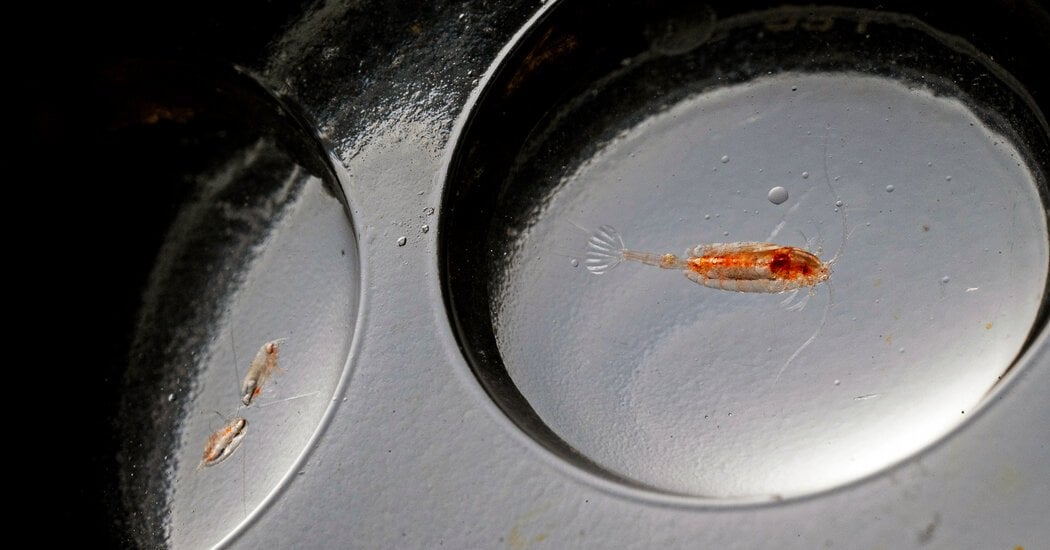
> These flowers are phytoplankton, tiny aquatic algae and bacteria that photosynthesize to live directly off energy from the sun. They are eaten by zooplankton, the smallest animals of the ocean, which, in turn, feed fish and larger creatures.
> It may seem implausible that a satellite orbiting high above the planet’s surface could make out microscopic organisms. But different phytoplankton have unique ways of scattering and absorbing light. PACE measures the whole spectrum of visible color and slightly beyond, from ultraviolet to near infrared, allowing scientists to identify different kinds of phytoplankton. Older satellites measured limited colors and could only reveal how much phytoplankton was underneath them, not what kind.
> Phytoplankton form the foundation of the marine food chain, and climate change is shaking that foundation.
> Phytoplankton in the open ocean appear to be dwindling. In the early 2000s, scientists detected that enormous zones of ocean with fewer nutrients and sparser phytoplankton, known as ocean deserts, are expanding. At the same time, coastal phytoplankton blooms, especially at higher latitudes, have grown and become more frequent, according to a 2023 study. Warmer sea surface temperatures are stimulating their growth, the researchers found. These blooms are also happening earlier in the year, disrupting coastal fisheries and people’s livelihoods.
> And while marine life depends on phytoplankton, sometimes it can create harmful blooms. Understanding what kinds of phytoplankton are where can help coastal residents protect themselves.
> Some phytoplankton blooms grow so big, so quickly, that when they eventually decay, they deplete oxygen in the surrounding water, creating “dead zones” where nothing else can live. And some phytoplankton produce toxins that can sicken and kill fish, birds and mammals, including humans.
> Researchers estimate, conservatively, that harmful blooms cost the U.S. economy about $50 million each year through damage to public health, fisheries and coastal recreation.
> In the winter of 2021, millions of pounds of oysters on the coast of Plaquemines Parish in Louisiana suddenly died, striking a major economic blow to local fishermen. Subsequent investigation revealed that toxic phytoplankton had bloomed following a storm, according to Bingqing Liu, an oceanographer and assistant professor at the University of Louisiana, Lafayette.
> Dr. Liu is part of the PACE “early adopter” group, working on incorporating the satellite’s data into a model that can simulate future scenarios. If people can see toxic blooms coming, they can try to mitigate economic and environmental losses, she said.
I recommend reading the rest of the article as well
This post is dedicated to those who do not fully understand just how fucked our current situation is due to our arrogance and callousness towards the environment and climate

1 Comment
**By Delger Erdenesanaa**
> Humans are living in a plankton world. These minuscule organisms are spread across the oceans, covering nearly three-quarters of the planet, and are among the most abundant forms of life on Earth.
> But a warming world is throwing plankton into disarray and threatening the entire marine food chain that is built on them.
> A year ago, NASA launched a satellite that provided the most detailed view yet of the diversity and distribution of phytoplankton. Its insights should help scientists understand the changing dynamics of life in the ocean.
> “Do you like breathing? Do you like eating? If your answer is yes for either of them, then you care about phytoplankton,” said Jeremy Werdell, the lead scientist for the satellite program, called PACE, which stands for “Plankton, Aerosol, Cloud, ocean Ecosystem.”
> Historically, research from ships has captured limited snapshots in time, offering only glimpses of the ever-changing oceans. The advent of satellites gave a fuller picture, but one still limited, like looking through glasses with a green filter.
> “You know it’s a garden, you know it’s pretty, you know it’s plants, but you don’t know which plants,” explained Ivona Cetinic, a NASA oceanographer. The PACE satellite effectively removes the filter and finally reveals all the colors of the garden, she said. “It’s like seeing all the flowers of the ocean.”
> These flowers are phytoplankton, tiny aquatic algae and bacteria that photosynthesize to live directly off energy from the sun. They are eaten by zooplankton, the smallest animals of the ocean, which, in turn, feed fish and larger creatures.
> It may seem implausible that a satellite orbiting high above the planet’s surface could make out microscopic organisms. But different phytoplankton have unique ways of scattering and absorbing light. PACE measures the whole spectrum of visible color and slightly beyond, from ultraviolet to near infrared, allowing scientists to identify different kinds of phytoplankton. Older satellites measured limited colors and could only reveal how much phytoplankton was underneath them, not what kind.
> Phytoplankton form the foundation of the marine food chain, and climate change is shaking that foundation.
> Phytoplankton in the open ocean appear to be dwindling. In the early 2000s, scientists detected that enormous zones of ocean with fewer nutrients and sparser phytoplankton, known as ocean deserts, are expanding. At the same time, coastal phytoplankton blooms, especially at higher latitudes, have grown and become more frequent, according to a 2023 study. Warmer sea surface temperatures are stimulating their growth, the researchers found. These blooms are also happening earlier in the year, disrupting coastal fisheries and people’s livelihoods.
> And while marine life depends on phytoplankton, sometimes it can create harmful blooms. Understanding what kinds of phytoplankton are where can help coastal residents protect themselves.
> Some phytoplankton blooms grow so big, so quickly, that when they eventually decay, they deplete oxygen in the surrounding water, creating “dead zones” where nothing else can live. And some phytoplankton produce toxins that can sicken and kill fish, birds and mammals, including humans.
> Researchers estimate, conservatively, that harmful blooms cost the U.S. economy about $50 million each year through damage to public health, fisheries and coastal recreation.
> In the winter of 2021, millions of pounds of oysters on the coast of Plaquemines Parish in Louisiana suddenly died, striking a major economic blow to local fishermen. Subsequent investigation revealed that toxic phytoplankton had bloomed following a storm, according to Bingqing Liu, an oceanographer and assistant professor at the University of Louisiana, Lafayette.
> Dr. Liu is part of the PACE “early adopter” group, working on incorporating the satellite’s data into a model that can simulate future scenarios. If people can see toxic blooms coming, they can try to mitigate economic and environmental losses, she said.
I recommend reading the rest of the article as well
This post is dedicated to those who do not fully understand just how fucked our current situation is due to our arrogance and callousness towards the environment and climate
!ping ECO